
 Deutsch
 Dansk
Dansk Svenska
 Nederlands
 Español
 Lietuvos
The seven biggest SEO benefits for small business are more qualified visibility, lower acquisition costs over time, compounding traffic, stronger local discovery, increased trust, less dependence on paid ads, and visibility in AI-assisted search. The benefits are real, but SEO is not instant and no benchmark guarantees a specific return for every business.
SEO is worth considering when a business can target realistic search demand, measure conversions, and commit to consistent work for at least six to twelve months. The right question is not “Will SEO always produce a huge ROI?” It is “Can organic search generate enough profitable demand to justify the investment?”
TL;DR
SEO can be a strong acquisition channel for small businesses, but it is not a quick hack. The best results come from targeting specific commercial and local searches, improving the pages that generate revenue, and measuring leads and sales instead of obsessing over rankings.
Local SEO is often the fastest opportunity. Google Business Profile, reviews, accurate business details, useful service pages, and relevant local mentions can help a small business compete without trying to outrank national brands for broad keywords.
SEO usually needs several months to show meaningful progress. A six-to-twelve-month planning window is more realistic than expecting immediate results. ROI varies widely by industry, customer value, competition, and execution quality.
AI Overviews do not have a magic SEO formula. Clear, helpful, well-sourced, answer-first content gives search systems a better page to understand, but no structure guarantees inclusion in an AI answer.
Key takeaways
- SEO for small businesses works best when it targets specific commercial and local searches instead of broad vanity keywords.
- Local SEO can produce faster opportunities than broad national SEO.
- Organic traffic can continue after publication, but it still requires maintenance and investment.
- The 748% ROI figure is a First Page Sage benchmark for thought-leadership SEO campaigns, not a guarantee for every small business.
- The often-repeated 22:1 SEO return should not be treated as a verified universal industry average.
- The 55% more traffic and 97% more backlinks blogging figures come from an old HubSpot study, not fresh 2026 research.
- Measure SEO by qualified leads, calls, bookings, purchases, revenue, and profit, not traffic alone.
- For AI visibility, write clear answers supported by evidence and make the page useful for humans first.
The numbers that hold up
The data below supports the business case for SEO, but the sources do not all measure the same thing. Some are surveys, some are proprietary vendor datasets, and some are historical benchmarks. Treat them as directional evidence, not promises.
Small-business adoption
WordStream reports that 61% of small businesses were not investing in SEO, while 71% of small businesses that were investing in SEO said they were satisfied with the results. These figures come from survey data and should not be treated as a universal census of every small business.
A separate 2026 LocaliQ survey of more than 300 small businesses found that 72% considered their SEO performance very or somewhat effective. The same survey found that social media was a main traffic source for 64% of respondents, compared with 52% for SEO. SEO remains useful, but it is not the only channel a small business should rely on.
Local search intent
Think with Google reports that 76% of people who search on a smartphone for something nearby visit a business within a day, and 28% of those searches result in a purchase.
That statistic does not mean 76% of every local search will produce a visit. It refers to people searching on smartphones for something nearby and is evidence of strong local intent, not a forecast for an individual business.

SEO ROI
First Page Sage reports a 748% three-year average ROI for thought-leadership SEO campaigns, with a nine-month break-even period. Its dataset is based on campaigns run through or analysed by the company, not a neutral census of all SEO campaigns.
The same report shows large differences by industry. Reported three-year ROI ranges from 317% for ecommerce to 1,389% for real estate. B2B SaaS is listed at 702%, with a seven-month break-even period.
The conclusion is simple: SEO can produce strong returns, but the result depends on industry, customer value, competition, execution quality, and the time horizon used. A small business should not assume it will achieve 748% ROI.
Seven SEO Benefits for Small Business
1. More qualified visibility
SEO puts a business in front of people who are actively searching for a product, service, problem, or provider. That is different from interrupting someone with an ad while they are doing something else.
The key is to target realistic search demand. A small business should not begin by chasing the broadest keyword in its industry. It should start with searches that combine a clear need with a specific service, product, audience, or location.
For example, a family-owned HVAC company in Columbus, Ohio, is more likely to make progress with “furnace repair Columbus OH” or “AC installation near me” than with “HVAC.” The broader term has more potential reach, but the specific searches make the customer need easier to identify and serve.
What this benefit looks like in practice
- More impressions for commercially relevant searches.
- More clicks to service, product, and location pages.
- More visibility for customer questions that sales staff already answer.
- More branded searches after repeated exposure.
Track qualified organic clicks, calls, forms, bookings, and purchases. Ranking for a keyword that never produces business is not a meaningful win.
2. Lower acquisition costs over time
SEO can reduce customer-acquisition costs because a successful organic page can attract multiple visitors without paying for each click. The business still pays for strategy, content, technical work, tools, promotion, and maintenance, but the cost structure differs from buying every visit through an advertising platform.
Several benchmark compilations report lower costs for inbound and SEO leads than outbound or paid leads. Those figures vary significantly by industry, geography, offer, and lead definition, so they should be used as directional comparisons rather than forecasts.
The financial case becomes clearer when the business knows its customer value. If a residential roofing company earns $4,000 in gross profit from an average completed project, a campaign that generates several profitable customers can justify a much larger SEO investment than a business whose average customer produces $50.
Use this calculation
SEO ROI = (Revenue attributed to organic search – SEO cost) / SEO cost
Include agency fees, consultants, SEO tools for small businesses, content production, technical work, digital PR, link acquisition, and internal staff time where those costs are material.
3. Compounding traffic and assets
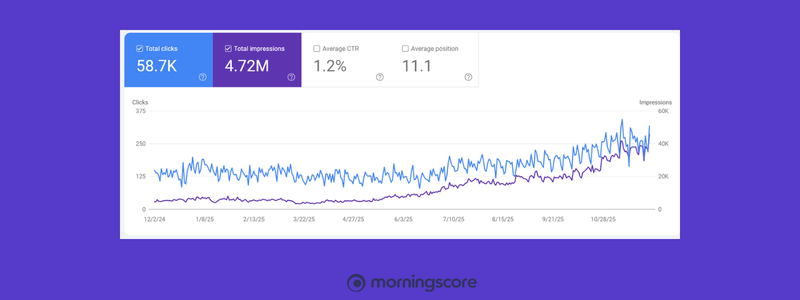
Paid traffic generally stops when the campaign stops. Organic traffic can continue after a page is published, although rankings can decline and pages need updates as competitors, search results, and customer expectations change.
A useful SEO page can support several business functions at once. It can rank for related searches, answer sales objections, earn links, support internal linking, and give sales staff a page to send to prospects.
The often-repeated figures of 55% more website visitors, 97% more inbound links, and 434% more indexed pages come from an old HubSpot study, not fresh 2026 research. They are historical evidence that active publishing can expand a site’s search footprint, not a promise of specific growth.
Current HubSpot research reports that small businesses are 23% more likely than average to see ROI from blog posts, while website, blog, and SEO activity remains a leading ROI channel in its 2026 marketing data.
What compounds
- Useful content that keeps matching relevant searches.
- Internal links that distribute authority and guide visitors.
- Reviews and mentions that accumulate over time.
- First-party customer insights that improve future content.
- Conversion data that shows which topics create revenue.
SEO is not passive income. It is an asset-building channel that rewards consistent maintenance.
4. Faster local discovery
Local SEO is often the fastest opportunity for a small business because location, relevance, and prominence matter alongside website authority. A small business does not need to outrank a national brand for every keyword. It needs to be visible for searches that describe what it sells and where it operates.
Think with Google reports that 76% of smartphone users who search for something nearby visit a business within a day, and 28% make a purchase. That makes local search one of the clearest connections between online visibility and offline revenue.
Google states that local results are mainly based on relevance, distance, and prominence – and that businesses cannot pay for a better organic local ranking. Reviews and links can contribute to prominence, which is why consistent review management matters.
A 2025 BrightLocal survey of 1,000 U.S. consumers found that 67% often or always look at reviews after a local-business search, and 85% consider contact information and opening hours important when researching local businesses. Accurate, complete business information is not optional.
Priorities for local businesses
- Complete and verify the Google Business Profile.
- Choose accurate business categories.
- Add services, opening hours, service areas, photos, and a specific description.
- Keep core business details consistent on the website and important third-party profiles.
- Ask customers for reviews in a consistent, policy-compliant way.
- Respond to reviews professionally, including negative reviews.
- Create useful local service pages instead of duplicating one template for every town.
- Earn relevant mentions from suppliers, partners, local media, associations, and industry directories.
A local business should not spend its first month submitting to dozens of low-quality directories. Fix the primary profile, the website, reviews, and the small number of platforms customers actually use.
One practical example comes from Morningscore’s work with Odense Aafart, a Danish river-cruise company run by a one-person marketing team. CEO Eva Pasgaard Skytte used the tool to find dead links, missing meta descriptions, images without alt text, duplicate H1s, and speed issues – then fixed many of them independently. The case does not provide a controlled ROI measurement, but it demonstrates what a small team can realistically accomplish with clear priorities.
5. Stronger trust before the sales conversation
Search visibility does not automatically create trust. It creates an opportunity to demonstrate trust.
Reviews, case studies, transparent contact details, useful author bios, pricing guidance, business credentials, and clear service information help users evaluate a company. For local businesses, the Google Business Profile, reviews, photos, opening hours, and contact details may influence a decision before a prospect visits the website.
Google explicitly says E-E-A-T itself is not a single ranking factor. The practical focus should be on first-hand experience, clear sourcing, relevant expertise, and trustworthiness – not on chasing a score.
Structured data can help search systems interpret information, but it does not make weak content authoritative. Use markup only when it accurately reflects visible page content.
6. Less dependence on paid advertising
Paid ads can create traffic quickly and are useful when a business needs immediate, controllable visibility. The weakness is dependency: when the campaign stops, the paid traffic normally stops with it.
SEO is slower, but successful pages can keep attracting impressions, clicks, and conversions after publication. That makes organic search useful for reducing dependence on a single paid channel, especially when advertising costs rise or budgets become unpredictable.
SEO and paid search are not enemies. A practical combination is to use paid ads for immediate demand and testing, then invest in SEO around the searches, pages, and messages that prove commercially valuable.
| Dimension | SEO | Paid search |
|---|---|---|
| Time to launch | Usually weeks to months for research, improvements, and publishing | Often hours to days after campaign setup |
| Time to meaningful results | Commonly several months; six to twelve months is a reasonable planning window for many small businesses | Can generate traffic immediately, but profitability still requires testing |
| Traffic after spend stops | Rankings and traffic may continue, but can decline without maintenance | Ad traffic normally stops when campaigns stop |
| Budget model | Labour, tools, content, technical work, and promotion | Media spend plus setup and management |
| Best initial targets | Specific services, problems, locations, and long-tail queries | High-intent queries where conversion economics are already understood |
| Main risk | Slow progress or no return if targeting and execution are weak | Paying for clicks that do not convert or scaling beyond profitable demand |
7. Visibility in AI-assisted search
Google’s AI Overviews can show supporting links to indexed pages that are eligible to appear in Google Search with a snippet. Google says there are no additional technical requirements specifically for AI Overviews or AI Mode beyond meeting normal Search technical requirements.
There is no proven “AI Overview schema” or guaranteed format that forces a page into an AI answer. The practical strategy is to publish helpful, clearly structured, well-sourced content that can be understood by both people and search systems.
AI search is also changing how consumers verify local information. A 2026 Yext survey of 3,848 consumers found that 42.7% used an AI tool for local search in the preceding month – and among those AI users, 53% then searched Google or Bing to verify the information. Accurate, consistent business data matters across every surface, not just your website.
Answer-first content
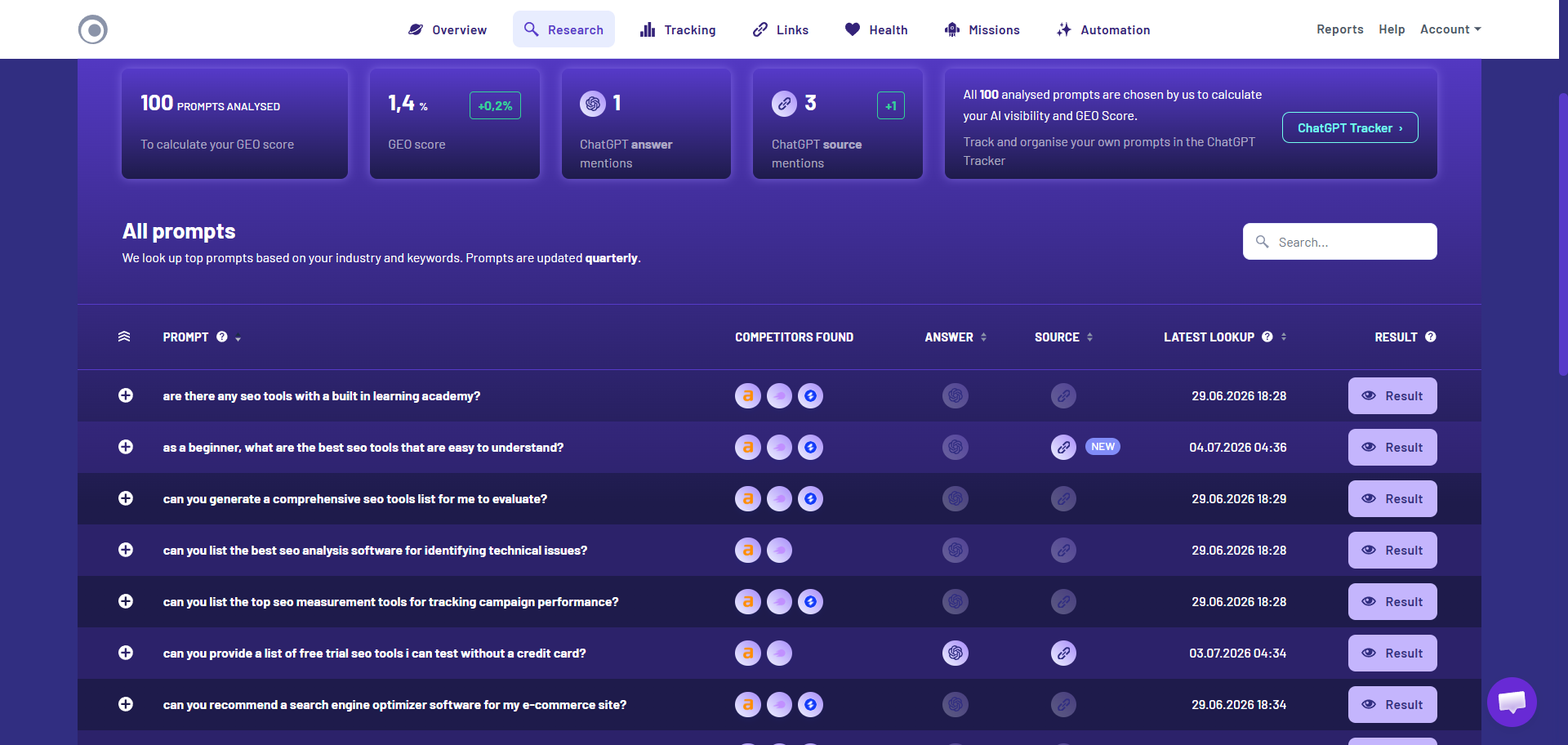
Start each section with a direct answer, then explain the reasoning and evidence. This improves usability and gives search systems a clean passage to interpret, but it does not guarantee inclusion in an AI answer.
For example:
Is SEO worth it for a small business? Usually, yes, if the business can target realistic demand and commit to consistent work for six to twelve months. The return depends on customer value, competition, execution quality, and measurement.
Useful practices include:
- Use descriptive headings that match real customer questions.
- Answer the heading early instead of burying the point.
- Cite current statistics and link to the original source.
- Show first-hand experience, examples, prices, limitations, and proof where relevant.
- Keep important pages indexable and eligible for normal search snippets.
- Monitor brand mentions, referral traffic, conversions, and AI citations as separate visibility signals.
What small businesses get wrong about SEO ROI
Mistake 1: treating a benchmark as a promise
The 748% three-year benchmark from First Page Sage is not a guarantee for a local business, ecommerce store, or new website. ROI depends on customer lifetime value, conversion rate, gross margin, competition, implementation quality, and the time horizon used.
Mistake 2: expecting instant results
SEO can show early movement within a few months, but a realistic planning window for meaningful results is often six to twelve months. First Page Sage’s benchmark reports a nine-month break-even period for its thought-leadership SEO dataset, with large differences across industries.
Mistake 3: measuring traffic instead of outcomes
Track qualified leads, calls, bookings, purchases, revenue, assisted conversions, and branded-search growth. Traffic and rankings are useful diagnostic metrics, but they are not the business result.
Mistake 4: treating SEO as a blog-post quota
Publishing more content is not a strategy by itself. Start with profitable products and services, customer questions, realistic competition, conversion paths, and content that adds something original.
A 90-day action plan
Days 1-14: establish the baseline
Set up Google Search Console and analytics. Define calls, forms, purchases, bookings, and qualified leads as conversion events. Check indexing, robots.txt, XML sitemap, HTTPS, mobile usability, and Core Web Vitals. Export the last three months of Search Console data and record organic clicks, impressions, rankings, conversions, and revenue where available.
Days 15-30: map the opportunity
List the products, services, problems, locations, and questions customers mention. Select five realistic topics or keywords. Map one primary search intent to each priority page. Consolidate duplicate pages targeting the same intent. Compare the current top-ranking pages for usefulness, proof, format, and missing information.
Days 31-60: improve the pages that matter
Rewrite titles and meta descriptions for qualified clicks. Improve the three to five highest-value service or product pages. Add process details, pricing guidance where appropriate, proof, FAQs, and clear calls to action. Complete the Google Business Profile, fix important business-information inconsistencies, and add relevant internal links.
Days 61-90: build and measure
Publish two genuinely useful pieces of content: one commercial or local piece and one problem-oriented piece. Use direct answers and clear headings without pretending that a specific format guarantees AI visibility. Add only accurate, relevant structured data. Earn legitimate mentions from partners, suppliers, local media, and relevant directories. Review impressions, clicks, calls, leads, sales, and revenue, then keep the tactics that produce evidence and drop the vanity work.
FAQ
Is SEO worth it for a small business?
Yes, often, if the business has valuable search demand and can commit to consistent implementation for six to twelve months. The return is not guaranteed and should be judged using leads, sales, margin, and customer value rather than rankings alone.
How long does SEO take to show results?
Early movement can appear within several months, but meaningful results often require six to twelve months. Competition, site history, technical quality, content quality, authority, and implementation speed all affect the timeline.
How much should a small business spend on SEO?
There is no universal correct budget. SEO costs for small business depend on competition, scope, internal resources, and the amount of execution required. A business can invest through internal time, a consultant, an agency, tools, content production, or a mixture of these. Set the budget against customer value and available demand, then measure whether the work produces profitable outcomes.
Can small businesses compete with big brands on SEO?
Yes, especially for local, niche, and specific service searches. A small business can compete by being more relevant, more useful, more local, and more credible for a narrow audience instead of attacking broad keywords dominated by national brands.
Can a small business do SEO itself?
Many small businesses handle the fundamentals themselves. This includes accurate business information, basic keyword research, and useful service pages. Specialist help becomes more useful for technical migrations or complex local work. You can start learning the basics with our DIY SEO guide. Doing the basics yourself is a highly practical starting point.
Does my small business need a blog for SEO?
No. A well-built service page and a maintained Google Business Profile are higher priorities for local businesses. A blog is only useful when it answers genuine customer questions and can be kept accurate. Thin or abandoned posts do not create meaningful value. See the Google SEO Starter Guide for more on creating helpful content.
Are paid SEO tools necessary for small businesses?
No, they are not strictly necessary. Google Search Console is the essential free starting point for checking technical alerts and actual queries. Paid tools can add useful competitor data, but expensive subscriptions are poor value if rarely used. Accessible small-business SEO software can help combine rank and health monitoring into one workflow. Google Search Console should always be your primary foundation.
Which SEO metrics matter most for small businesses?
Track qualified leads, calls, sales, and revenue rather than just raw traffic. Organic clicks and commercial rankings are useful diagnostic signals, but they do not guarantee profit. Do not use keyword volume or a proprietary tool score as your only proof of return. A complete small-business SEO checklist will focus on business outcomes over vanity metrics.
Can AI tools handle the SEO for my business?
AI can assist with outlines and drafts, but it cannot replace your actual business context. It does not know your real search data or customer interactions by default. Mass-produced AI text often conflicts with Google’s spam guidance. Content still requires human review to ensure it provides original value to the reader.
Sources:
- WordStream: 101 SEO Stats to Reference Everywhere in 2026
- LocaliQ: Insights from 300+ SMBs on SEO, GEO, and Website Traffic in 2026
- Think with Google: Digital Marketing: It’s Time to Rethink Measurement
- Think with Google: Online-to-Offline Search Research PDF
- First Page Sage: SEO ROI Statistics 2026
- First Page Sage: Marketing ROI by Channel 2026
- HubSpot: 2026 Marketing Statistics, Trends, and Data
- HubSpot: Business Blogging Study
- Google Search Central: AI Features and Your Website
- Google Search Central: Creating Helpful, Reliable, People-First Content
- Google Search Central: General Structured Data Guidelines
- Google Search Central: Q&A Page Structured Data
- Google Search Central: Search Documentation Updates
- Google: Improve Your Local Ranking on Google
- BrightLocal: Consumer Search Behavior 2025
- Yext: 2026 Consumer Search Behaviors Report
- Morningscore: Odense Aafart Case Study