
 Deutsch
 Dansk
Dansk Svenska
 Nederlands
 Español
 Lietuvos
Most SEO checklists hand you 40 tasks with no order of operations. You close 12 tabs, bookmark none of them, and end up doing whatever’s easiest instead of what actually moves the needle. This one gives you the exact sequence for SEO for small businesses, ranked by what actually drives rankings when you don’t have an in-house SEO team and you’ve got maybe 5 hours a week to spend on this. It’s built on the same framework Morningscore’s co-founder Karsten Madsen has applied across 20+ client projects and analysis of 10,000+ websites over 15 years of SEO work.
No fluff, no “SEO is a marathon not a sprint” filler. Just the order to do things in and the numbers that tell you if you’re doing them right. Everything here also works as a DIY SEO for small business playbook, nothing below requires an agency or a specialist you can’t become in a weekend.
TL;DR
- Figure out your traffic ceiling, domain authority tier, and local vs. national split before doing anything else, they decide how you weight everything after.
- Fix technical foundations first: indexing, Core Web Vitals (LCP under 2.5s, INP under 200ms, CLS under 0.1), crawlability, and conversion tracking. Nothing else works if Google can’t see your site.
- Map keywords to specific pages using a realistic difficulty ceiling, not vanity search volume, and kill duplicate pages targeting the same term.
- Build service pages with real depth (pricing, specifics, proof), not generic filler.
- If you’re local, treat Google Business Profile as a full-time asset and keep review velocity steady, not bursty.
- Structure content answer-first so AI answer engines (ChatGPT, Perplexity, AI Overviews) can extract it, and build genuine off-site brand mentions alongside backlinks.
- Publish and refresh content on a sustainable cadence, measure conversions and CTR outliers, not just traffic.
- Use the 90-day priority matrix below to do the six highest-impact, lowest-effort tasks first instead of guessing where to start.
Before you touch anything: the 3 numbers that decide your strategy
Skip this and you’ll spend your 5 hours a week on tasks that don’t matter for your specific business. Three things determine everything else in this checklist:
Traffic potential of your niche. If nobody’s searching for what you sell, no amount of on-page optimization saves you. Pull search volume for your top 10 target terms before you do anything else. If the ceiling is 500 searches a month total, your strategy looks completely different than if it’s 50,000.
Your current domain authority tier. A brand-new site competing against 10-year-old domains on competitive national terms is wasting time. Know whether you’re fighting for page one or fighting to get indexed at all. That changes what “quick win” even means for you.
Local vs. national intent split. If 80% of your revenue comes from a 30-mile radius, Phase 4 below is where you spend most of your time. If you’re a pure ecommerce or SaaS play with no physical location, skip most of local SEO and put that time into content and links instead.
Figure out these three things first. Everything below gets prioritized differently depending on the answer.
Phase 1: Foundation (Week 1-2)
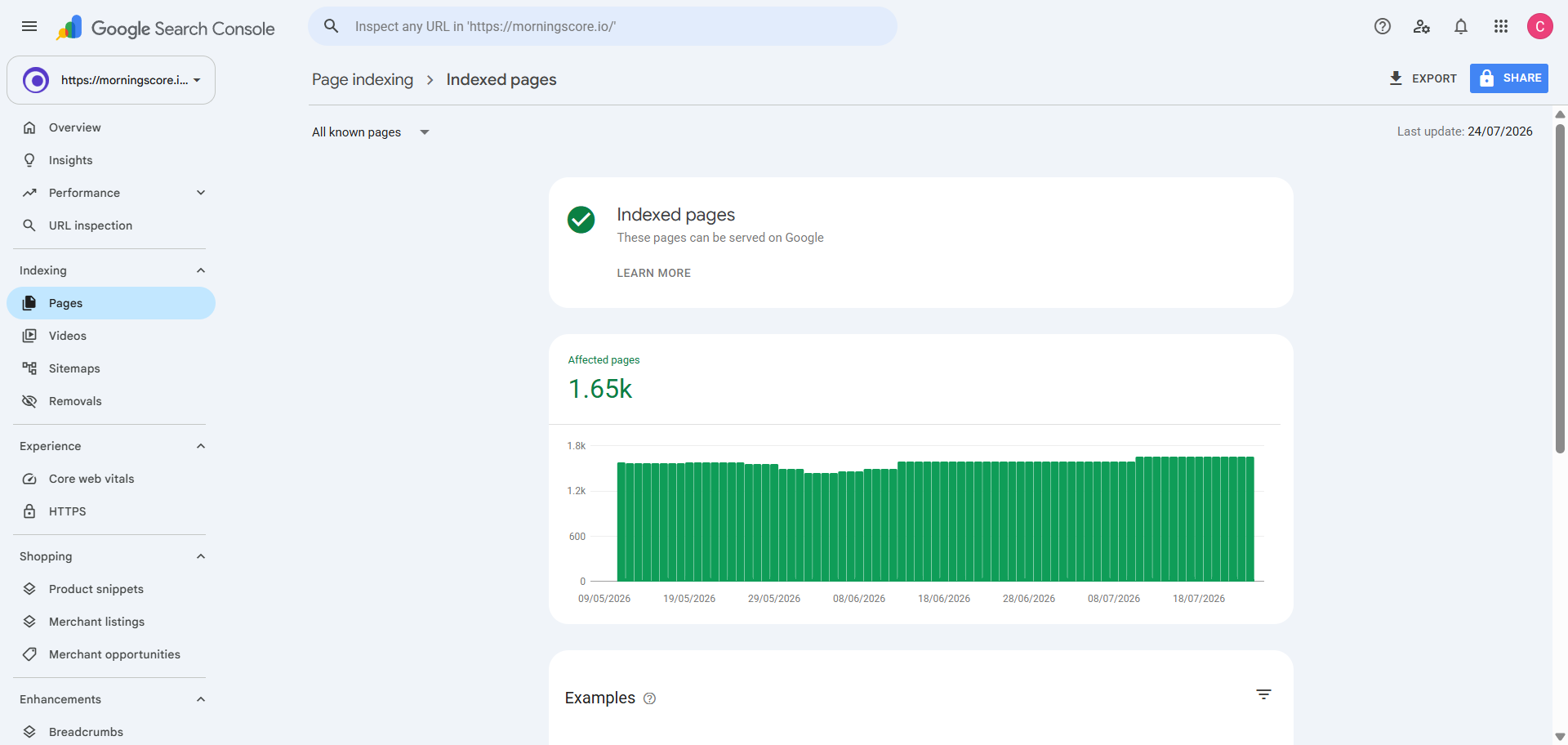
Nothing else on this list matters if Google can’t crawl and index your site properly. Do this first, even if it’s boring. The Google Search Central SEO Starter Guide makes this same point bluntly: no technical work guarantees rankings, but skipping it quietly blocks everything else.
-
Check indexing status. Search site:yourdomain.com in Google. If pages you expect to see aren’t there, you have a bigger problem than any keyword strategy will fix. Cross-check against Google Search Console’s Coverage report for the real picture.
-
Fix Core Web Vitals. Largest Contentful Paint under 2.5 seconds, Interaction to Next Paint under 200 milliseconds, Cumulative Layout Shift under 0.1. Run your site through PageSpeed Insights. If you’re red on any of these, fix it before touching keywords, it affects every page on your domain at once.
-
Confirm HTTPS and mobile usability. Should be a non-issue in 2026, but check anyway. Mixed content warnings and mobile rendering errors quietly tank rankings.
-
Audit crawlability. Check your robots.txt isn’t blocking pages it shouldn’t, confirm your XML sitemap is submitted and current, and find orphan pages (pages with no internal links pointing to them). Screaming Frog’s free tier handles this for sites under 500 pages.
-
Set up analytics tied to conversions, not traffic. Traffic is a vanity number. Set up goal tracking (form fills, calls, purchases) in GA4 before you start optimizing, otherwise you won’t know if any of this worked.
Phase 2: Keyword and intent mapping (Week 2-3)
-
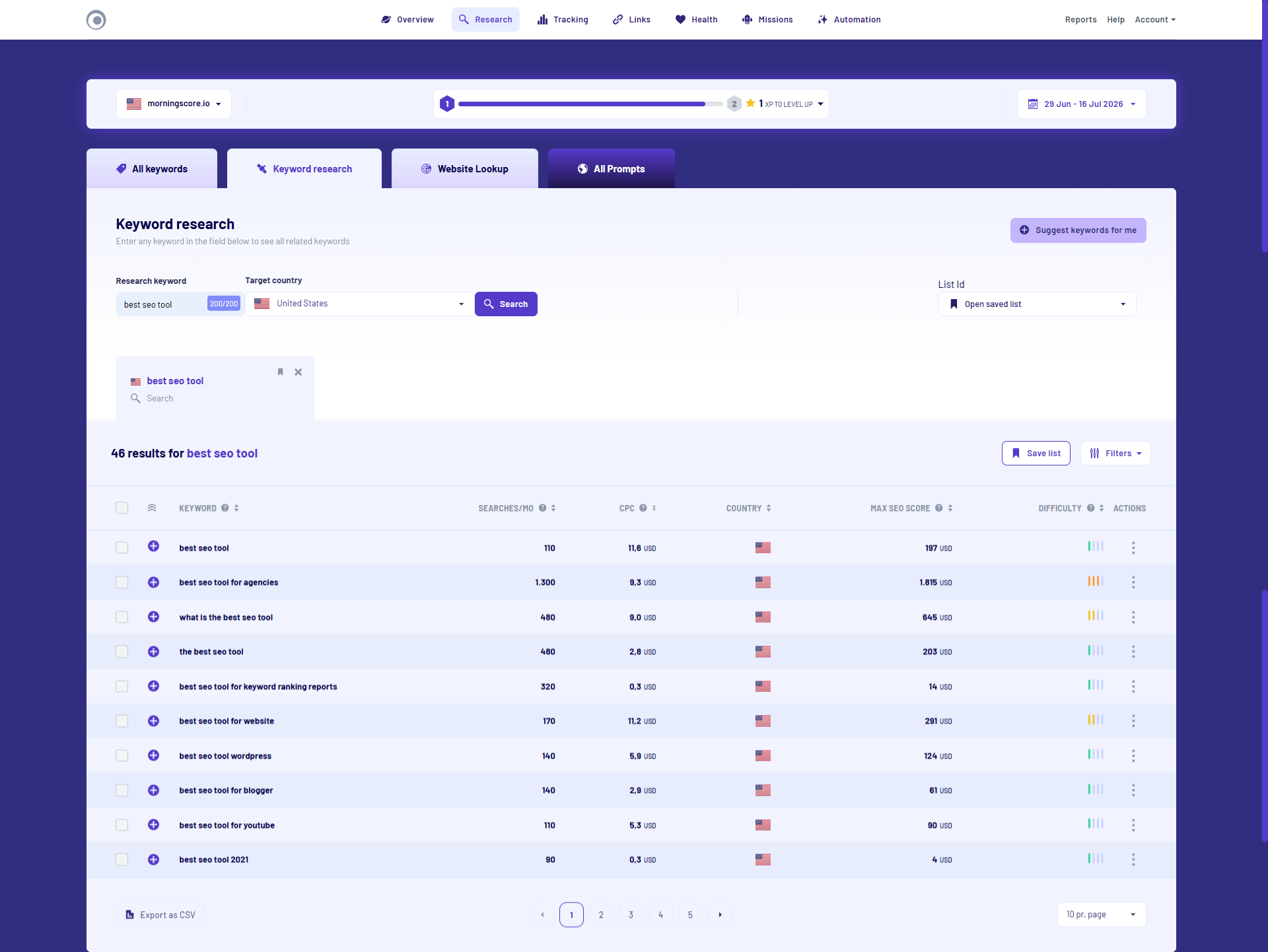
Mine your actual customers, not just keyword tools. Pull the last 50 support tickets and sales call transcripts. The exact phrases customers use to describe their problem are better keyword data than anything a tool spits out, because they’re phrases from people who already bought.
-
Split winnable keywords from vanity keywords. For a new or low-authority site, a keyword with 10,000 monthly searches and a Domain Rating requirement of 60+ is not winnable this year. A keyword with 200 searches and weak competition is. Set a realistic difficulty ceiling for your site and stop chasing terms above it.
-
Enforce one keyword, one page. Most small business sites have three service pages all quietly targeting the same term, splitting authority between them and confusing Google about which page should rank. Map every target keyword to exactly one URL. Consolidate or redirect the rest.
Phase 3: On-page that actually converts (Week 3-5)
-
Get the mechanics right, fast. Unique title tag under 60 characters with the primary keyword near the front, meta description that’s actually a pitch (not a keyword stuffing exercise), one H1 per page. This takes an afternoon per page, don’t overthink it.
-
Build service pages with actual depth. Generic “we do plumbing” pages don’t rank or convert. Include pricing signals (even ranges), specifics about the process, and proof (reviews, before/after, case numbers). Thin pages lose to competitors with substance every time. As a practical example: KARLSSON Indretning & Design, a Morningscore customer, grew monthly organic clicks from 100 to 1,000 after building focused pages around specific keywords – owner Charlotte Karlsson noted that Morningscore helped her “find the right keywords and build pages that hit the mark.”
-
Build internal linking on purpose. Link from high-authority pages (usually your homepage and top blog posts) down to the pages you want to rank. Random linking doesn’t build topical authority, deliberate linking does.
Phase 4: Local SEO, done right (Week 4-6)
Skip most of this phase if you don’t serve a local market. If you do, this is where the highest-leverage hours go. Google says local results are driven by relevance, distance, and prominence – and that complete, accurate profile information is one of the clearest ways to improve all three.
-
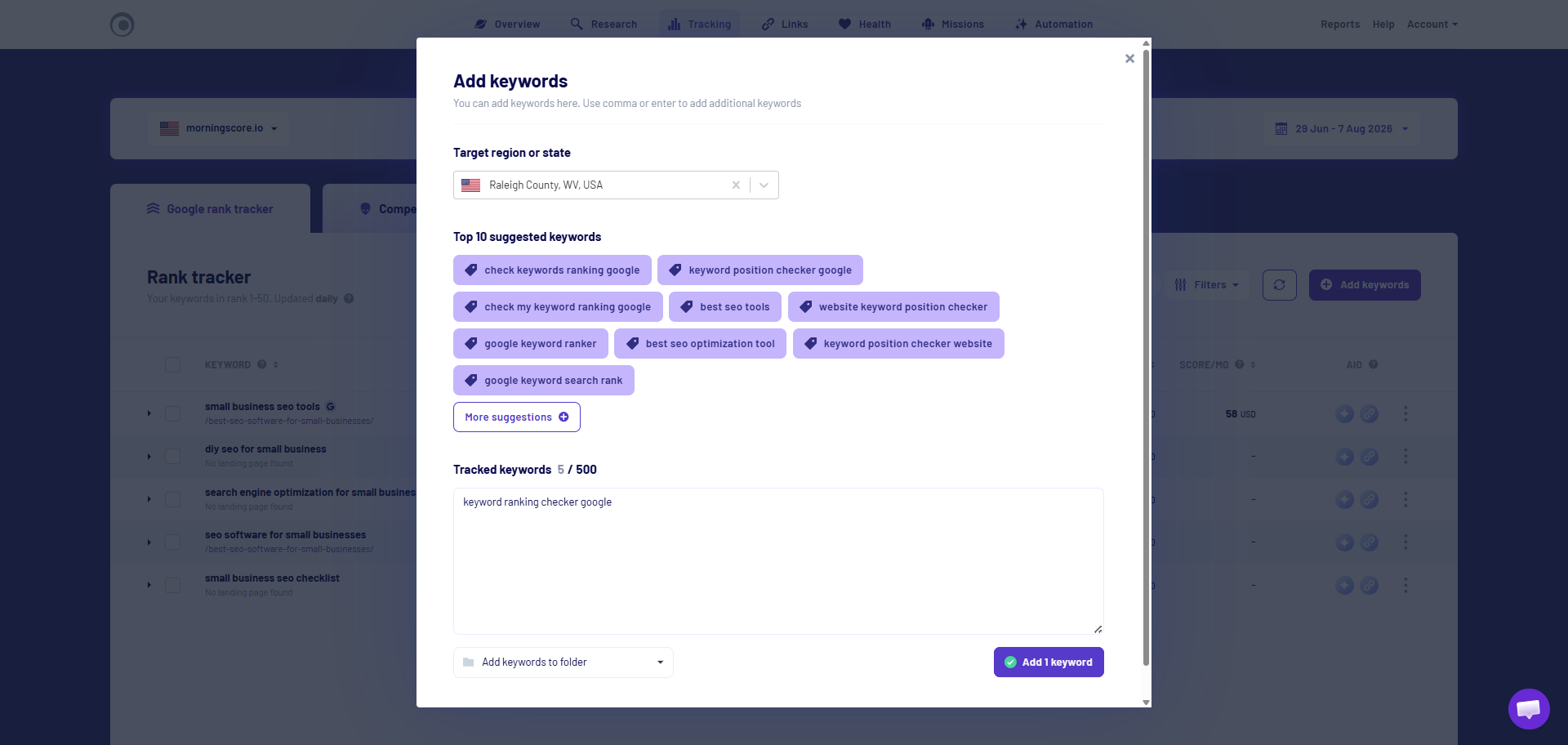
Fully optimize Google Business Profile. Every field filled, correct categories, real photos (not stock), and a posting cadence of at least weekly. An abandoned GBP with 40% of fields blank is leaving rankings on the table for free.
-
Fix NAP consistency where it counts. You don’t need your business listed identically on 40 directories. You need it consistent on Google, Bing Places, Apple Maps, and the 3-5 directories that actually matter for your industry (Yelp for local services, industry-specific directories for B2B). According to BrightLocal’s 2025 consumer research, 56% of people check that business information matches across online sources before making contact.
-
Build location pages that aren’t duplicate content. If you serve multiple areas, each location page needs unique content specific to that area, not the same template with the city name swapped. Google spots this instantly and it can hurt you more than help.
-
Set a real review velocity target. Aim for at least 4-8 new Google reviews a month for a local business, consistently, not a burst of 20 in one week followed by silence. Velocity and recency matter more than total count. One important note: the FTC’s 2024 rule banning fake reviews prohibits buying reviews, fabricating them, and conditioning reviews on positive sentiment – so keep your review strategy clean and ask genuinely.
Rankings alone don’t win local customers either. BrightLocal’s 2026 research found that proximity (44%), star rating (38%), and review count (37%) all outranked simply appearing first in results – only 6% of local searchers said they just clicked the top result.
Phase 5: AEO and GEO, getting picked by AI answers
This is the part that separates a 2026 checklist from a 2023 checklist with the year changed in the title. Traditional rankings still matter, but a growing share of your customers now find answers through ChatGPT, Perplexity, and Google’s AI Overviews before they ever click a blue link. That said, keep perspective: Yext’s 2026 consumer report found that even among people who used AI for local search, 53% still verified via Google or Bing before acting (vendor-reported survey, 3,848 global consumers).
-
Structure content so AI can lift it cleanly. Lead each section with a direct answer in the first sentence or two, then explain. AI tools extract and summarize, they don’t reward buried answers three paragraphs deep.
-
Implement FAQ schema. Google recommends structured data to help search systems understand your content and surface it in rich results. This is a genuinely free, high-leverage task most small businesses still skip.
-
Write in answer-first paragraph structure throughout, not just in an FAQ section. Every H2 should be answerable by its first sentence.
-
Build off-site brand mentions, not just backlinks. AI answer engines weigh how often and how positively your brand gets mentioned across the web, not just who links to you. Reviews, forum mentions, and press coverage now do double duty as SEO and AI visibility signals.
Phase 6: Content and authority building (ongoing)
-
Set a cadence you can actually sustain. One well-researched post every two weeks beats four rushed posts a month that all say the same thing. Consistency compounds, sporadic bursts don’t. Google’s people-first content guidance is clear that content should be original, reliable, and up-to-date – not primarily designed to manipulate rankings.
-
Build links that aren’t directory spam. Guest posts on relevant sites, digital PR, and genuine partnerships outperform the $50-for-10-links packages you’ll get pitched constantly. Quality over quantity, every time, no exceptions. Malermester Ingemann, a painting business that worked with Morningscore, shifted from 90% paid traffic to 75% organic – cutting acquisition costs significantly while adding 10-12 new customers monthly (Morningscore-reported customer case study).
-
Refresh your best content on a cycle. Pick your top 10 performing pages and review them every 6 months. Updated stats, fixed dead links, and expanded sections keep pages ranking longer than publishing new content and abandoning old posts.
Phase 7: Measurement that isn’t vanity metrics
-
Track impressions and clicks by individual query in Search Console, not just aggregate traffic. This shows you exactly which keywords are close to breaking through.
-
Find your CTR outliers. A page ranking position 4 with a CTR way below average for that position has a meta description problem, not a content problem. Fix the pitch before you touch the page.
-
Attribute conversions to the actual path, not just to “organic traffic” as one bucket. Know which pages and keywords are actually generating leads or sales, not just sessions.
The 90-day priority matrix
Stop treating every task on this list as equally urgent. Here’s the order, ranked by effort and impact for a typical small business:
|
Task |
Effort |
Impact |
Phase |
|
Fix indexing/crawl errors |
Low |
High |
1 |
|
Fix Core Web Vitals |
Medium |
High |
1 |
|
Set up conversion tracking |
Low |
High |
1 |
|
Map keywords to pages (dedupe) |
Medium |
High |
2 |
|
Fully optimize Google Business Profile |
Low |
High |
4 |
|
Fix title tags and meta descriptions |
Low |
Medium |
3 |
|
Build out thin service pages |
High |
High |
3 |
|
Add FAQ schema |
Low |
Medium |
5 |
|
Restructure content for answer-first format |
Medium |
High |
5 |
|
Build local review velocity |
Medium |
Medium |
4 |
|
Fix NAP consistency on key directories |
Low |
Medium |
4 |
|
Start consistent content cadence |
High |
Medium |
6 |
|
Build genuine backlinks |
High |
High |
6 |
|
Refresh top 10 pages |
Medium |
Medium |
6 |
The first six rows are your first 30 days. They’re low-to-medium effort and high impact, which is exactly why they come first.
Common mistakes that tank small business SEO
-
Chasing keywords with search volume way above what your domain authority can compete for.
-
Writing one generic page instead of separate pages for separate services or locations.
-
Ignoring Core Web Vitals because “the site looks fine to me.”
-
Burying the answer in paragraph three instead of sentence one.
-
Buying 50 backlinks from a directory package instead of earning 5 real ones.
-
Setting up Google Business Profile once and never posting or updating it again.
-
Tracking traffic instead of tracking conversions, then wondering why SEO “isn’t working.”
FAQs
How to do SEO for a small business?
Fix technical foundations first (indexing, Core Web Vitals, crawlability), then map keywords you can realistically win to specific pages, build out service pages with real depth, optimize Google Business Profile if you serve a local market, and publish content consistently. Do it in that order. Most small businesses fail at SEO not from lack of effort but from doing tasks in the wrong sequence, like writing blog posts before fixing a crawl error that’s blocking half the site from being indexed.
Is SEO dead or evolving in 2026?
Evolving, not dead. Traditional ranking factors (technical health, content quality, backlinks) still drive the majority of visibility. What’s new is a second layer on top: AI answer engines like ChatGPT, Perplexity, and Google AI Overviews now source a growing share of buyer research. The sites getting cited there are almost always the ones already ranking well organically, structured so AI can extract answers cleanly. Anyone telling you SEO is dead is usually selling you an alternative.
What is the 80/20 rule in SEO?
Roughly 20% of your SEO tasks drive 80% of your results. For most small businesses that 20% is: fixing technical/crawl issues, getting Google Business Profile fully optimized, and building 3-5 genuinely strong service pages targeting winnable keywords. The other 80% of tasks (extra blog posts, minor schema tweaks, chasing every directory listing) matters far less. This checklist’s priority matrix is built around finding that 20% for your specific site instead of guessing.
What is an SEO checklist?
A structured list of tasks, ideally sequenced and prioritized, covering technical SEO, keyword targeting, on-page optimization, local signals, content, and measurement. A good one tells you what order to do things in and why. A bad one is just an alphabetized task dump that treats fixing a broken sitemap the same as writing your 15th blog post, which is most of what ranks for this term right now.
What are the 4 types of SEO?
Technical SEO (crawlability, site speed, indexing, structured data), on-page SEO (content, title tags, headers, internal linking on individual pages), off-page SEO (backlinks, brand mentions, PR, social signals), and local SEO (Google Business Profile, NAP consistency, location-based content). A fifth category, AEO/GEO (answer engine and generative engine optimization), is increasingly treated as its own bucket in 2026 because AI answer engines weigh signals differently than traditional search.
What are six essential SEO checks you would normally make?
Indexing status (site:yourdomain.com), Core Web Vitals scores, mobile usability, XML sitemap and robots.txt configuration, title tag and meta description uniqueness across pages, and Google Search Console’s coverage and performance reports for crawl errors and query-level data. These six catch the majority of issues that quietly cap a small business site’s rankings before any content or keyword work even matters.
Can ChatGPT do SEO?
It can speed up parts of it: keyword brainstorming, drafting meta descriptions, outlining content, spotting gaps in existing pages. It can’t crawl your live site, pull real search volume data, or replace judgment on which keywords are actually winnable for your domain. Treat it as a fast first draft tool, not a strategist. The businesses winning in AI search right now are pairing it with real technical audits and real data, not replacing the audit with a chat window.
Can I do SEO myself?
Yes, for most small businesses, especially in the first 6-12 months. This is exactly what SEO for small businesses looks like in practice: the technical foundation (Phase 1 above), Google Business Profile optimization, and basic on-page fixes don’t require an agency. Where DIY starts to strain is competitive link building and ongoing content at scale, that’s usually where businesses either hire help or accept a slower timeline. Nothing on this checklist requires specialized skills you can’t learn in a weekend.
What are the top 5 SEO strategies?
Fix technical health before anything else, target keywords your domain can realistically rank for instead of the highest-volume terms, build genuinely deep content instead of thin pages, treat Google Business Profile as a full-time asset if you’re local, and structure everything answer-first so both Google and AI answer engines can extract it. In that order, for a small business with limited hours, these five outperform a scattershot approach every time.