
 Deutsch
 Dansk
Dansk Svenska
 Nederlands
 Español
 Lietuvos
Key Takeaways
- Successful small business SEO relies on consistent, long-term effort rather than quick traffic shortcuts.
- Focus on search intent by answering the specific questions your customers actually ask offline.
- Prioritize local SEO and fix essential technical basics to give your website a solid foundation.
- Measure your progress regularly with tools like Google Search Console to invest in what actually works.
Search engine optimization for small businesses is not dead, and it is definitely not some mystical dark art reserved for agencies with matching hoodies. It has just gotten more demanding. In 2026, ranking well means combining useful content, a clean website, local visibility, and consistent tracking. Businesses that skip the fundamentals and chase shortcuts usually end up disappointed. Businesses that treat SEO as a long-term system tend to win quietly over time.
This article breaks down what actually matters for small business SEO right now, without the jargon overload or the “10x your traffic overnight” nonsense. It is written by the team at Morningscore, an SEO tool founded in 2018 that works with 4,000+ businesses worldwide. The advice here is grounded in what we see actually moving the needle for small businesses day to day.
What Search Engine Optimization for Small Businesses Means in 2026
SEO, or search engine optimization, is the process of making your website easier to find when people search for what you offer. It is not about tricking Google. It is about making it obvious to Google, and to actual humans, that your business deserves to show up.
Effective search engine optimization for small businesses usually comes down to three things: showing up for the right search terms, showing up in the right location, and showing up with content that actually answers what the searcher wants. If someone searches “emergency plumber near me” and your business fixes emergencies and is near them, you want to be visible, not buried on page four where nobody scrolls.
The reason this matters more for small businesses than big brands is simple. Big brands can afford to buy visibility with massive ad budgets. Small businesses usually cannot. SEO gives smaller players a way to compete on relevance and usefulness instead of budget size. It rewards businesses that actually understand their customers, not just the ones with the biggest marketing department.
There is also a compounding effect with SEO that paid ads do not have. Once a page ranks well, it can keep bringing in traffic for months or years with minimal extra spend. Ads stop the moment you stop paying. Good SEO content keeps working quietly in the background.
That said, the gap between businesses doing SEO and those ignoring it is still significant. Industry data from 2026 highlights that many small players still struggle with digital basics. Setting up a dedicated website and a Google Business Profile remains a primary way to get ahead of the local competition simply by covering the fundamentals properly.
Search Engine Optimization for Small Businesses Starts with Keyword Research
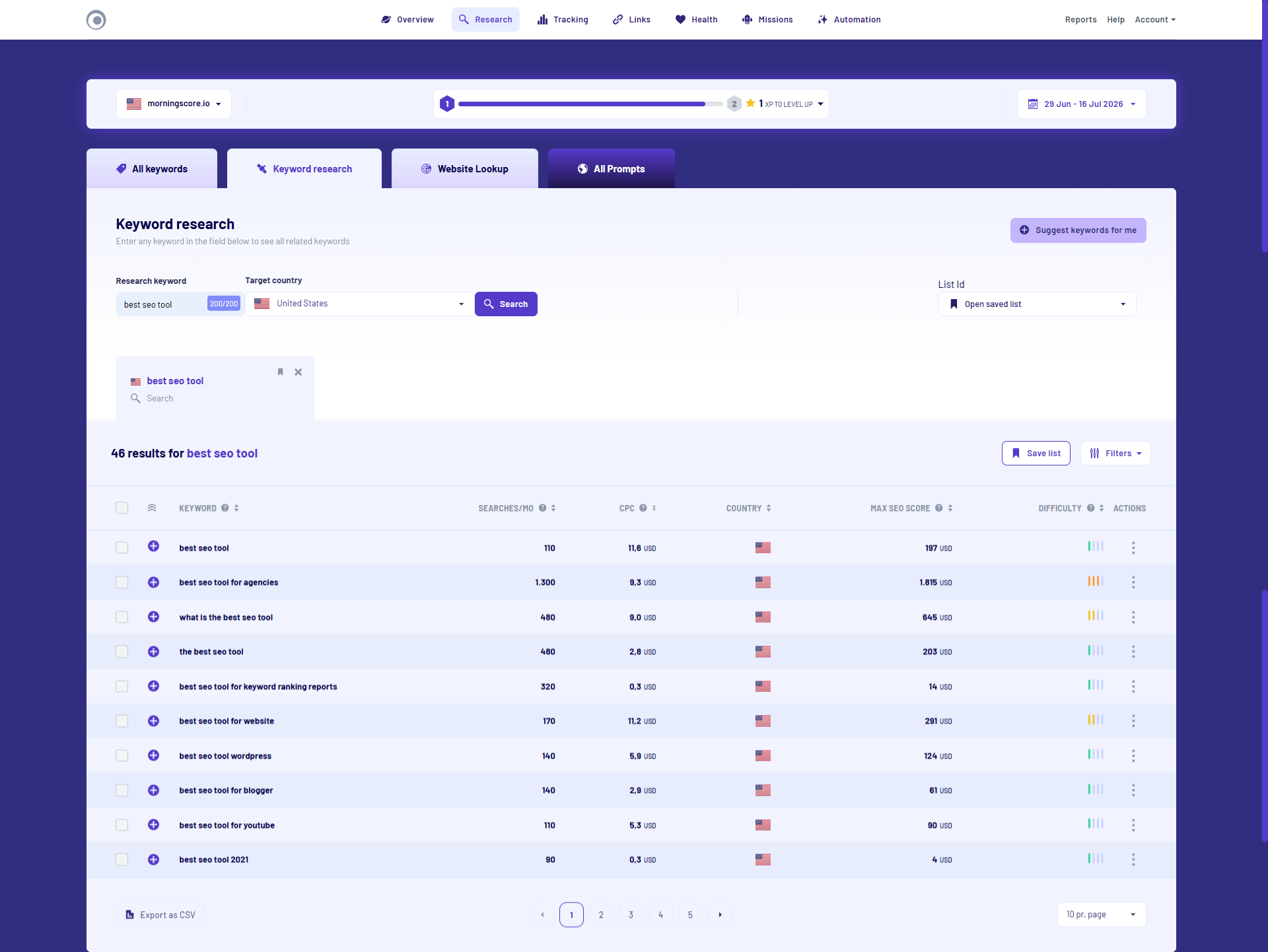
Everything in SEO starts with understanding what people actually type into search engines. Skipping this step is like opening a shop without knowing what your customers want to buy. You might get lucky, but probably not.
Focus on search intent, not just search volume
A lot of small businesses obsess over broad keywords with big search volume, things like “marketing” or “shoes.” These terms are almost impossible to rank for and often attract the wrong kind of visitor anyway. Someone searching “marketing” could be a student, a competitor, a job seeker, or literally anyone. That is not useful traffic.
Instead, focus on long-tail keywords. These are longer, more specific search phrases like “affordable marketing agency for small restaurants” or “running shoes for flat feet.” They have lower search volume, but the people searching them usually know exactly what they want, which means better conversion rates.
Group your keywords into rough categories: what you sell, what problems you solve, and what location you serve. This gives you a natural structure for the pages you will eventually create or improve.
Check what your competitors are already doing
Before you build anything, search your target keywords and see who already ranks. Look at their page titles, the type of content they publish, and how deep their pages go. This is not about copying them. It is about spotting gaps: questions they left unanswered, outdated information they never fixed, or a service angle they completely ignored.
If three competitors all have thin, generic pages about “furniture repair,” a genuinely detailed guide with real photos and pricing context can outrank all of them without much of a fight. Competitor gaps are often the fastest path to ranking, faster than trying to out-optimize a page that is already excellent.
Build a focused list before expanding
Do not try to rank for fifty keywords in month one. Pick five to ten keywords that matter most to your business and build strong pages around them first. Once those start gaining traction, expand outward into related terms, questions, and comparisons. Trying to cover everything at once usually results in a pile of weak, half-finished pages instead of a few strong ones that actually rank.
Optimizing Your Website for Small Business Search Engine Optimization
Your website is the foundation everything else sits on. Even the best content strategy will underperform if your site structure is a mess.
Give every page a clear job
Each important page on your site should focus on one topic and one purpose. A page trying to be about five different services at once usually ends up ranking for none of them. If you offer multiple services, give each one its own dedicated page with its own clear title, headings, and content.
Get specific with titles and meta descriptions
This is one of those details that separates a decent SEO page from a sloppy one. Keep your title tag under roughly 60 characters, put your main keyword near the front, and add your brand name at the end if there is room. Write your meta description to actually sell the click, under about 160 characters, summarizing what the page offers with the keyword included naturally. Skip this step and Google will often generate its own snippet, which is rarely as compelling as one you write yourself.
Structure your site with internal linking
Internal links are the quiet workhorses of SEO. They help visitors move naturally from one relevant page to another, and they help search engines understand how your pages relate to each other. If you have a blog post about “how to choose a wedding photographer,” link it to your actual wedding photography service page. That is not spam, that is just useful navigation.
Keep your overall site structure simple. Visitors and search engines should be able to figure out your main categories and services within a few clicks from the homepage.
Add structured data where it matters
Structured data, often called schema markup, is code added to your pages that tells search engines exactly what your content means: a business address, a review rating, a price, an FAQ. It does not directly boost rankings, but it can unlock rich snippets like star ratings, business hours, or expandable FAQ boxes right in the search results. For a small business, LocalBusiness schema and FAQ schema are usually the two most worth setting up first, since they are relatively simple and visually make your listing stand out from competitors who skipped this step. Google recommends using JSON-LD format and validating your markup with the Rich Results Test before publishing.
Make sure pages can actually be found
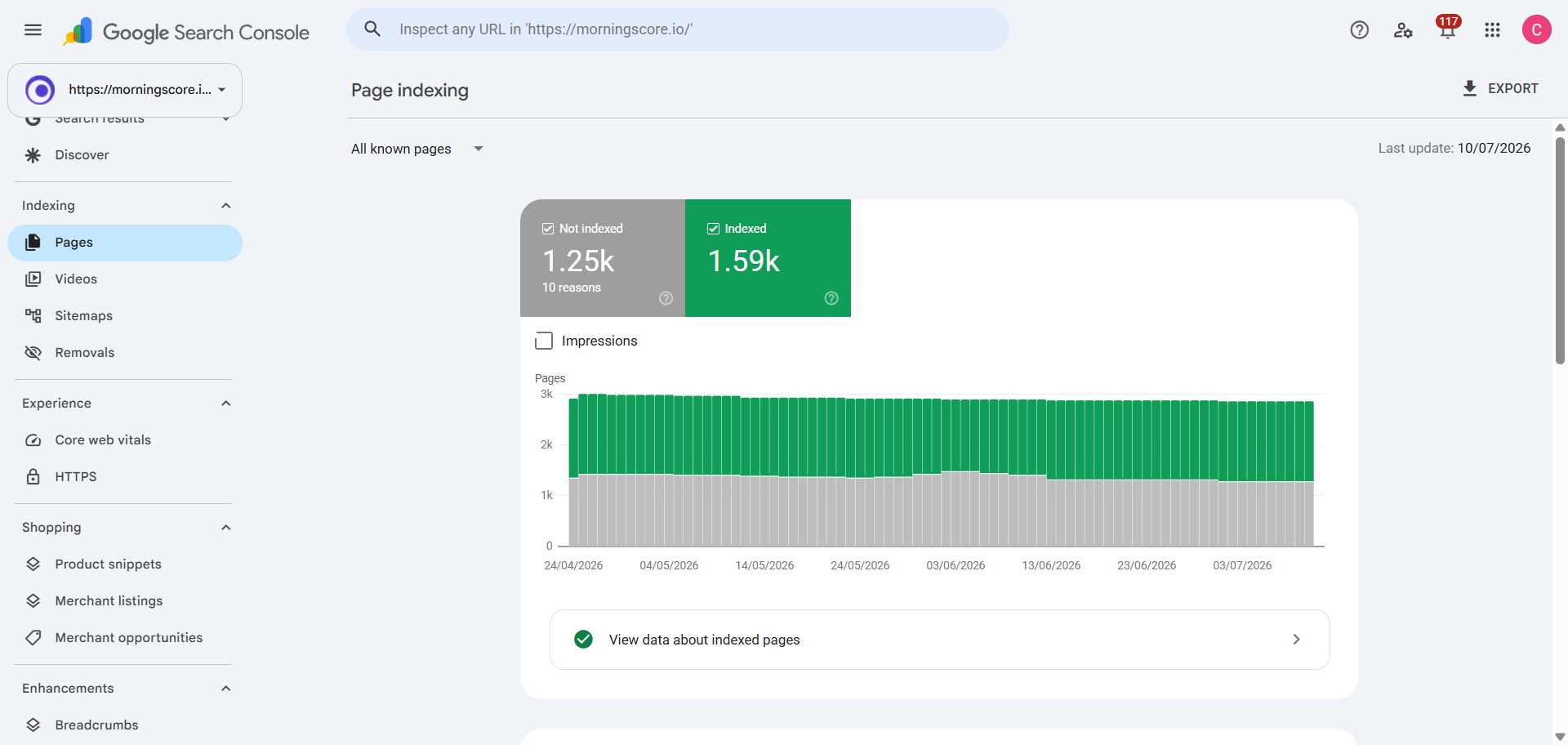
This sounds obvious, but plenty of small business websites accidentally block important pages from being indexed, whether through incorrect settings, broken links, or messy site migrations. Regularly check that your key pages are indexable and appearing in search results. A beautifully written page that Google cannot see is basically invisible to the world.
Creating Content for Small Business Search Engine Optimization
Content is still one of the strongest tools small businesses have, but only if it is built around genuine usefulness instead of keyword-stuffed filler.
Answer the questions your customers already ask
Think about the questions customers ask you on sales calls, in emails, or in your DMs. Those questions are gold. They tell you exactly what content to create. If you run a bakery and customers keep asking about allergy-friendly cakes, write a detailed page about that. If you run a law firm and clients keep asking about how long a case takes, address it directly.
This approach naturally creates content that matches real search intent, because the questions your customers ask offline are usually the same ones they type into Google. It also tends to produce the kind of specific, non-generic content that Google’s own AI guidance now explicitly encourages over commodity content that could come from anywhere.
Organize content into pillars and clusters
Instead of publishing random, disconnected blog posts, organize your content around a few core topics. Pick one broad “pillar” page for each major service or theme, then build smaller “cluster” articles around it that answer specific related questions and link back to the pillar. A landscaping business might have a pillar page on “lawn care services” with cluster posts on watering schedules, seasonal fertilizing, and common lawn diseases, all linking back to the main page.
This structure helps search engines understand that your site has real depth on a topic, not just a handful of scattered posts, and it tends to lift the rankings of the whole group, not just one page.
Mix content types for coverage
A strong small business content strategy usually includes several types of pages working together:
- Service pages that clearly explain what you offer and who it is for
- Blog posts that answer specific questions or explore topics related to your industry
- FAQ pages that tackle common objections and concerns
- How-to guides that walk people through a process step by step
- Comparison pages if customers are weighing you against alternatives
Each type plays a different role. Service pages convert. Blog posts attract. FAQs remove hesitation. Guides build trust. Together, they cover the buyer’s journey from curious stranger to paying customer.
Keep content updated, not just published
Publishing something once and forgetting about it is a common mistake. Search engines tend to favor content that stays accurate and current. Revisit older posts every few months, update outdated information, add new examples, and fix anything that no longer reflects reality. A post that quietly climbs from page three to page one after an update is one of the more satisfying wins in SEO.
Why Local Search Engine Optimization Matters for Small Businesses
If your business serves a specific geographic area, local SEO deserves serious attention. For many small businesses, it is the single highest-return part of the entire SEO strategy. Reports on consumer search behavior show that the vast majority of people search for local businesses daily, and many are driven away by inaccurate or outdated information in listings. Getting the basics right here is not optional.
Optimize your Google Business Profile properly
Your Google Business Profile is often the first thing potential customers see, sometimes before they even visit your website. Fill it out completely: business category, services, opening hours, photos, and a clear, specific business description. An incomplete profile looks unfinished and can cost you trust before a customer even clicks through.
Keep your business name, address, and phone number identical everywhere online, including directories, your website, and social profiles. Local ranking is based on relevance, distance, and prominence, and completing your profile accurately is one of the clearest ways to improve all three. Inconsistent details confuse search engines and can quietly hurt your local rankings.
Collect reviews and respond like a human
Reviews influence both rankings and buying decisions. Ask satisfied customers to leave one, and make it easy for them to do so. When reviews come in, good or bad, respond genuinely. A thoughtful reply to a negative review often builds more trust than a wall of five-star ratings with no engagement at all.
The stakes here are real. Modern search behavior studies show that consumers expect businesses to be responsive and transparent. A high percentage of people read several reviews before making a choice, making active profile management a simple way to stand out from the competition.
Build location-specific pages if relevant
If you serve multiple towns, neighborhoods, or regions, consider creating pages tailored to each area. The key word here is tailored. Do not duplicate the same paragraph and swap out the city name. Add real, specific details about how you serve that particular area, local landmarks, or region-specific services. Thin, duplicated location pages tend to underperform and can even work against you.
Technical Search Engine Optimization for Small Businesses
Technical SEO has a reputation for being intimidating, but for most small businesses, the essentials are manageable without hiring a specialist.
Speed and mobile experience
Most search traffic today happens on mobile devices, so your site needs to work well there, not just on a designer’s laptop. Compress large images, avoid clunky pop-ups that block content, and cut anything that slows the page down. A slow, clunky mobile experience quietly drives visitors away before they even see what you offer.
Do not forget image alt text
Every meaningful image on your site should have descriptive alt text, a short line explaining what the image shows. This helps visually impaired users navigating with screen readers, and it also gives search engines another signal about what your page covers. “Chocolate wedding cake with fresh berries” is a far more useful alt text than “IMG_2038.jpg,” which unfortunately is still what a shocking number of small business sites are running with.
Fix crawl and indexing issues
Broken links, duplicate pages, missing titles, and crawl errors can quietly sabotage your rankings without any obvious warning sign. Periodically check your site for these issues. Submitting a sitemap and reviewing how your important pages are indexed helps you catch problems before they cost you months of visibility.
Security and structure
A secure site (HTTPS) is now a baseline expectation, not a bonus feature. Google’s technical SEO guidance lists HTTPS, crawlability, and page experience as core fundamentals every site should have in order before focusing on more advanced tactics. Beyond that, keep your site’s navigation logical. If a new visitor cannot figure out how to find your services or contact page within a few seconds, that is a structural problem worth fixing regardless of SEO impact.
Use Google Search Console consistently
Google Search Console is one of the most valuable free tools available to any small business. It shows which search queries bring people to your site, how many people click, which pages are indexed, and where technical errors are hurting your visibility. Checking it regularly, even just monthly, gives you a much clearer picture of what is actually working versus what only feels like it is working.
Run a proper audit periodically
Beyond day-to-day checks, schedule a deeper SEO audit every few months. Go through your site’s technical health, content performance, backlink profile, and keyword rankings all at once, rather than glancing at isolated metrics. This wider view tends to surface problems that individual reports miss, like a whole category of pages slowly losing rankings while everything else looks fine on the surface.
For a practical example of what this looks like in action, Morningscore’s case study with BlivProjektleder.dk shows how breaking audit findings into prioritized, actionable tasks helped the business focus on the fixes with the highest estimated traffic impact first, rather than getting lost in a long list of issues with no clear starting point.
Build Authority
Search engines treat links and mentions from other sites as a form of trust signal. If reputable sites reference you, that carries weight. But building authority is not about collecting random links like trading cards.
Earn relevant links, not random ones
Focus on links from sources that genuinely make sense: industry associations, local business directories, suppliers, partners, and relevant media coverage. A single link from a respected local newspaper or industry publication is worth far more than a hundred links from spammy, unrelated sites. Quality and relevance matter more than raw quantity.
Use real proof of your work
Case studies, testimonials, before-and-after examples, and specific results all help build authority in a way that goes beyond backlinks. They show both search engines and human visitors that your business has a track record, not just a nice-looking website. If you helped a client double their bookings or fixed a problem nobody else could, say so, with specifics.
How to Measure Search Engine Optimization for Your Small Business
SEO without measurement is basically guessing with extra steps. Tracking performance tells you what is actually paying off and what is quietly wasting your time.
The core metrics that matter
Focus on a handful of meaningful numbers: impressions, clicks, keyword rankings, organic traffic, and, most importantly, business outcomes like leads and sales. Traffic that never converts into an inquiry or purchase is not particularly useful, no matter how impressive the numbers look on a dashboard. Recent reports on SMB website trends found that 40% of small businesses saw traffic losses from algorithm or AI-driven changes last year, which makes consistent tracking more important than ever so you can catch drops early rather than months later.
Tools that actually help
Google Search Console remains the essential free starting point. It shows exactly which search queries bring people to your site, how your pages perform, and where technical issues might be holding you back. Google Analytics complements this by showing what visitors actually do once them land on your site.
For small businesses that want a more guided, hands-on experience, Morningscore is a solid option. It combines rank tracking, keyword tracking, and a simplified SEO workflow designed specifically for people without deep technical SEO backgrounds. Rather than throwing a wall of raw data at you, it translates performance into clearer, more actionable steps, which can be genuinely useful when you are running a business and do not have hours to interpret spreadsheets.
Review and adjust regularly
SEO is not a “set it and forget it” project. Review your data monthly, identify pages that are close to ranking well but not quite there, and put extra effort into improving those. Pages sitting on page two of search results are often the easiest wins, since a small improvement can push them onto page one.
Set Realistic Expectations
SEO is one of the few marketing channels where patience is not optional, it is basically a requirement. Most small businesses start seeing meaningful movement somewhere between four and twelve months, depending on competition, site age, and how consistently the work gets done. Anyone promising guaranteed rankings in two weeks is selling something, and it is probably not real SEO.
This does not mean you are working blind the whole time. Early signs like increased impressions, better click-through rates, and slowly climbing keyword positions are all evidence that something is working, even before the traffic numbers look dramatic. Track those early signals so you are not tempted to quit right before things start paying off.
Should You DIY or Hire Help?
Plenty of small businesses can handle the fundamentals of search engine optimization for small businesses themselves: keyword research, basic on-page fixes, Google Business Profile setup, and regular content publishing. If you have the time and are willing to learn DIY SEO, there is no reason you cannot run a solid SEO program on your own, especially in the early stages. Current trends show that more than half of small businesses already manage their marketing entirely on their own, so you would be in good company.
Hiring outside help starts to make more sense when your website has deeper technical problems you cannot diagnose, when you are in a highly competitive market where every advantage counts, or when you simply do not have the hours to dedicate to it consistently. A good freelancer or agency can also be useful for a one-time audit even if you plan to handle ongoing work yourself. The worst outcome is not doing SEO in-house or hiring help, it is doing neither and hoping the website figures itself out.
Common SEO Mistakes
Even well-meaning small businesses fall into the same traps repeatedly.
- Targeting keywords that are too broad or too competitive to realistically rank for
- Publishing content with no clear purpose, just to “post something”
- Ignoring local SEO despite serving a specific geographic area
- Expecting meaningful results within days or weeks
- Letting AI tools generate entire pages without any human review or fact-checking
- Never checking analytics, then concluding SEO “does not work”
- Skipping structured data and alt text because they seem like minor details
- Overcomplicating the strategy instead of focusing on a few solid fundamentals
Most of these mistakes come down to impatience or inconsistency, not a lack of effort. SEO rewards businesses that keep showing up, keep improving, and keep paying attention to what the data actually says.
FAQ
Which SEO tool is best for small businesses?
Google Search Console is the best free starting point, since it comes directly from Google and shows exactly how your site performs in search, including clicks, impressions, and indexing issues. For a more complete, beginner-friendly paid option, Morningscore is a strong choice for small businesses because it combines rank tracking, keyword tracking, and a simplified workflow that does not require deep technical expertise to use effectively.
Is SEO dead or evolving in 2026?
SEO is evolving, not dead. Search behavior is shifting toward more conversational queries and AI-assisted discovery, which means content needs to be clearer, more structured, and genuinely useful rather than stuffed with keywords. The lazy, spammy version of SEO is fading fast, but well-executed SEO focused on real usefulness is more relevant than ever.
Is SEO worth it for small businesses?
Yes, for most small businesses it is worth the investment. SEO tends to bring steady, compounding traffic over time without the constant spend that paid ads require. It works particularly well for local services, ecommerce, and niche businesses where a single customer’s lifetime value justifies the patience required. If you need immediate leads within days, SEO alone will not get you there.
How to do SEO for a small business?
Start with a focused keyword list, check what your competitors are already doing, optimize your most important website pages, create genuinely helpful content, set up and maintain your Google Business Profile, and monitor performance through Google Search Console. From there, focus on improving pages that show early promise rather than spreading effort thin across dozens of new initiatives at once.
Can ChatGPT do SEO?
ChatGPT can be a genuinely useful assistant for SEO tasks like brainstorming keyword ideas, drafting content outlines, writing meta descriptions, and generating first drafts of blog posts. It cannot replace strategic thinking, fact-checking, or an understanding of your specific customers and market. Treat it as a fast first draft tool, not a finished product.
Can I do SEO by myself?
Yes, absolutely. Small business SEO is very much doable without hiring an agency, especially in the early stages. The essential stack is simple: a working website, a focused keyword list, useful content, and regular check-ins through Google Search Console.
One thing to watch out for: if you’re using ChatGPT to help with your SEO work, remember it does not have access to your actual search data. It cannot tell you which keywords you already rank for, how many clicks a page is getting, or where your real technical issues are. It can only guess or generalize. That is why you still need Google Search Console or a tool like Morningscore in the mix, since those give you the real numbers ChatGPT simply does not have access to. Use ChatGPT for drafting and brainstorming, and use actual SEO data to decide what to act on.
Consistency matters far more than complexity here.
Conclusion
Small business SEO does not require doing everything at once. It requires doing a handful of things consistently well: understanding what your customers and competitors are doing, building a clean and helpful website, creating content organized around real topics, strengthening local visibility, and tracking results honestly. AI tools and modern platforms can speed up parts of the process, but the core of good SEO has not changed much: be useful, be clear, and stick with it long enough for the results to show.
To the moon! 🚀