
 Deutsch
 Dansk
Dansk Svenska
 Nederlands
 Español
 Lietuvos
What DIY SEO Really Means in the AI Search Era
Let’s get one thing straight: SEO hasn’t died, it’s just gotten a personality upgrade. DIY SEO for small business remains one of the most cost-effective marketing channels you have, even with ChatGPT and Copilot crashing the party. It is the process of making your website easier for search engines to find, understand, and rank favorably. As Google’s own SEO Starter Guide puts it, good SEO is about helping search engines understand your content and helping users find your site.
Here’s what’s actually changed. A few years ago, “ranking well” meant showing up in the traditional blue-link results. Today, a growing share of searches get answered directly inside an AI Overview, a chat response, or a voice assistant reply, sometimes without the user ever clicking through to a website at all. That’s not a reason to give up on SEO, it’s a reason to get sharper about it. Search engines still crawl, index, and rank your site using largely the same signals they always have: relevance, quality, technical health, authority, and user experience.
What’s new is that generative AI systems now sit on top of those signals, pulling from well-structured, trustworthy, clearly-written content to build their answers. The fundamentals you’re about to learn still carry the weight, they just now do double duty, feeding both classic search results and the AI summaries riding shotgun on top of them. Google’s 2026 AI search guidance confirms this directly: foundational SEO remains the key, and unique first-hand content is what gets picked up.
For a small business owner, this is actually good news.
You don’t need to reinvent your strategy for AI, you need to do foundational SEO well and layer a few AI-specific habits on top (more on that later). Expect this to be a marathon, not a sprint. Results typically take a few months to show up, but each improvement compounds. Think of it like compound interest for your website: small, consistent deposits now, meaningful payoff later.
TL;DR
DIY SEO for small business means using free tools (Google Business Profile, Search Console, Keyword Planner, Screaming Frog, or a gamified option like Morningscore) to improve your keyword targeting, on-page content, technical health, and local presence, without hiring an agency.
-
Local SEO and Google Business Profile are your highest-leverage, lowest-cost wins.
-
E-E-A-T (experience, expertise, authoritativeness, trustworthiness) matters more than ever, especially in health, legal, or finance niches.
-
New AI search habits (GEO, AEO, AIO) mean writing clearly, answering questions directly, and skipping keyword stuffing.
-
Expect results in three to six months, not three to six days. Consistency beats intensity.
-
Costs range from $0 (your time only) to $69 to $299 a month for a SaaS tool like Morningscore, $75 to $100 an hour for a freelancer, or roughly $3,500 a month for a full agency.
-
If you hit a wall despite doing everything “right,” the fix is usually deeper trust signals and backlinks, not more content.
Free Tools for DIY SEO for Small Business
You don’t need a Semrush-sized budget to get real SEO traction. Here’s your starter toolkit, all free or nearly free, and what each one actually does for you day to day.
Google Business Profile (GBP)
Is non-negotiable if you serve local customers. It’s free, and it puts your business directly on Google Maps and in local search results whenever someone nearby searches for what you offer. Beyond the basic listing, you can add products, services, individual descriptions per offering, business hours, photos, and posts, all of which feed into how completely Google understands (and trusts) your business. The official Google Business Profile Help centre is your go-to reference for setup and ongoing management.
Google Search Console
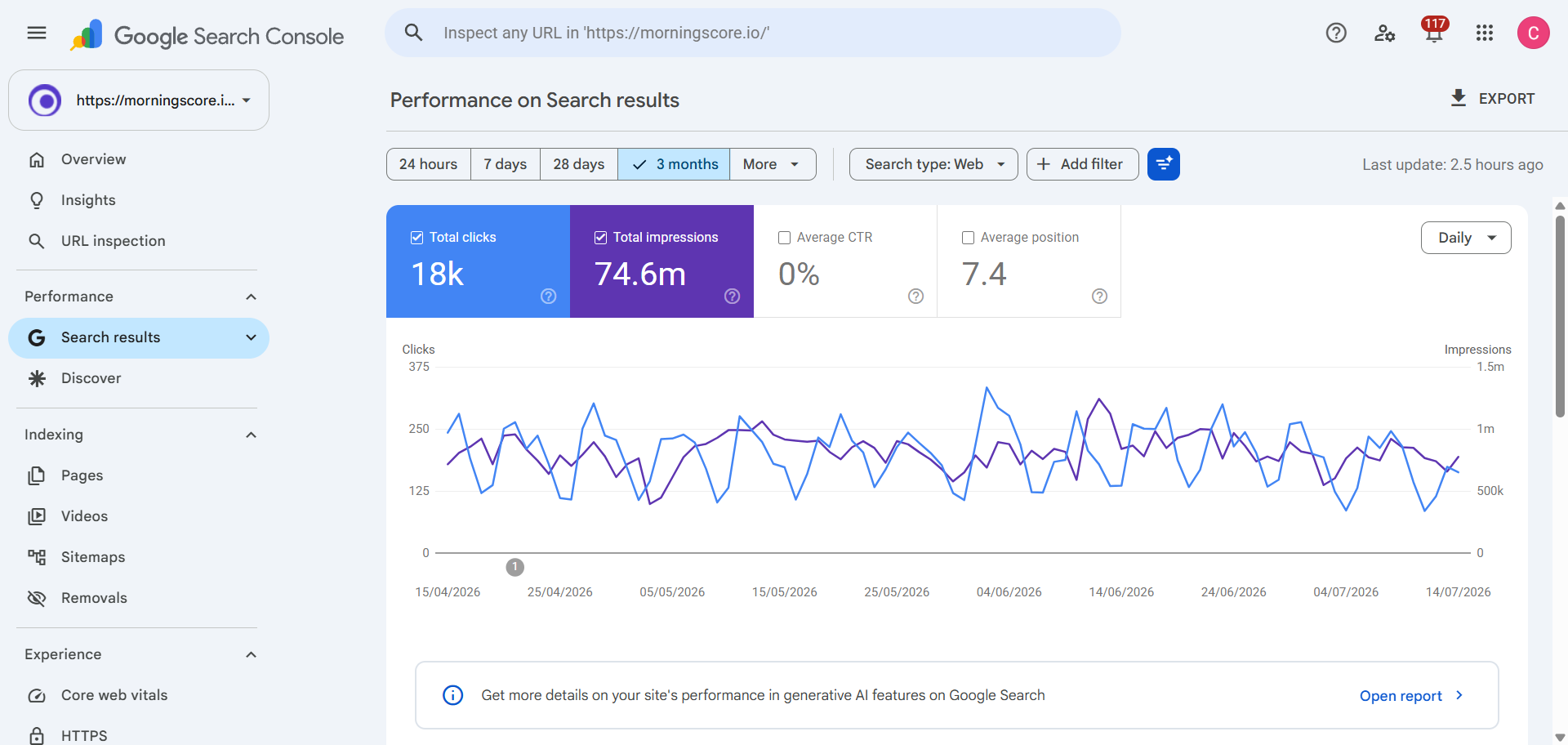
Is your website’s report card and diagnostic tool rolled into one. It shows exactly which pages are indexed, how many impressions and clicks each page gets, which queries are already sending you traffic, and any technical errors Google has flagged. Google has also added generative AI performance reports to Search Console, giving you visibility into impressions from AI Overviews and AI Mode. Check it monthly at minimum, weekly once you’re actively optimising.
Google Keyword Planner
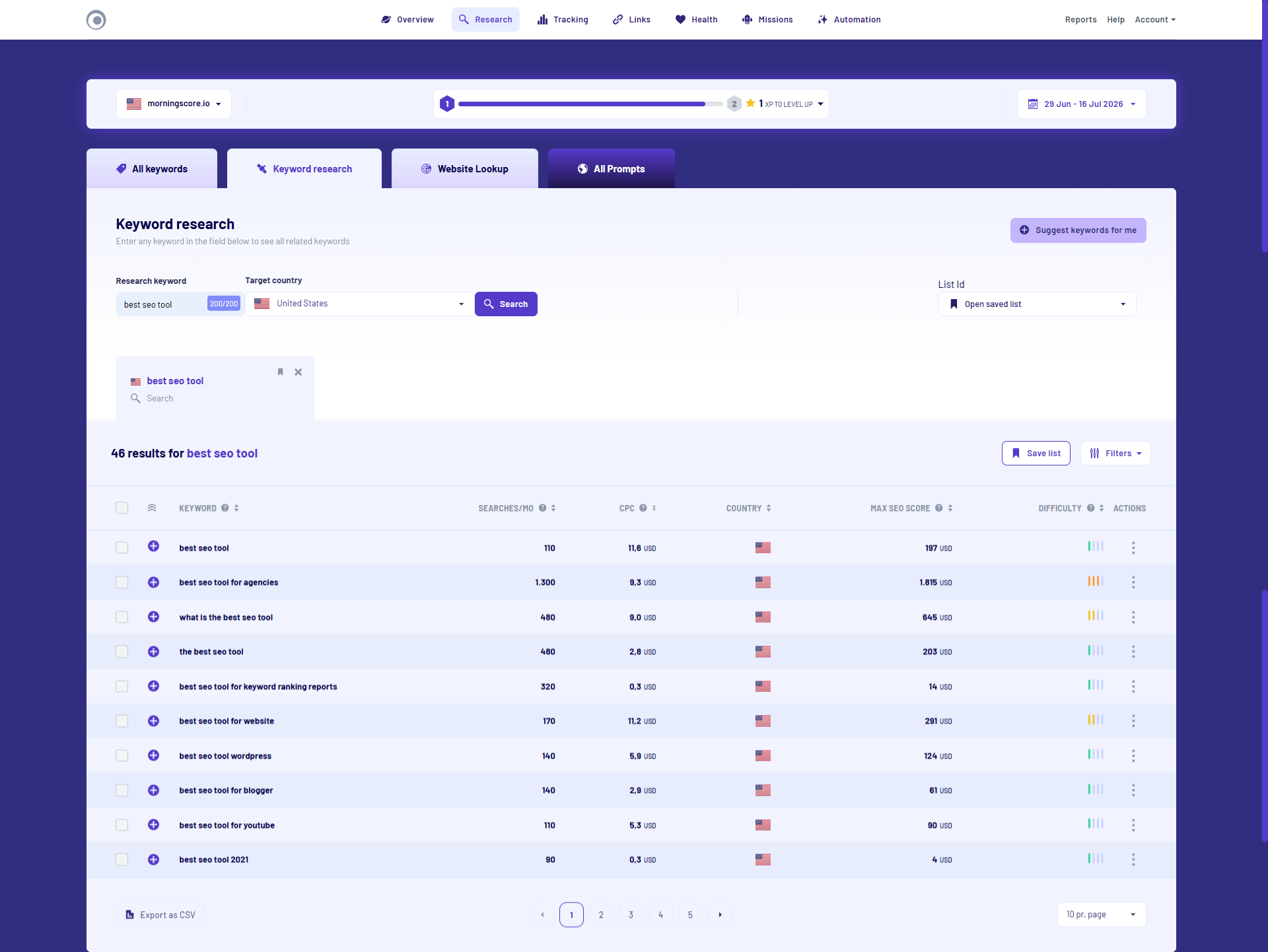
and free alternatives like Keyword Surfer or Ubersuggest’s free tier help you validate whether people actually search “fridge” or “refrigerator,” “HVAC repair” or “AC repair near me,” before you build content around the wrong word. Guessing is expensive when it costs you months of wasted content. Or you can use Morningscore’s keyword research tool.
Screaming Frog
It has a free crawler (up to 500 URLs) that scans your site for technical gremlins hiding under the hood: broken links, missing title tags, duplicate meta descriptions, redirect chains, and more. Run it quarterly, or immediately after any big site change.
Bing Webmaster Tools
Call it Search Console’s underrated cousin. Bing’s market share is smaller, but its users convert well, and setup takes ten minutes. Bing’s Webmaster Guidelines also emphasise semantic structure, accurate structured data, and entity consistency – good corroborating guidance that aligns with what Google recommends. And now it comes with some good AI visibility data.
And if raw spreadsheets and dashboards make your eyes glaze over, SEO tools like Morningscore take a different approach: they gamify SEO into scored missions, tracked rankings, and prioritised action items. Morningscore was founded in Odense, Denmark in 2018 and now serves 1,000+ customers across 40 countries – built specifically to make SEO manageable for owners doing it themselves. For solo owners managing DIY SEO for small business alongside everything else, that kind of structure is often the difference between consistent progress and SEO that quietly stalls after week two.
DIY SEO Keyword Research Without an Agency
Keyword research is really just structured empathy: figuring out exactly how your future customers talk about the problem you solve, in their words, not your industry jargon.
Start with a brain dump
Write out every product, service, and customer question you can think of, without filtering yet. If you’re a bakery, that’s not just “custom cakes,” it’s “birthday cakes near me,” “gluten-free bakery,” “wedding cake tastings,” and “how far in advance to order a wedding cake.” Aim for 20 to 50 raw phrases before touching a tool.
Validate with data
Run your list through a free keyword tool to check monthly search volume and see related terms you hadn’t considered. You’re looking for a sweet spot: enough people searching to matter, but not so competitive that you’re fighting national chains for page one.
Group by intent
Some searches are informational (“how much does a wedding cake cost”), some are navigational (“bakery name plus city”), and some are transactional (“order custom cake online”). Map each keyword to the type of page that should target it, blog posts for informational queries, optimised service or product pages for transactional ones.
Go conversational for the AI era
Voice assistants and chat tools respond to natural phrasing, not clipped keyword fragments. Instead of “roof repair,” think “how to fix a leaking shingle roof in rainy climates.” These longer, question-style phrases often have less competition and match how people actually talk to Siri, Alexa, or ChatGPT.
Finally, place your keywords naturally in titles, meta descriptions, headers, URLs, and the first hundred words of your content, never stuffed in, just present where they genuinely belong.
On-Page and Technical DIY SEO Basics
This is the unglamorous plumbing of SEO. Nobody brags about their internal linking structure at a dinner party, but skip this stuff and it’s like renovating a beautiful house with no working pipes underneath.
Title tags and meta descriptions
They are your storefront sign in the search results. Every page needs a unique title (under 60 characters) that includes your primary keyword, and a meta description (under 155 characters) that makes someone want to click. Duplicate or missing tags across pages confuse both users and search engines.
Header structure (H1, H2, H3)
It organises your content logically, one H1 per page, H2s for major sections, H3s for subsections. Search engines and AI tools use your header hierarchy to understand what your page is actually about.
Content quality still rules everything
If your page promises to answer “how to remove a wine stain from carpet,” it needs to actually and clearly answer that, not dance around it while plugging your product three times. Google’s helpful content guidance is clear: people-first content with original value is what earns rankings. Thin content gets ignored by algorithms and humans alike. Successful DIY SEO for small business depends on being genuinely helpful.
Internal linking
Is used to connect your pages into a coherent web rather than a pile of disconnected leaflets. Link from your blog posts to relevant service pages, and vice versa. This spreads authority around your site and keeps visitors moving instead of bouncing after one page.
Site speed and mobile-friendliness
They are baseline requirements now, not bonus points. Use Google’s PageSpeed Insights (free) to check load times, and test your site on an actual phone, not just your desktop browser at 150% zoom. Slow, clunky mobile pages lose both rankings and customers.
HTTPS security
This should be standard by now; if your site still runs on plain HTTP, that’s an easy, urgent fix.
None of this is thrilling. But it’s the difference between a house with a solid foundation and one that looks nice until the first storm.
Local SEO and Google Business Profile Mastery
If you’re a local business, this section alone can outperform everything else on this list combined.
Complete and maintain your Google Business Profile obsessively
List every product and service individually rather than lumping them together, add photos regularly, and post updates (offers, events, seasonal notes) at least weekly. Profiles that go quiet lose visibility while more active competitors quietly climb past them in the local pack.
Match your GBP to your website exactly. If a service appears on your site but not on your profile (or vice versa), you create a mismatch that can actively hurt your local rankings. A practical example: a plumber who lists “boiler installation” on their website but omits it from their GBP may rank well organically but disappear entirely from local map results for that specific service.
It’s also worth adding structured data markup to your website using Schema.org vocabulary – the standard maintained by Google, Microsoft, Yahoo, and Yandex. A simple LocalBusiness schema block reinforces your name, address, phone number, and opening hours in a machine-readable format, making it easier for both search engines and AI tools to understand your entity correctly.
Build a real review engine, not a one-time push
Ask every customer for a review, not just the happy ones. A healthy mix of ratings (with thoughtful responses to the occasional negative one) reads as more authentic than a suspiciously perfect five-star wall. Make it frictionless: a QR code on the receipt, a link in the follow-up email, or a gentle in-person ask. Google treats consistent review velocity as a genuine engagement signal.
Nail your citations
Your business name, address, and phone number (NAP) need to be identical across every directory: Yelp, Bing Places, Apple Maps, industry-specific directories, and your own website footer. Inconsistencies quietly erode trust signals over time.
Play to the local advantage
Winning a five-to-ten-mile radius against local competitors is dramatically more achievable than chasing national rankings. Small owners can spot a fix on Monday and have it live Tuesday, while bigger competitors move slowly. This agility is a core strength of DIY SEO for small business.
Content That Builds E-E-A-T and Earns Backlinks
E-E-A-T stands for experience, expertise, authoritativeness, and trustworthiness. This is the lens search engines use to judge whether your content deserves to rank, especially in “your money or your life” categories like health, finance, or legal. It’s worth noting that Google has clarified that E-E-A-T is not a direct ranking factor in itself, but it shapes the kind of content that tends to earn trust and links over time.
Show real experience
Write from what you’ve personally done, not what you’ve read elsewhere and rephrased. A plumber writing about “why your pipes freeze” from fifteen years of actual service calls will outshine a generic AI-rewritten article every time. Karsten Madsen, Morningscore’s CEO and co-founder, has analysed 10,000+ websites over 15+ years in SEO – the kind of first-hand depth that’s hard to fake and easy to trust.
Build expertise visibly
Add author bios with real credentials, certifications, and photos. If you have licences, awards, or years of specific experience, say so clearly on relevant pages, not buried in an “About” page nobody visits.
Establish authoritativeness
Through backlinks, chasing quality over quantity relentlessly. One link from a chamber of commerce or local news outlet does more for your rankings than a dozen links from random low-quality blogs. Ways to earn these ethically: guest posts, collaborations with complementary local businesses, and responding to journalist queries through services like HARO or Qwoted.
Demonstrate trustworthiness through transparency
Clear contact information, visible pricing, and accurate information all signal to visitors that you’re the real deal. No budget can replace genuine transparency. Google’s people-first content guidance specifically calls out bylines, transparent authorship, and clarity about how content was created as trust markers worth getting right.
Never buy backlinks
It might feel like a shortcut, but link-selling networks sell the same links to dozens of other sites too, diluting their value and risking a penalty that can take months to recover from. Earn them the slow, real way instead.
Optimising for AI Search: GEO, AEO, and AIO Explained
Three new acronyms have crashed the SEO party, and while they can sound like alphabet soup, each one addresses a genuinely different way people now find information.
Generative Engine Optimization (GEO)
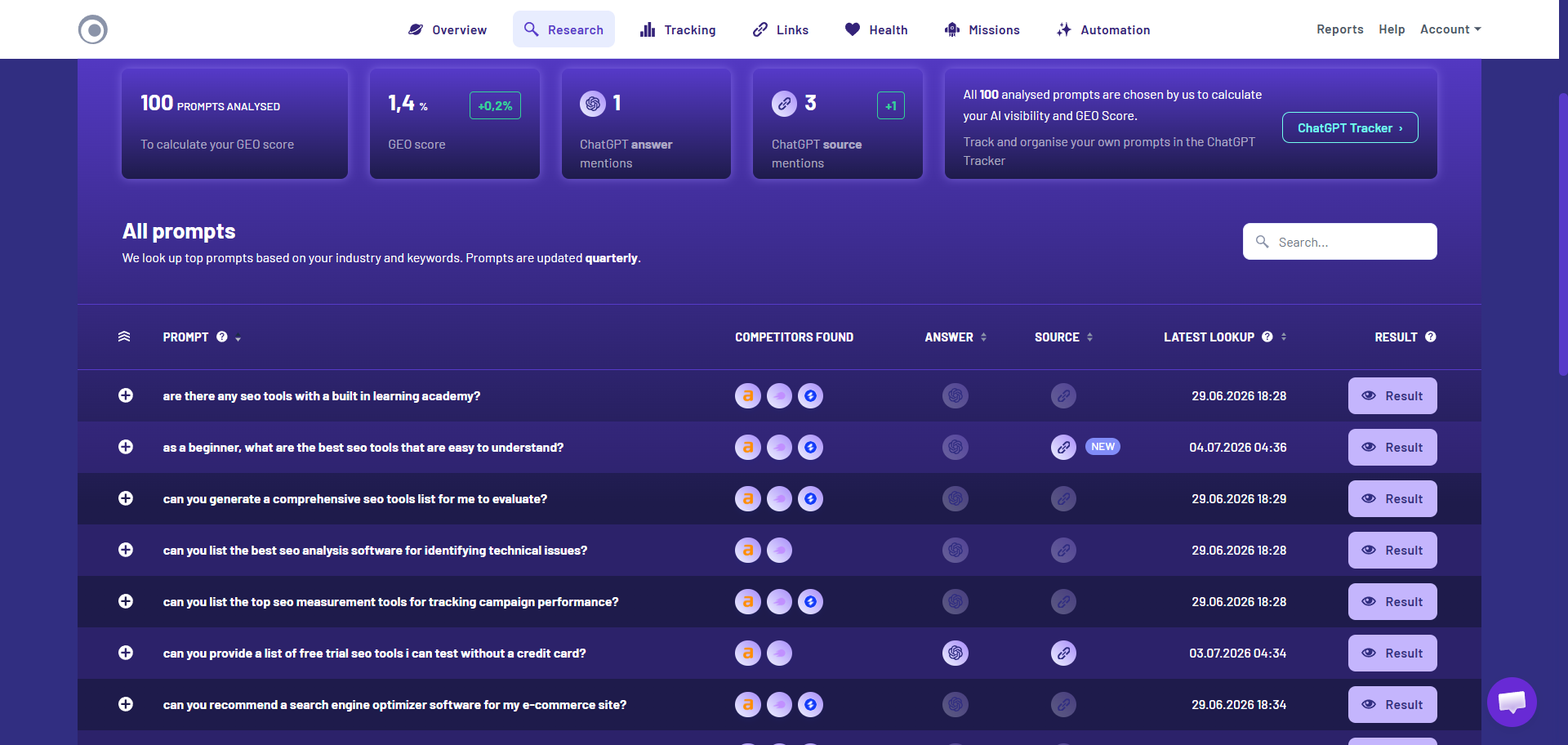
Focuses on how tools like ChatGPT, Gemini, Claude, and Perplexity interpret, summarise, and cite your content. To optimise for this, write clear, well-structured, fact-based content with real statistics and specific details. Generic fluff gets skipped over.
Answer Engine Optimization (AEO)
Targets voice assistants like Siri, Alexa, and Google Assistant. The format that wins here is tight: 50 to 60 word direct answers to specific, common questions, written in plain language right near the top of a relevant page.
Artificial Intelligence Optimization (AIO)
Is the umbrella term covering all of the above. The common thread across GEO, AEO, and AIO is refreshingly simple: write in plain language, skip the keyword stuffing, use short paragraphs, and answer questions completely. Machines are getting better at rewarding the kind of clear, helpful writing that humans prefer anyway. Google’s guidance on AI search explicitly advises against bot-focused optimisation tricks, and stresses unique first-hand content measured against real business goals.
A practical starting move: pick your five most commonly asked customer questions and write a dedicated, well-structured FAQ section answering each one. That single addition can feed traditional search, AI overviews, and voice assistants simultaneously.
When DIY SEO Hits a Wall (and What to Do)
Here’s the part most SEO guides skip: sometimes you do everything “right,” follow every checklist, and still don’t move much. This happens most often in competitive niches where you’re up against sites with decades of built-up authority.
More content usually isn’t the fix
What’s often actually missing is deeper trust signal density: visible certifications, real case studies, and a Google Business Profile that mirrors your website’s services exactly. A mismatch here can quietly knock you out of the local map pack entirely.
You Need Backlinks
Backlinks tend to be the real bottleneck in these tougher niches. The realistic path forward: reach out to similar, non-competing businesses for mutual mentions, pursue journalist platforms like HARO, and sponsor local events or school teams for natural, earned links.
Review volume compounds faster than most owners expect. A competitor with 150 reviews and a habit of responding to them will keep pulling ahead of a newer profile sitting at 40. Building a steady, ethical review habit is one of the few levers you fully control in DIY SEO for small business regardless of budget.
If you’ve genuinely covered the fundamentals and growth still feels stuck, it may be time to bring in focused, specific help, not a vague monthly retainer, but a scoped project where success is measurable.
Tracking Progress: Free Analytics and Reporting
You can’t improve what you don’t measure, and thankfully the tools that matter most here cost nothing.
Google Search Console is your primary dashboard. Check which pages are actually visible in search, how many clicks each page earns, and any technical errors Google has flagged. Set a recurring monthly review, and don’t panic over week-to-week fluctuations. Google has recently added AI Overview and AI Mode impression data directly inside Search Console, so you can now see whether your content is being picked up in generative results too.
Bing Webmaster Tools mirrors Search Console for Bing’s smaller audience, worth the ten minutes to set up and check occasionally.
Beyond raw rankings, watch behavioural metrics: session duration and bounce rate tell you whether people who land on your site actually stick around, a sign your content matches search intent.
Most importantly, track conversions: contact form submissions, phone calls, or newsletter signups. A page that ranks beautifully but converts nobody is a vanity metric. Tie every effort in your DIY SEO for small business strategy back to real business goals.
Set realistic expectations on timeline. It’s genuinely normal to publish something new and see minimal movement for three to six months. That’s not failure, that’s just how search engines build trust.
DIY SEO Cost Breakdown vs Hiring Help
DIY SEO for small business doesn’t cost much cash, but it absolutely costs your time, and your time has real value.
Doing it yourself: mostly free tools, but expect to invest several hours weekly, more heavily in the first few months while you set up profiles and fix technical issues, then tapering to maintenance mode.
A gamified SaaS tool like Morningscore sits in an accessible range, from $69 to $299 per month. It covers 167 countries, integrates with Google Search Console, WordPress, and Shopify, and is designed from the ground up for owners doing their own SEO. It positions itself as the middle ground between fully manual DIY and an expensive agency retainer.
An independent SEO specialist typically runs from $75 to $300 per hour, usually on a three-month minimum engagement. This is a reasonable option if you want expert eyes on your strategy without full agency overhead.
A full-service agency typically start at $3,500+ per month, with a six-month minimum commitment recommended. This is appropriate once your business has outgrown the DIY stage or you simply don’t have the bandwidth anymore.
Compare all of this against paid search ads, which stop producing results the instant you stop paying. SEO’s gains, once earned, tend to stick around and compound.
30-Day DIY SEO Action Plan
Week 1, Foundation
Claim and fully complete your Google Business Profile. Set up Google Search Console and verify your site. Run a free Screaming Frog crawl and fix the most glaring technical errors.
Week 2, Research
Brain-dump keyword ideas based on real customer language. Validate volume with a free tool. Group keywords by intent and map each to a page. Check your NAP consistency across major directories.
Week 3, Optimise and create
Update titles, meta descriptions, and headers on your five highest-priority pages. Add or tighten internal links. Write and publish one original piece of content. This is a big step in DIY SEO for small business success.
Week 4, Build and measure
Launch a simple review-request habit for every customer. Reach out to two or three potential backlink partners. Set a recurring monthly reminder to review your Search Console data and track what’s actually moving.
Repeat this cycle monthly, layering in new keywords. SEO rewards consistency far more than intensity. Small, steady effort every month beats one exhausting weekend.
Frequently Asked Questions
Can I really do SEO myself without any experience?
Yes, for most companies the fundamentals of DIY SEO for small business are learnable in a weekend and don’t require technical expertise. Competitive or YMYL niches like healthcare are harder, but the basics still form your foundation.
How long does DIY SEO take to show results?
Typically three to six months for meaningful movement, and up to twelve months for competitive keywords. Search engines build trust in new content gradually, so early silence isn’t a sign of failure.
What’s the single highest-impact thing I can do for free?
For local businesses, a fully completed and regularly updated Google Business Profile, paired with a steady stream of customer reviews, usually delivers the fastest visible impact.
Do I need to pay for tools like Ahrefs or Semrush to get started?
No. Google Search Console, Google Business Profile, and Screaming Frog’s free tier cover the essentials. Budget-friendly tools like Morningscore are a helpful middle step when managing DIY SEO for small business goals.
What is GEO, AEO, and AIO, and do I actually need to worry about them?
They’re the SEO of the AI search era. You don’t need a separate strategy, just write clear, direct, well-structured answers to common questions, and you’re covering all three at once.
Why is my competitor outranking me even though my website looks better?
Rankings depend on more than design: review count, backlink quality, and Google Business Profile completeness usually matter more than visual polish. A well-optimised, less flashy site often beats a beautiful but thin one.
Should I ever pay for backlinks?
No. Purchased links violate search engine guidelines and can trigger penalties. Earn links instead through local partnerships, sponsorships, and genuinely useful content.
When should I stop doing DIY SEO and hire help?
When you’ve consistently covered the fundamentals for six or more months and growth has plateaued, especially in a competitive niche. Or if you want to scale more quickly than your time allows.
To the moon! 🚀