
 Deutsch
 Dansk
Dansk Svenska
 Nederlands
 Español
 Lietuvos
If you’re a business owner shopping for the best SEO software for small businesses in 2026, you’ve probably noticed the pricing pages are designed to confuse you. Every tool claims to be “all-in-one,” every plan has an asterisk, and half the reviews online are written by affiliates who’ve never opened the dashboard. This guide skips that. Real prices, real feature limits, real tradeoffs, so you can pick a tool once and move on with your life.
TL;DR
If you just want the short version:
-
Best overall for small business: Morningscore ($69/mo) – gamified, built for teams without SEO expertise
-
Best budget option under $50/mo: Moz Pro Starter ($49/mo, more limited feature set)
-
Best for enterprise-level data depth: Ahrefs ($129/mo Lite)
-
Best free stack: Google Search Console, GA4, Screaming Frog free tier
How we tested the best SEO software for small businesses
We weighted price transparency, setup time, learning curve, ranking accuracy, and support quality. Here’s the thing most SEO software reviews get wrong: they benchmark every tool like it’s being bought by an in-house SEO team with three years of experience. That’s not who’s actually buying this stuff. Finding the best SEO software for small businesses means looking at tools from the perspective of an owner, not an agency specialist.
Most small business buyers are 1-3 person marketing teams with no dedicated SEO hire. Usually it’s the founder, or a generalist marketer wearing five hats, trying to figure out why their site isn’t ranking between answering support tickets and running ads. For that buyer, ease-of-use isn’t a nice-to-have, it’s the difference between a tool getting used daily or becoming a $130/mo line item nobody opens after week two. As Google’s SEO Starter Guide puts it, good SEO starts with content that is well organised and easy to read – not with the most powerful toolset you can afford.
Comparison Table
Reviews of the best SEO tools for small businesses
Morningscore – Best SEO software for small businesses with no in-house expertise
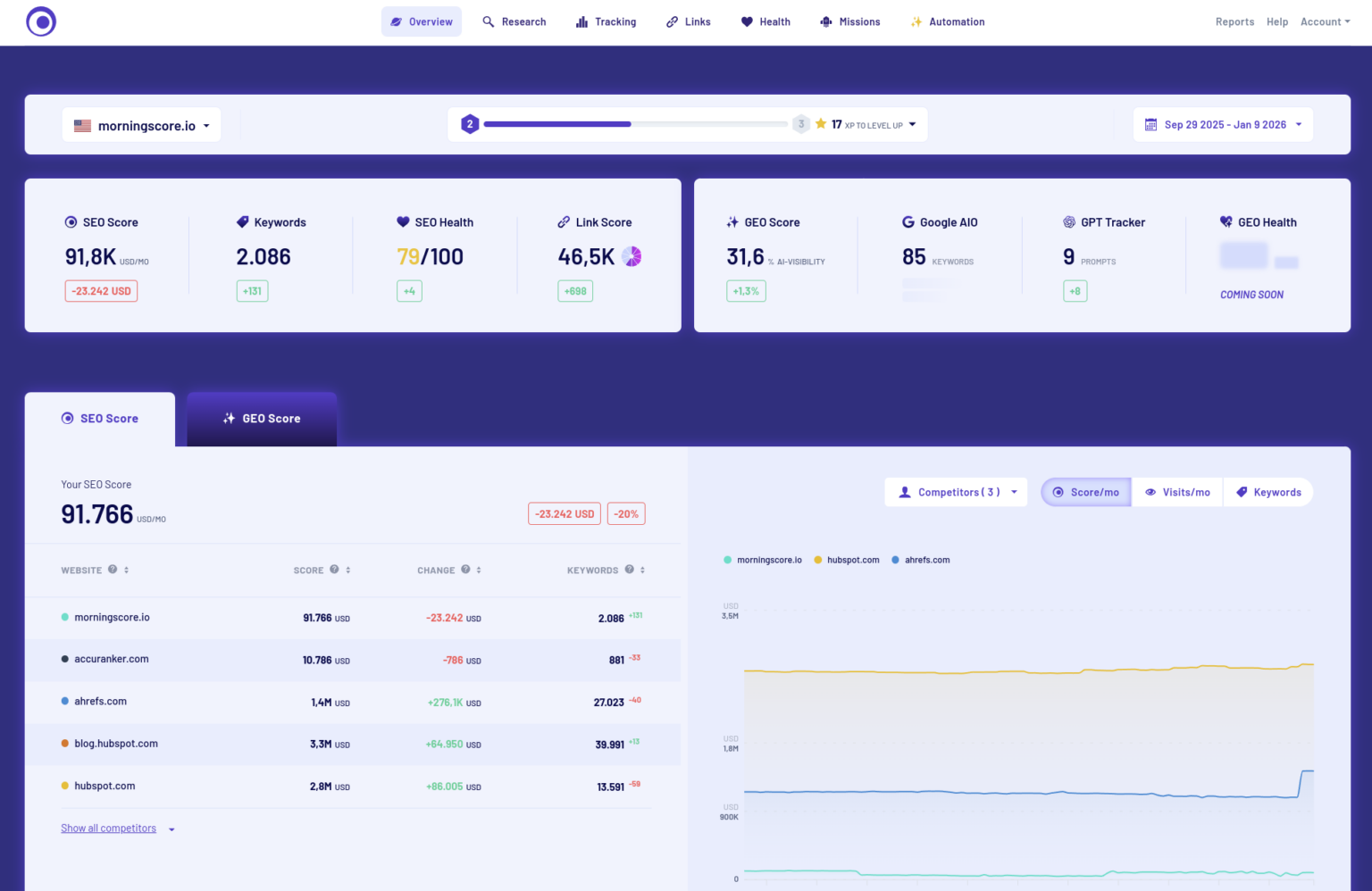
Morningscore is a Danish SEO tool founded in 2018 and built by Karsten Madsen, who also co-founded the digital agency Morningtrain back in 2010. That background – building tools for clients who aren’t SEO specialists – shows up clearly in the product. It turns SEO into something closer to a game than a spreadsheet. You get scores, missions, and a dashboard that covers keyword tracking, backlinks, and site health in one place, with no features locked behind add-ons on any plan tier.
AI visibility tracking, GEO Score, Google AI Overviews tracking, and an AI prompt tracker are standard on every plan including the $69/mo Lite tier, not an upsell. Competitors like SE Ranking charge $89/mo on top of their base price for comparable functionality, which makes Morningscore’s entry price look even more competitive once you actually need that feature rather than a nice-to-have.
Real customers back this up. Danish food brand Nordthy nearly tripled their organic traffic and ranked for more than twice as many keywords after using Morningscore, highlighting the tool’s prioritisation system and weekly reporting as the practical difference-makers. Another customer, Servicepos, reported a 30% increase in leads and 65 keywords in Google’s top 10 within three months – specifically calling out how easy the tool was to manage without an SEO background.
Where it falls short: the raw keyword and backlink database is smaller than what Ahrefs or Semrush maintains, since those tools built their entire reputation on data depth. And it’s not designed for agencies juggling 50+ client accounts, that’s a different product problem entirely.
Pricing runs from $69/mo on the Lite plan (100 keywords, 3 websites, 2 users) up to $299/mo on Premium (5,000 keywords, 100 websites).
Skip it if: you’re an agency running enterprise-scale data volume or need API access built for high-frequency, large-batch pulls. Morningscore includes full API on every plan, but it’s sized for a small team’s workflow, not for hammering it with heavy automated queries all day.
Ahrefs – Best for Deep Backlink and Competitor Data
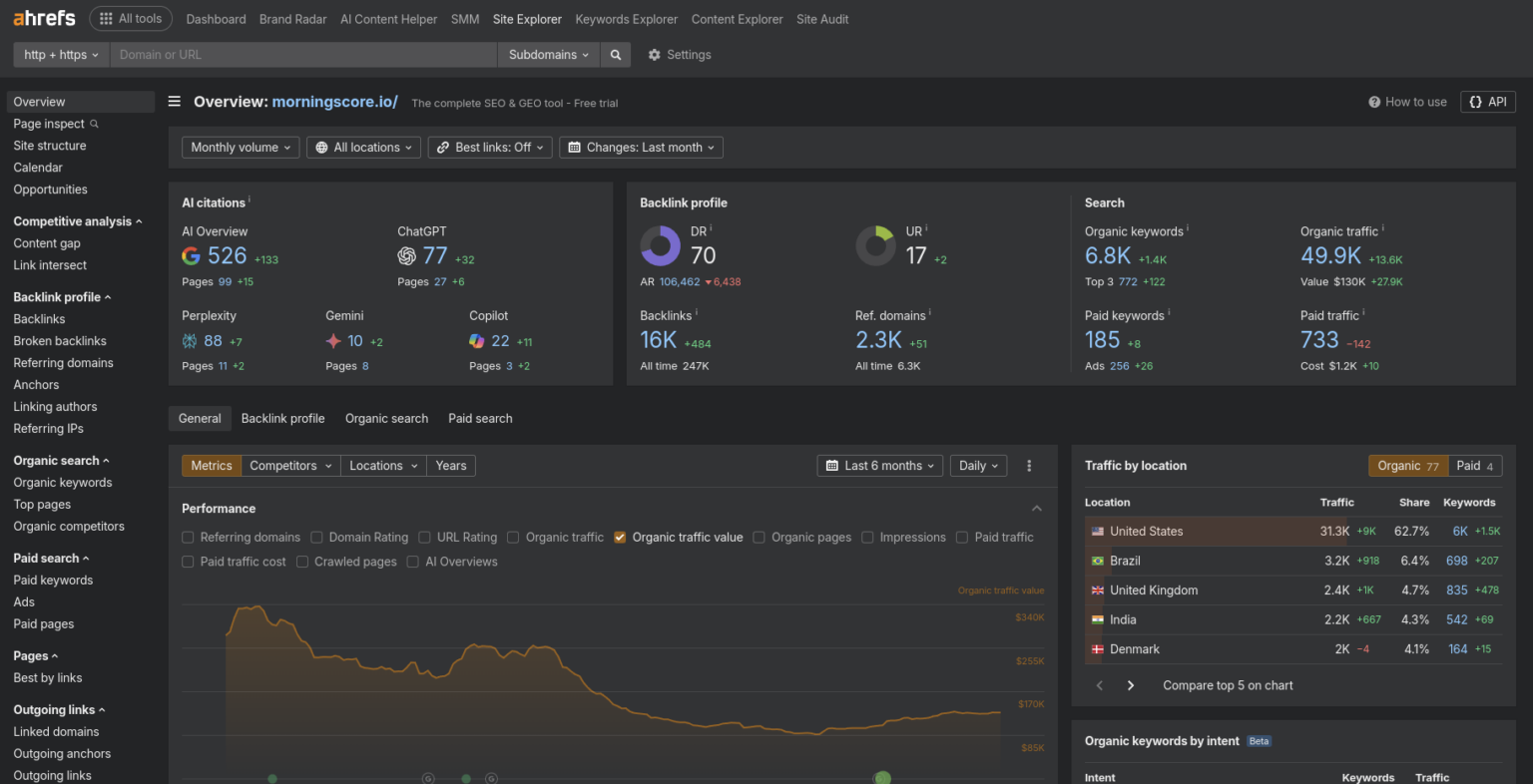
Ahrefs built the industry’s most respected backlink index, full stop. If you need to reverse-engineer why a competitor outranks you or run a serious technical site audit, the crawler here is best-in-class.
The tradeoffs are real though: steep learning curve, no free trial (you’re either paying or using the limited free Webmaster Tools), and the entry plan only gives you a single seat.
Pricing starts at $129/mo for Lite, scaling up to $449/mo for Advanced.
Skip it if: you’re a solo owner who just needs rank tracking, not deep research. You’ll pay for horsepower you’ll never use.
Semrush – Best for All-in-One Marketing Suites
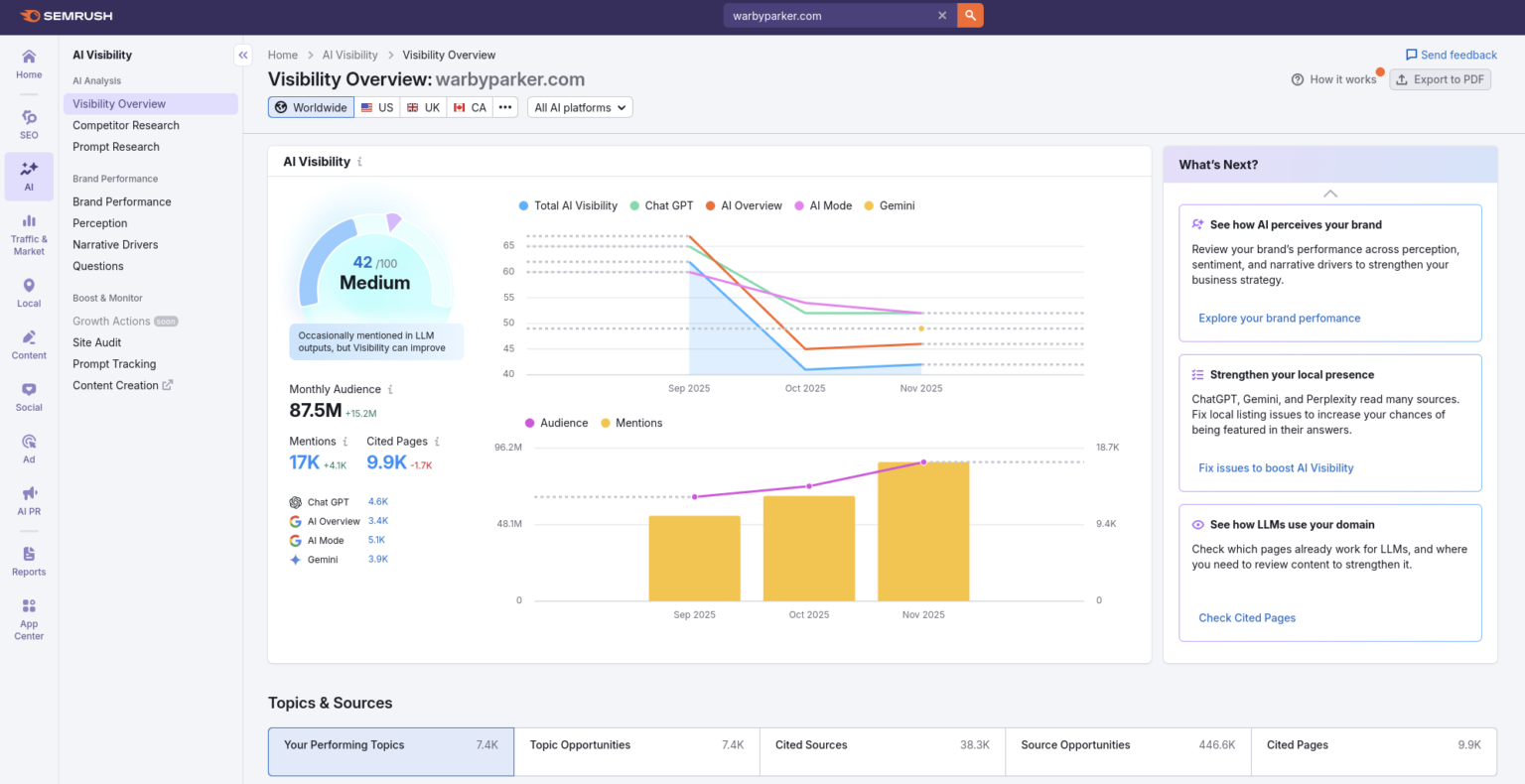
Semrush isn’t really an SEO tool anymore, it’s a marketing suite that happens to include SEO. You get PPC, content, social, and competitive research bundled together, which is genuinely useful if you’re running a broader marketing operation.
The catch: it’s expensive, the add-ons stack up fast, and the interface can be overwhelming if you’re not already fluent in marketing tooling.
Pricing sits at $139.95/mo for SEO, climbing to $549/mo for Advanced.
Skip it if: you only need core SEO functionality, not a full marketing stack. Paying for PPC and social tools you’ll never touch is money down the drain.
SE Ranking – Best for Agencies on a Mid-Size Budget
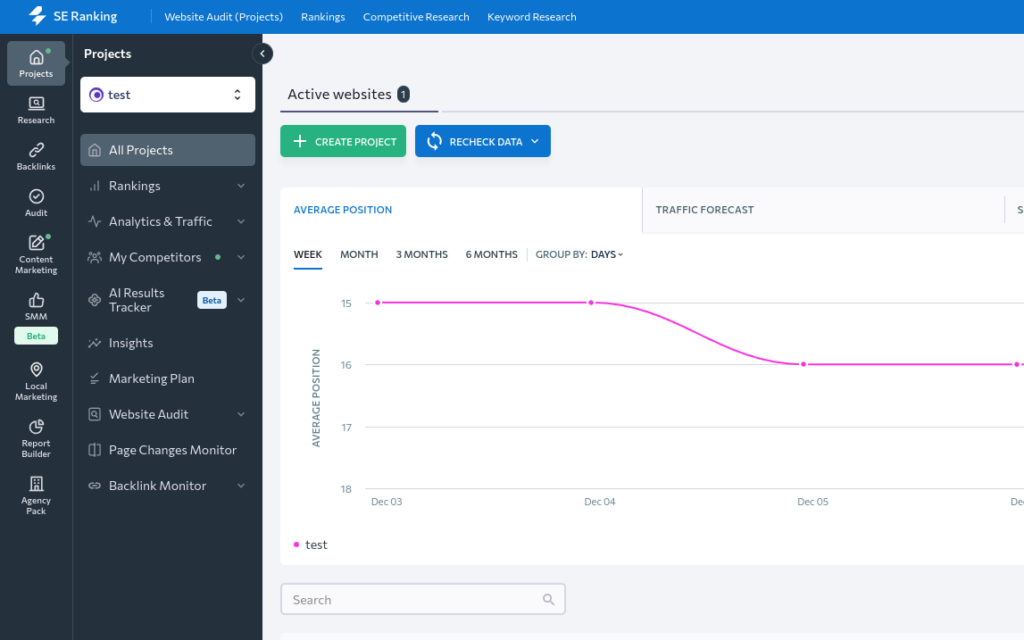
SE Ranking is built around white-label reporting and multi-client dashboards, which makes it a natural fit for agencies managing several accounts at once.
The downside is that a lot of useful functionality gets gated behind paid add-ons, the AI Search add-on alone runs an extra $89/mo. What looks like a $125/mo tool on paper can quietly become a $220/mo tool once you need the features that actually matter.
Pricing starts at $125/mo for the entry plan.
Skip it if: you run a single-site small business that doesn’t need agency-grade client management features.
Moz Pro – Best Budget Rank Tracker
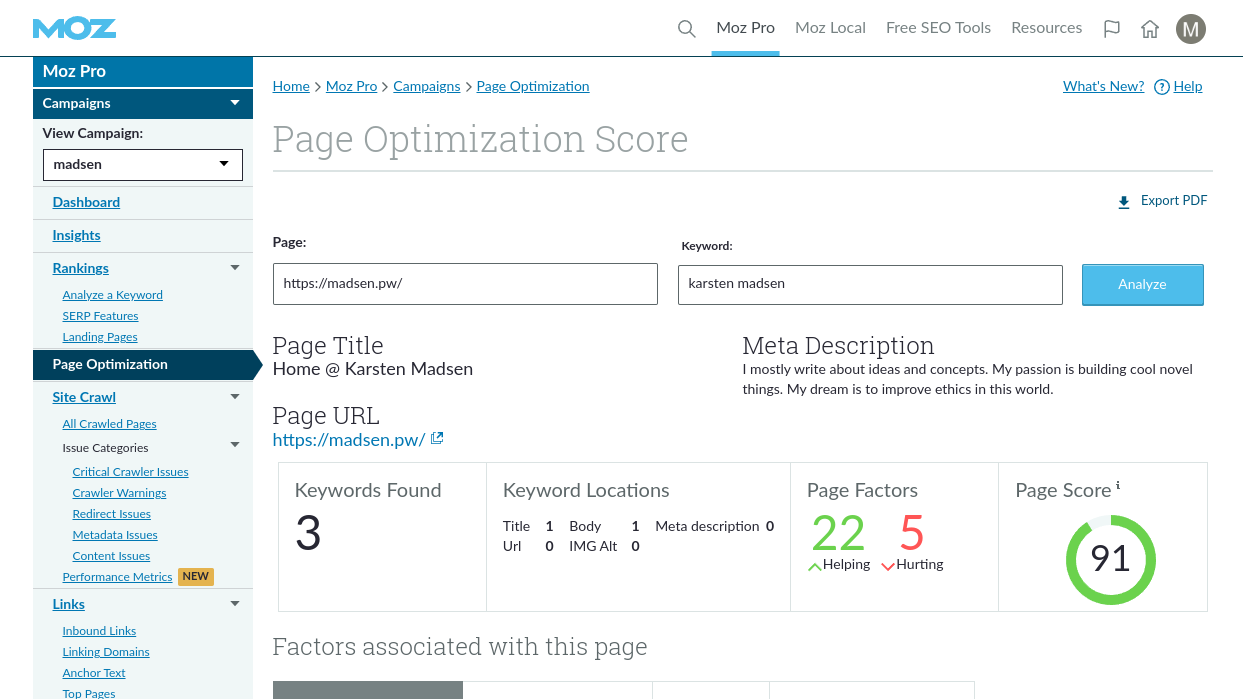
Moz Pro is the tool your marketing teacher probably mentioned back when domain authority was the metric everyone obsessed over. It still does the basics well: simple rank tracking, domain authority scoring, and the kind of brand trust that comes from being one of the oldest names in the space.
Where it falls short: What it doesn’t do is keep pace on advanced features. The backlink index is noticeably smaller than Ahrefs, and if you’re looking for deep content tools or competitor gap analysis, you’ll hit a ceiling fast.
Pricing runs $49/mo for Starter up to $299/mo for the Large plan.
Skip it if: you need competitor gap analysis or built-in content tools. Moz Pro is a rank tracker first, everything else is secondary.
Mangools – Best for Solo Users and Simple Keyword Research
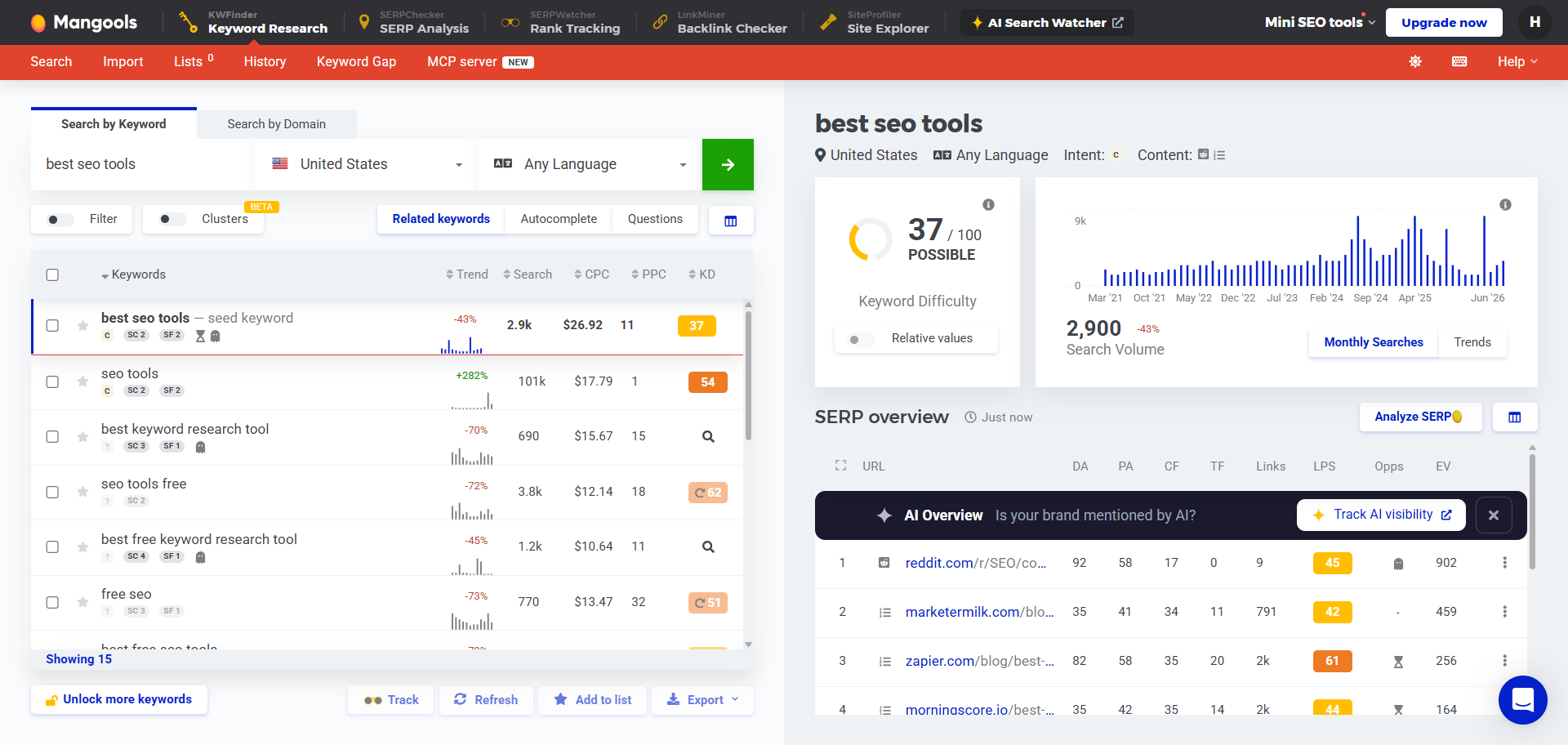
Mangools is the tool people recommend when someone says “I just want to check my keywords without a PhD in SEO.” The interface is clean, and KWFinder (its keyword difficulty tool) is genuinely good at what it does. It’s the right call for a solo consultant or content creator who wants one affordable tool covering keyword research, SERP checking, and basic rank tracking without agency-level complexity.
Where it falls short: The limitation is depth. Site audits and backlink analysis are thin compared to the bigger players, so if your SEO needs grow past basic keyword research, you’ll outgrow it.
Pricing starts around $30.50/mo.
Skip it if: your team needs full technical SEO audits. Mangools wasn’t built for that job.
Ubersuggest – Best for Very Light, Occasional Use
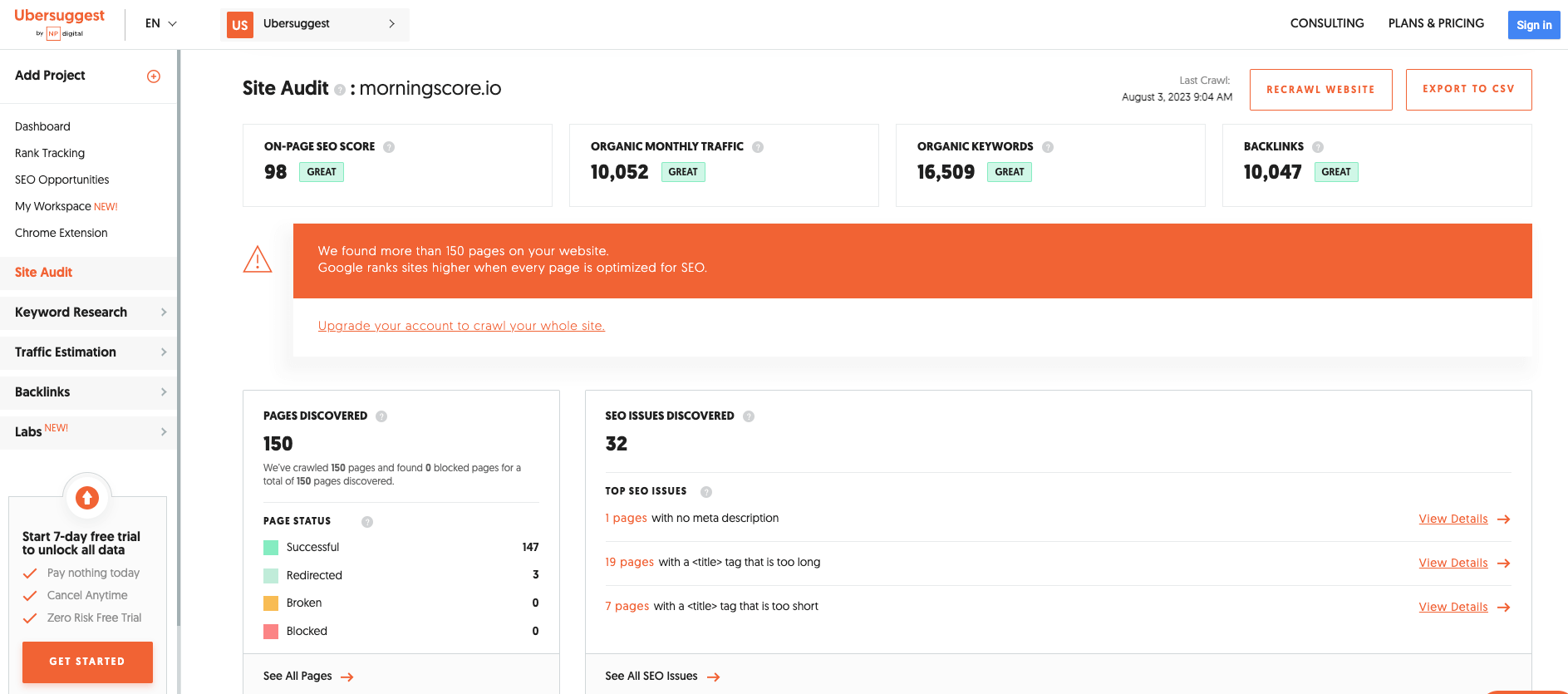
Ubersuggest is the cheapest name on this list and it plays that role honestly. It’s decent for generating content ideas and getting a rough sense of keyword opportunities without much financial commitment. It’s a fine on-ramp if you’ve never used a paid SEO tool and want to see what keyword data even looks like before spending real money elsewhere.
Where it falls short: The tradeoff is accuracy and depth. The keyword database is smaller, and rank tracking reliability isn’t something you’d want to build a serious strategy around.
Pricing sits around $29/mo.
Skip it if: you’re tracking more than a handful of keywords seriously. This is a starter tool, not a long-term system.
Does the best SEO software for small businesses need AI tracking?
Traditional rank tracking tells you where you sit on Google. It doesn’t tell you whether ChatGPT, Perplexity, or Google’s AI Overviews are citing your site at all, and for a growing chunk of searches, that’s now the more important question.
Every major tool has bolted this on differently, and the pricing tells you a lot. Semrush has an AI Visibility toolkit, Ahrefs has Brand Radar, and SE Ranking gates it behind an AI Search add-on for an extra $89/mo on top of the $129/mo base plan, turning it into a $218/mo tool the moment you want the one feature everyone’s asking about.
Morningscore takes the opposite approach: GEO Score (AI visibility measurement), a Google AI Overviews tracker, and an AI prompt tracker are included in every plan, starting at $69/mo, no add-on, no upsell.
Here’s the honest take: if you’re not yet ranking consistently on regular Google search, AI visibility tracking is secondary – fix the fundamentals first. But since Morningscore includes it standard rather than as a paid tier, it’s a strong contender for the best SEO software for small businesses looking for future-proof features.
Comparison Table for AI Visibility
Free tools to use before buying the best SEO software for small businesses
Before you commit a dollar to any paid platform, there’s a free stack that covers real ground: Google Search Console, GA4, Ahrefs Webmaster Tools’ free tier, and Screaming Frog’s free tier (up to 500 URLs). If you’re a very small site or just starting out, this combination handles indexing, traffic, and basic technical audits without a subscription. Most people upgrade once they need the capabilities of the best SEO software for small businesses, such as historical data, competitor tracking, or automation.
How to Choose Based on Your Business Type
Your business model should decide the tool, not the other way around.
-
Local service business: needs city/state-level tracking. Morningscore, BrightLocal ($39/mo per location), and SE Ranking all handle this.
-
Ecommerce: needs product/category-level tracking and technical audit depth. Ahrefs and Semrush are built for that scale.
-
Content/SaaS: needs competitive benchmarking on a lean budget. Morningscore and Mangools fit here without overpaying for agency-grade infrastructure.
Common mistakes when picking the best SEO software for small businesses
A few patterns show up over and over:
-
Paying Ahrefs or Semrush prices ($129-$499/mo) for features a 1-3 person team will never touch.
-
Chasing rank tracking obsessively while ignoring technical SEO issues that are actually tanking performance. One Morningscore customer described a site audit as a “huge eye-opener” – dead links, missing meta descriptions, and duplicate H1s that had gone unnoticed in a one-person marketing team.
-
Ignoring the real time-cost of learning a complex tool instead of just picking a simpler one from day one. That “powerful” tool sitting unused because nobody has time to learn it is worse than a simpler choice when searching for the best SEO software for small businesses.
FAQ
Is Morningscore good for beginners with no SEO experience?
Yes, by design. It translates SEO health into a single 0-100 score and turns fixes into step-by-step “missions,” so you always know what to do next without needing to understand jargon like crawl budget or canonical tags first. That’s built for founders and generalist marketers, not trained SEOs, which is exactly who’s buying it.
What’s the best SEO software for small businesses on a tight budget?
Moz Pro Starter ($49/mo) is cheaper but narrower, mainly rank tracking and domain authority. Morningscore ($69/mo) bundles keyword tracking, backlinks, site health, and AI visibility in one plan with no add-ons. Ubersuggest ($29/mo) is cheapest overall, but its accuracy is the weakest of the three, so it’s cheap, not cheap-and-reliable.
Is Ahrefs or Semrush worth it for a small business?
Only if you actually need Ahrefs’ backlink depth or Semrush’s PPC/social/content bundle. Most small businesses with one site and no dedicated SEO hire won’t use that depth, and end up paying enterprise prices for a rank-tracking use case a $69/mo tool handles just as well.
Is SEO dead or evolving in 2026?
Evolving, not dead. What’s actually dying is old-school SEO tactics – keyword stuffing, spammy backlinks, writing for algorithms instead of people. Search traffic still drives billions in revenue globally, but AI answer engines and AI Overviews now sit in front of traditional results for a big chunk of queries, so the game has shifted from “rank #1” to “get cited, wherever the answer surfaces.” Ranking #1 on Google no longer guarantees visibility, some industry research puts your odds of also being cited in AI answers at around 30% even with a top ranking. Practically: keep doing technical SEO and content fundamentals, but stop treating blue-link rankings as the only scoreboard.
Can ChatGPT do SEO?
Partially. ChatGPT is genuinely useful for the writing side of SEO – meta descriptions, title tags, restructuring content for search intent, generating schema markup, and brainstorming keyword clusters. It’s weak or useless on the data side: it can’t crawl your site, can’t pull real keyword volume or difficulty scores, can’t track rankings, and can’t validate whether structured data is actually rendering correctly. Think of it as a content assistant, not a replacement for a dedicated SEO platform. Most workflows end up using both – ChatGPT for drafting and optimising copy, a tool like Ahrefs, Semrush, or Morningscore for the data and tracking layer.
Can I do my own SEO for my business?
Yes, especially at the small business scale. The basics – technical health checks, keyword research, on-page optimisation – don’t require an agency retainer, and DIY SEO tools built for non-specialists (Morningscore, Mangools) exist specifically so a founder or generalist marketer can run this without hiring a specialist. Where DIY gets harder is at scale: large ecommerce catalogs, complex technical migrations, or aggressive competitive markets tend to benefit from expert help. For most small businesses starting out, doing it yourself with the right tool is the realistic and cost-effective path.
Is SEO worth it for small businesses?
Yes, with a caveat on timeline. SEO for small businesses compounds, meaning the payoff isn’t immediate – expect to see meaningful traction over months, not weeks, which is a mismatch for businesses expecting ad-campaign-speed results. Where it pays off: steady, largely free traffic that keeps flowing once you rank, unlike paid ads which stop the moment you stop paying. Where it doesn’t pay off as cleanly: extremely low-competition niches with almost no search volume, or businesses that need customers this week, not this quarter. For most local and content-driven small businesses, it’s worth the investment.
How much should a small business pay for SEO?
For software specifically, a realistic range is $50-200/mo – that covers a capable all-in-one tool like Morningscore ($69/mo) up through mid-tier options like Ahrefs or SE Ranking ($129/mo) without stepping into enterprise or agency-tier pricing ($300-500/mo) that a 1-3 person team won’t use fully. If you’re also paying for services (an SEO consultant or agency on top of software), budgets vary widely, but the software line item itself rarely needs to exceed $150-200/mo for a small business unless you’re running ecommerce at scale or managing multiple client sites.
To the moon! 🚀