
 Deutsch
 Dansk
Dansk Svenska
 Nederlands
 Español
 Lietuvos
Most small business SEO failures aren’t tactical. They’re sequencing errors. Owners do the right things in the wrong order, or measure the wrong number, and then conclude “SEO doesn’t work for us.” It’s not that SEO failed. According to a 2025 BrightLocal survey of 778 US SMB owners, only 35% had a Google Business Profile set up, and 54% were handling all their marketing themselves – which gives you a sense of how many small business sites are missing basic foundations before any strategy even begins. BrightLocal SMB Marketing Report 2025
This isn’t another list of vague tips. It’s a diagnostic, built like a small business SEO checklist you can actually run against your own site. The mistakes small business owners make when using SEO tend to repeat across industries, size, and budget, so run through this list, find where you’re actually bleeding, and fix that first.
TL;DR
Most SEO failures aren’t a talent problem, they’re a sequencing problem. Owners publish content before fixing technical issues, chase keyword volume over buyer intent, abandon their Google Business Profile, and measure traffic instead of leads. Fix the order (technical, then content, then local, then measurement) and most of the damage undoes itself within a few months. The mistake almost nobody’s tracking yet: whether your business shows up at all in AI answers from ChatGPT, Perplexity, or Google AI Overviews.
Key Takeaways
- SEO mistakes compound in a specific order: technical issues first, content and keyword issues second, local and trust signals third, measurement last. Fix them out of order and you redo work later.
- Keyword volume without matching search intent produces traffic that never converts.
- A single robots.txt or sitemap error can quietly block Google from crawling your whole site, with no visible warning until traffic craters.
- An abandoned Google Business Profile hurts local rankings as much as a broken website does.
- Reporting traffic instead of qualified leads makes it impossible to tell if SEO is actually working.
- Not tracking visibility in AI Overviews and AI chat tools is the newest mistake on this list, and the one most competing advice still ignores.
The 60-Second Self-Check
Before you read another word, answer these five questions honestly:
- Has your Google Business Profile been updated in the last 30 days?
- Do you know how many backlinks your top competitor has, roughly? Morningscore’s competitor analysis tool will show you this in under a minute if you don’t.
- Is your website loading in under 3 seconds on mobile?
- Can you name the search intent behind your top 5 target keywords?
- Do you know how many leads (not visits) came from organic search last month?
If you answered “no” to two or more, you’re not failing at SEO. You’re flying blind. Everything below explains why, and what to do about each one. If you want the fast version, run your site through Morningscore’s free SEO checker first – it scores your site 0-100 and flags most of what’s covered here in a couple of minutes.
Strategic Mistakes That Waste Months, Not Minutes
Publishing content before fixing the foundation
Writing blog posts on a site with broken crawl paths, no indexing, or a five-second load time is like advertising a store that doesn’t have a working front door. Google has to be able to find, load, and understand your pages before content quality even matters. Google’s own SEO Starter Guide says pages need to be crawlable and understandable before anything else counts. Fix the technical layer first. Content second.
Choosing keywords by volume instead of intent
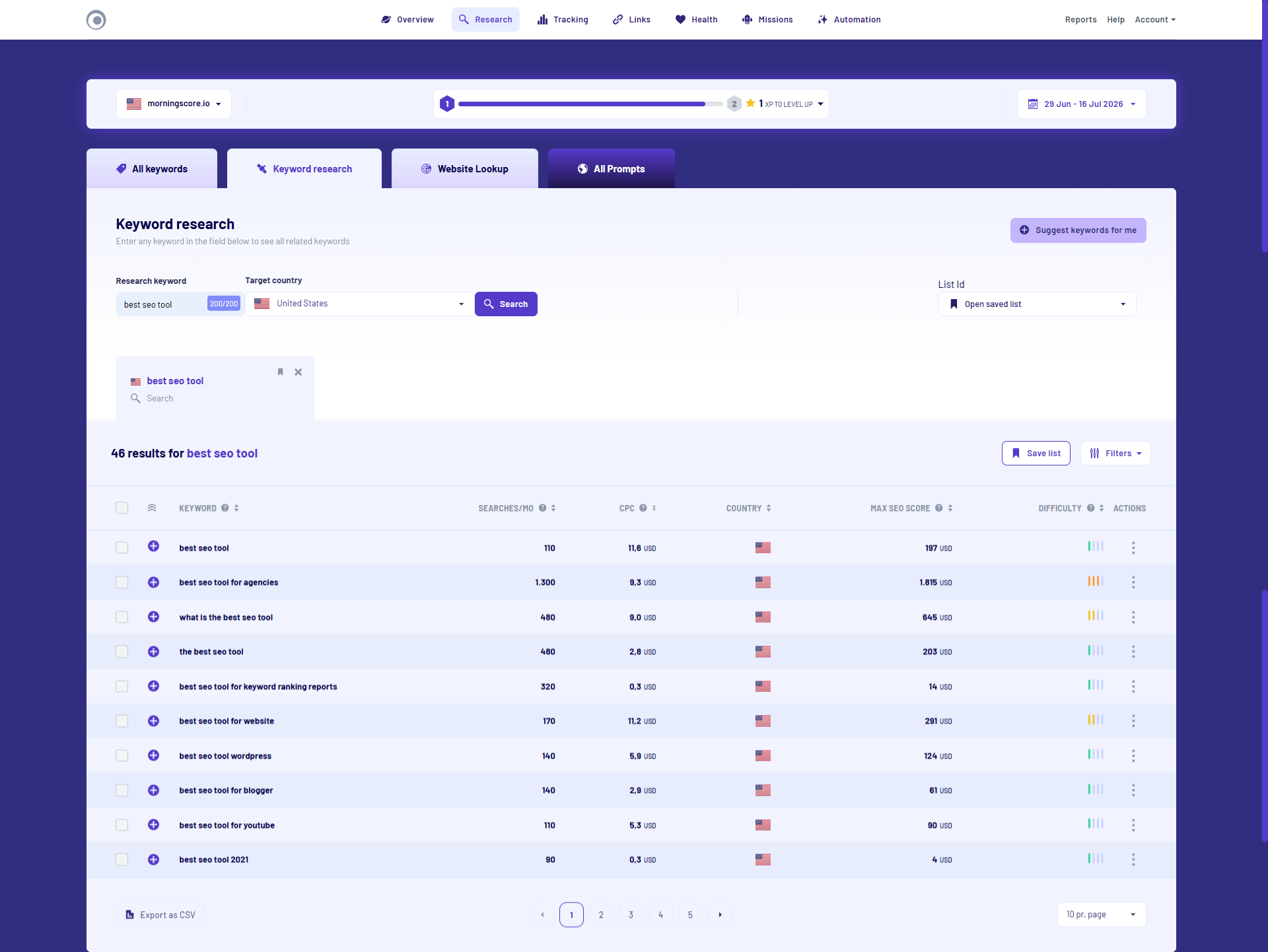
“SEO tips” gets more searches than “SEO audit checklist for small businesses,” but the second one converts. Owners chase big numbers on keyword tools and wonder why traffic doesn’t turn into customers. Volume tells you how many people search. It tells you nothing about whether they’re ready to buy, compare, or just browsing out of curiosity. The right SEO tools for small businesses will show you difficulty and traffic value side by side – which is the actual comparison that matters, not just search volume in isolation.
Treating SEO as a project instead of an operating system
SEO isn’t a website redesign you finish and move on from. Algorithms update, competitors publish new content, and your own site decays if nobody maintains it. The businesses that win treat SEO like they treat bookkeeping: an ongoing function, not a one-time deliverable. That’s easier to sustain with daily rank tracking and a running health score instead of a one-off audit you glance at once and forget.
Expecting page-one rankings in weeks
If someone promised you first-page rankings in a month, they were selling you something, not doing SEO. Google is explicit on this: “No one can guarantee a #1 ranking on Google,” and changes may take from hours to several months to appear in Search. Realistic timelines run 4 to 12 months depending on competition and domain history. Owners who expect instant results quit right before the compounding effect kicks in.
Hiring the cheapest option instead of the right-fit option
A $300/month “SEO package” that mass-produces generic blog posts across hundreds of clients isn’t a discount. It’s a slow leak of your budget with nothing to show at the end. Google also warns against providers promising special relationships with Google or priority submission – red flags worth knowing. Cheap SEO and effective SEO are rarely the same purchase.
Content and On-Page Mistakes
Publishing thin, disconnected content
A blog with 40 posts that don’t link to each other or build toward any topic isn’t a content strategy. It’s a pile of pages. Google rewards sites that demonstrate depth on a subject through connected, structured content – not scattered one-off articles. AI search tools are picking up on the same signals.
Keyword stuffing instead of matching intent
Cramming “plumber in [city]” into every sentence doesn’t help you rank anymore, and it makes your copy unreadable. Google’s spam policies explicitly classify unnatural keyword repetition as something that can lead to lower rankings or removal from search results. Write for the person searching, not the algorithm. The keyword belongs in the title, headers, and naturally in the body – not repeated like a chant.
Ignoring internal linking
Your service pages and your blog posts should talk to each other. If a reader lands on a blog post and there’s no path to the relevant service page, you’ve written marketing material with no destination. Internal links also tell search engines which pages matter most on your site. Google’s SEO Starter Guide specifically recommends using relevant internal links to help both visitors and crawlers navigate your content.
Writing generic meta descriptions and titles
“Welcome to [Business Name] – Your Trusted Partner” tells a searcher nothing and gives them no reason to click over a competitor’s result. Every title and description should state what the page is about and why it’s worth clicking, in plain language. Google recommends descriptive, useful titles and snippets as a basic SEO foundation – not an afterthought.
Scaling AI-generated content with zero editorial judgment
AI writing tools are fine for drafts. They’re a liability when an owner publishes them unedited, with no expertise, no fact-checking, and no real experience behind the claims. Google’s guidance on helpful content says trust is the most important E-E-A-T element, and recommends clear authorship, real sourcing, and disclosure of automation where readers would reasonably expect it. If nobody with real knowledge touched the page, it shows – to readers and to search engines.
Technical Mistakes Nobody Notices Until Traffic Drops
Robots.txt or sitemap errors blocking crawlers
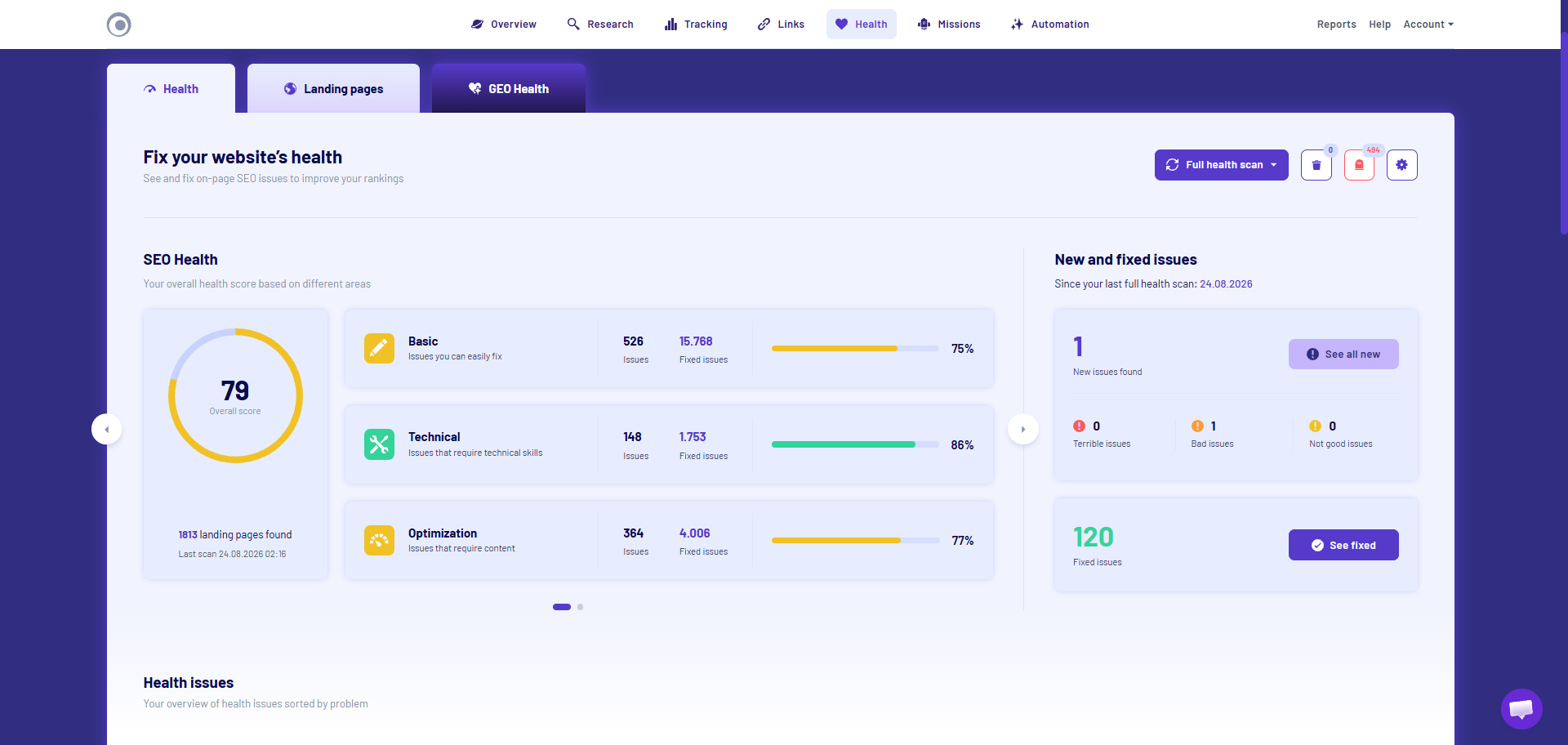
A single misconfigured line in your robots.txt file can quietly block Google from crawling your entire site. Nobody notices until traffic craters, because the site still looks fine to a human visitor. Check Search Console regularly, or run an automated site health scan that flags crawl and indexing issues before they cost you months of traffic. This is a five-minute check that prevents a months-long recovery.
Slow mobile load times from unoptimized images
Most small business sites are slow because nobody compressed the images before uploading them. A 4MB photo of the storefront doesn’t need to be that size on a webpage. Compress it, and your load time (and your rankings) improve without touching anything else. It’s one of the fastest wins on this list.
Broken links and orphan pages
Old blog posts pointing to pages that no longer exist, or pages with zero internal links pointing to them, both waste crawl budget and confuse visitors. Run a link audit quarterly. It’s boring maintenance, and it matters.
No schema markup
Schema is the structured data that tells search engines and AI tools exactly what your page is: a service, a review, a FAQ, an event. Without it, you’re relying on search engines to guess. Google recommends using the most specific LocalBusiness subtype, validating it with the Rich Results Test, and making sure it matches what’s visible on the page. That’s exactly the kind of clarity that gets pulled into rich results and AI-generated answers.
These technical issues are exactly what a site health audit is built to catch, and prioritize, so you’re not guessing which fix matters most.
Local and Trust Mistakes
Neglecting the Google Business Profile
For any business with a physical location or a service area, this profile often outperforms the website itself in local search. Owners set it up once and never touch it again. Google says local rankings are based on relevance, distance, and prominence – and that complete, accurate Business Profile information directly improves your eligibility. Update hours, post photos, respond to reviews. An abandoned profile signals an abandoned business.
Inconsistent business info across directories
If your address is “123 Main St.” on your website and “123 Main Street, Suite A” on Yelp, that inconsistency erodes the trust signal search engines use to confirm your business is legitimate and local. Google’s Business Profile guidelines are clear: use your real-world name, accurate address, and match details exactly across platforms. Keyword-stuffed business names and virtual offices aren’t permitted either. Match your name, address, and phone number exactly, everywhere.
Ignoring reviews as a ranking and trust signal
Reviews aren’t just social proof for customers. They’re a signal search engines weigh for local rankings, and increasingly a signal AI tools reference when summarising a business. No reviews, or worse, unanswered negative reviews, tells both humans and algorithms something is off.
The 2026 Mistake Almost Nobody’s Talking About: AI SEO
Here’s the one that’s going to matter more every month: not tracking whether AI tools like ChatGPT, Google AI Overviews, or Perplexity ever mention your business at all. Call it AI SEO for small business: the practice most owners haven’t started yet, mostly because nobody told them it was already a thing.
Traditional rank tracking answers “where do I show up in Google’s 10 blue links.” That question is shrinking in relevance. A growing share of searches now get answered directly by an AI summary, with no click to any website. If your business isn’t showing up as a source in those answers, you’re invisible in a channel that didn’t exist in the SEO playbooks most owners learned from. This isn’t a future problem. It’s already reshaping which businesses get found.
Google’s own guidance confirms that AI Overviews and AI Mode use the same foundational SEO practices as standard Search – crawlable content, internal links, good page experience, accurate structured data, and an up-to-date Business Profile. So the fixes in this article aren’t separate from AI visibility. They’re the same work.
This is measurable, not a guessing game. Morningscore’s AI Overviews Tracker checks daily whether your content shows up (and gets cited) inside Google’s AI Overviews for your target keywords, and rolls it into a GEO Score that tracks your visibility across AI search generally, not just Google. Most competing checklists on this topic still don’t mention any of this. Now you know, so start checking.

Measurement Mistakes
Reporting traffic instead of qualified leads
10,000 monthly visitors sounds impressive until you realise none of them are buying. Traffic is a vanity number unless you’re also tracking conversions, form fills, or calls that came from organic search. Google recommends measuring the business goal that actually matters, not just rankings or visits. Track the number that pays your bills.
Never connecting Google Search Console
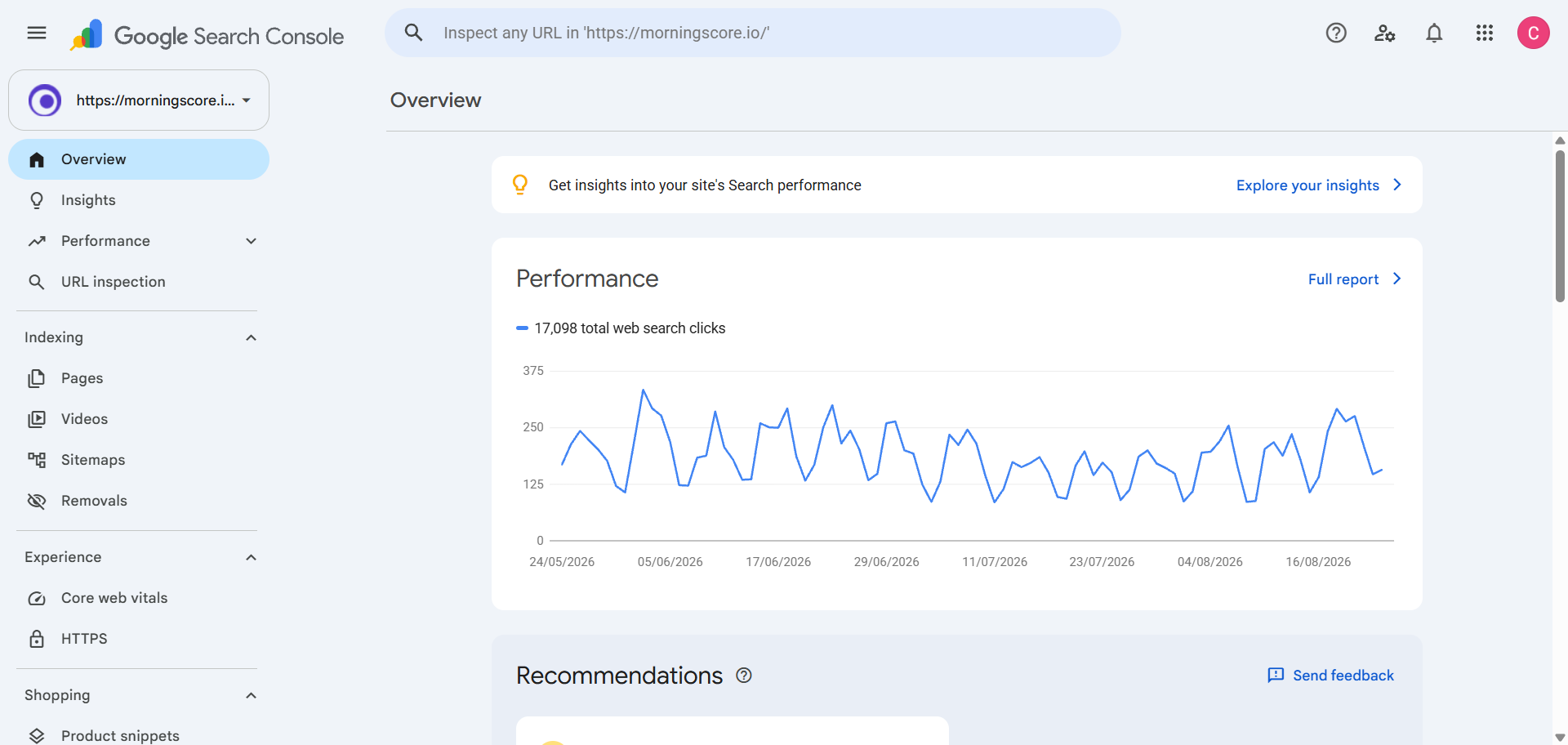
This is free, takes ten minutes to set up, and shows you exactly which queries bring people to your site, which pages have indexing errors, and where your click-through rate is embarrassingly low. Google explicitly recommends Search Console as the primary tool for understanding search performance – and AI-feature traffic is included in its standard Web reporting too. Owners who skip this are guessing at data that’s sitting there for free.
No baseline, so no way to prove SEO is working
If you don’t know what your traffic, rankings, and leads looked like before you started, you can’t prove anything improved. Screenshot your numbers on day one, or better, let a dashboard track your SEO Score, Health Score, and keyword positions automatically so the baseline exists whether you remembered to save it or not. Six months from now, you’ll want that comparison, and you won’t be able to recreate it after the fact.
A Simple 90-Day Fix Sequence
Don’t try to fix all of the above at once. Work in this order:
- Weeks 1-2: Technical audit. Fix crawl errors, broken links, page speed, and mobile issues.
- Weeks 3-6: Intent-matched content. Rewrite or create pages around what searchers actually need, not just what ranks by volume.
- Weeks 7-8: Internal linking pass. Connect blog content to service pages and vice versa.
- Weeks 9-10: Local signals. Update your Google Business Profile, fix directory inconsistencies, request reviews.
- Weeks 11-13: Measurement setup. Connect Search Console, define your baseline, and start tracking leads instead of just visits.
This order matters. Content published on a broken technical foundation, or local signals fixed before you can even measure impact, wastes effort you’ll have to redo later. If keeping track of what’s done and what’s next feels like its own job, an SEO task manager that turns audit results into a prioritised to-do list removes the “what do I even do first” problem entirely.
FAQ
What are the biggest mistakes small business owners make when using SEO?
The pattern is almost always the same: publishing content before fixing the technical foundation, choosing keywords by volume instead of intent, and abandoning the Google Business Profile after the initial setup. A 2024 survey by Service Direct of 272 SMB marketers found that technical on-page implementation was the leading SEO challenge, cited by 51% of respondents – which lines up with what we see in practice. If Google can’t crawl and index your pages properly, nothing else you do matters yet.
How long before SEO mistakes start hurting rankings?
Some, like a blocked robots.txt file, can tank visibility within days. Others, like thin content or missing schema, erode rankings gradually over months. Google notes that changes may take from hours to several months to appear in Search – the fix usually takes longer to show results than the mistake took to cause damage.
Can small business owners fix SEO mistakes themselves without hiring an agency?
Yes, for most of the issues on this list. Technical fixes, Google Business Profile updates, and content restructuring don’t require specialised expertise, just time and the right checklist. A free site audit will hand you that checklist instead of making you guess where to start. Complex technical migrations or large-scale link building are where outside help usually pays off.
Do AI search engines punish the same SEO mistakes as Google?
Mostly yes, with one addition. AI tools weigh clarity, structure, and demonstrated expertise even more heavily, because they’re extracting and summarising your content rather than just ranking a link. The same fixes that help traditional SEO (clear structure, real expertise, schema markup) also improve your odds of being cited in AI-generated answers. Tools that track AI Overview visibility directly are how you’d actually confirm this instead of just assuming it.
Should a small business focus on high-volume keywords?
Not necessarily. It is better to choose terms that match your customers’ buying intent and local area. A lower-volume, specific query often brings in actual customers rather than just curious browsers. Google’s SEO Starter Guide suggests writing for readers and answering their actual questions instead of chasing broad vanity terms.
Do you really need local SEO as a small business?
Yes, if your customers visit your physical location or you serve a specific geographic area. Complete and accurate business information helps Google match your profile to relevant nearby searches. Maintaining an active Google Business Profile is one of the most effective ways to boost your visibility without writing endless blog posts.
Does keyword stuffing help your pages rank faster?
No, forcing keywords into your text unnaturally actually hurts your readability and rankings. Unnatural repetition is explicitly against Google’s spam policies. Just use the exact words your customers use in prominent places like headers and titles, but keep the writing natural and helpful.
Are backlinks still important, and should you buy them?
Links are still useful for discovery and building authority, but quality matters much more than raw volume. Buying links violates Google’s guidelines and is one of the classic mistakes small business owners make when using SEO. Instead, check out a practical link building guide to learn how to earn links through legitimate local partnerships and resources.
What should a small business measure instead of traffic?
Track impressions, clicks, and queries using Google Search Console, and then connect those visits to real actions on your site. Focus on meaningful metrics like calls, form submissions, bookings, or purchases. High traffic only matters if it turns into qualified leads for your business.
Most of the mistakes small business owners make when using SEO come down to skipping a step, not lacking talent. Fix the sequence, and the results follow.
To the moon! 🚀