
 Deutsch
 Dansk
Dansk Svenska
 Nederlands
 Español
 Lietuvos
Semrush Pro costs $139.95 per month, which adds up to nearly $1,700 a year before you add extra users or API access. If you only use a fraction of the 50 features included in that subscription, you are paying a premium for tools you ignore. Finding a cheaper alternative to semrush means identifying the specific features you actually need, whether that is rank tracking, competitor analysis, or backlink data. This guide breaks down the best budget-friendly SEO platforms, exact pricing differences, and how to migrate your data without losing historical rankings.
Why switch? The hidden costs and tool bloat
Most users start looking for a new platform because of the baseline price. Semrush Pro sits at $139.95 per month, while the Guru tier jumps to $249.95 per month. But the base price only tells part of the story. Many platforms charge hidden fees for API access or place strict limits on daily reports. If you need to pull data into custom dashboards, those API costs escalate quickly. You can review our breakdown of the cheapest all-in-one SEO API out there to understand how enterprise data pricing works.
Then there is the bloat factor. Semrush offers dozens of specialized tools for social media scheduling, local listing management, and content drafting. If your primary goal is to track keywords and audit your website, paying for a massive suite makes little sense. Focused tools often provide a cleaner interface and faster workflows because they do not try to do everything at once. You get the data you need without navigating through menus of tools you never use.
Best all-in-one cheaper alternative to semrush: Morningscore
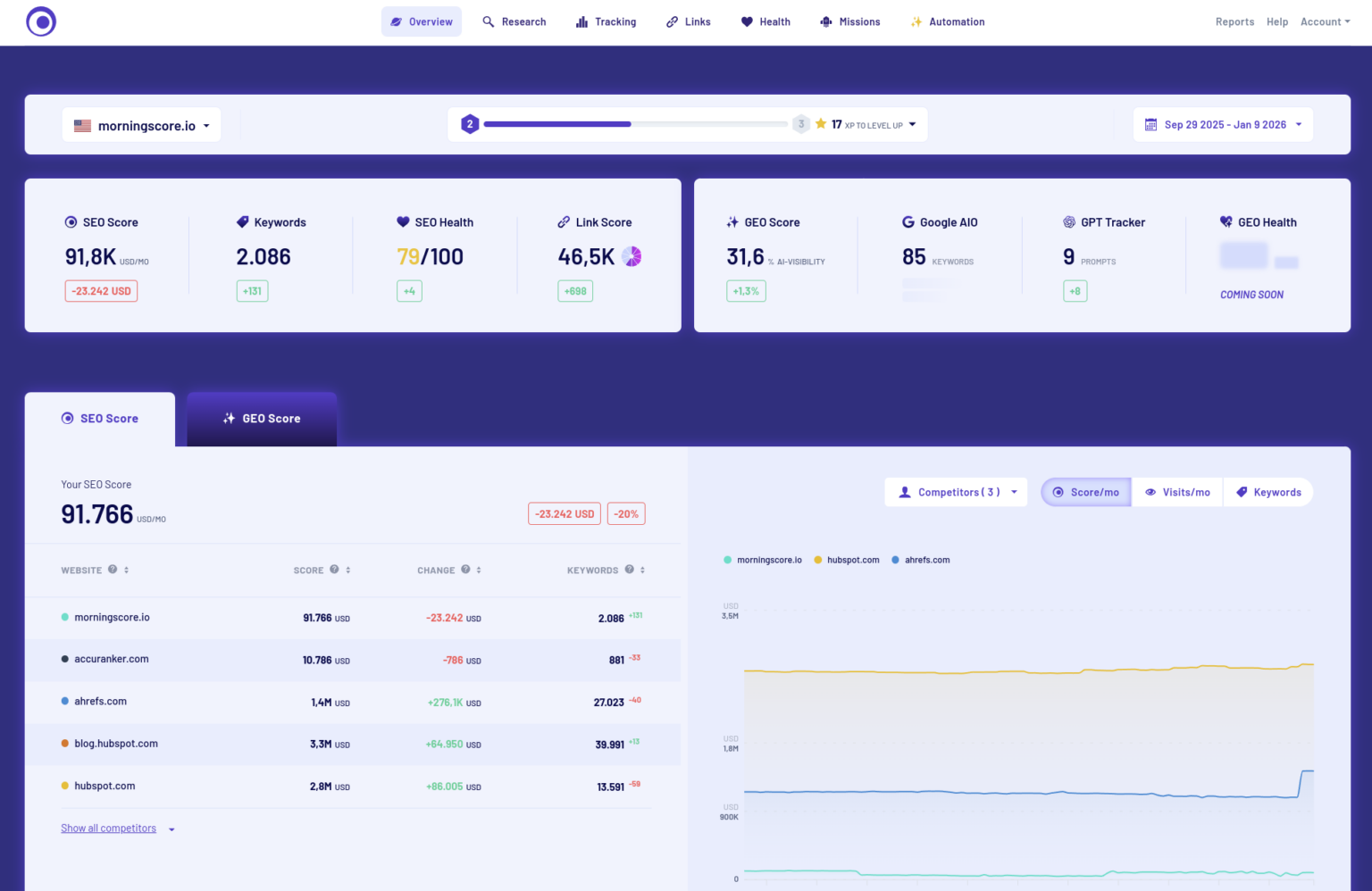
We built Morningscore to give you the core data you need without the enterprise price tag. Our Business plan is $99 per month, which still saves you about $41 per month, or roughly $490 a year, compared to Semrush Pro. If you manage a smaller site, our Lite plan is $69 per month and includes 100 tracked keywords and 3 websites. Our platform is built by a team with deep industry experience.
Morningscore includes a local rank tracker, a traffic checker, and a comprehensive health tool that scans up to 25,000 pages. We focus on making the data actionable. Instead of overwhelming you with endless tables, we calculate the exact monetary value of your organic traffic. This makes it easier to report progress to clients or stakeholders. We are a dedicated Semrush alternative that prioritizes user experience and clear insights.
If you run an agency, you know how expensive client reporting gets on premium platforms. Morningscore is built as an agency SEO tool with smart user management and automated reporting included. You can test the platform with our 14-day free trial, and you do not need a credit card to start.
Best for PPC and competitor research: SpyFu
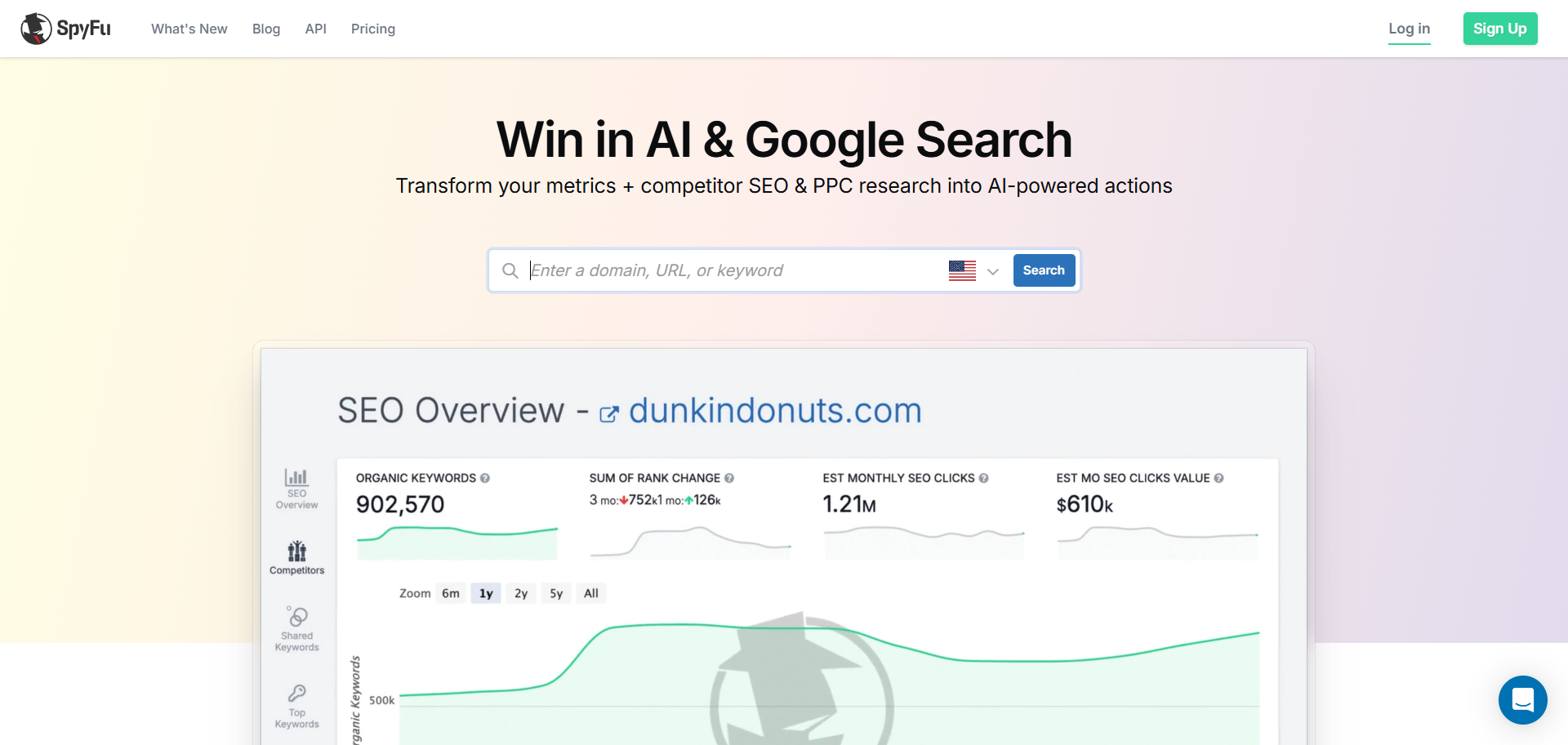
If your primary focus is paid search and competitor keyword analysis, SpyFu is a highly targeted option. SpyFu Basic starts at $39 per month, saving you over $100 per month compared to Semrush. SpyFu allows you to export 10,000 rows of data and track up to 5,000 keywords on their entry-level plan.
According to their site, they offer a Semrush alternative with unlimited data for searches, meaning you do not hit a daily cap when researching competitor domains. Their Pro plan costs $119 per month and includes API access, which is significantly cheaper than upgrading to a Semrush Guru or Business tier just for API rights. SpyFu excels at showing you exactly what your competitors are bidding on in Google Ads and how their ad copy has changed over time.
Best for tight budgets: Mangools
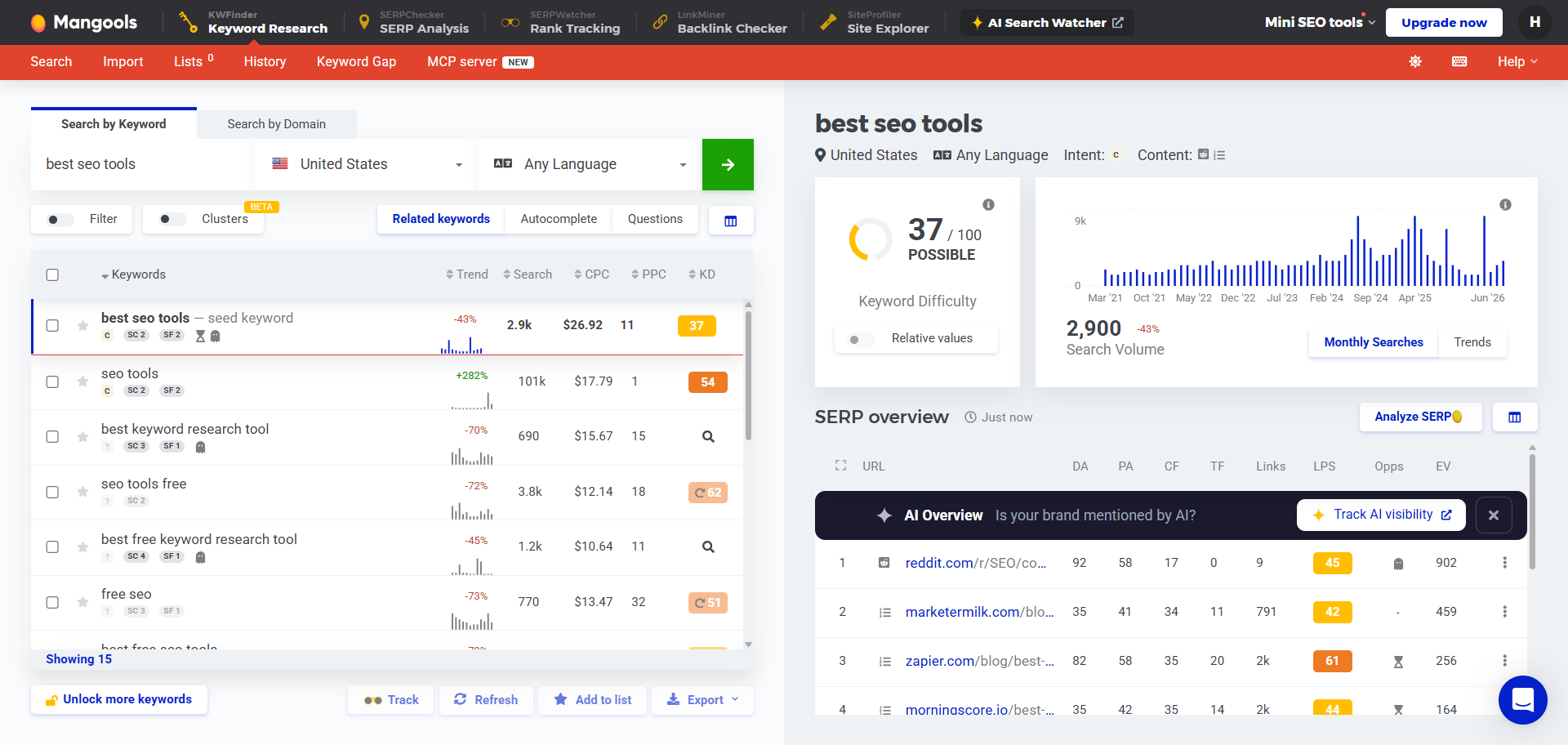
Mangools is still the cheapest way in. Basic runs $61/month, or $37.70/month if you prepay a year, and bundles five tools: KWFinder, SERPWatcher, SERPChecker, LinkMiner, and SiteProfiler, plus AI Search Watcher PRO. The tradeoff is daily lookup caps across five separate interfaces instead of one, and no AI visibility or automation tools built in.
Morningscore Lite, at $69/month, closes that price gap to $8 and skips the tradeoff. It’s built for beginners with a guided to-do list instead of five dashboards to learn, and it includes GEO tracking (AI Overviews, ChatGPT prompt rankings) and automation like one-click page optimization by default, not as an add-on. If you’re just checking rankings solo, Mangools is fine. If you want one simple tool that also covers how you show up in AI search, Morningscore is the smaller step up.
Other notable budget SEO platforms
The market for SEO software has expanded rapidly, giving you several other viable options depending on your specific workflow needs.
SE Ranking for agency dashboards
SE Ranking is frequently cited as a solid all-around dashboard alternative, but it stopped being the budget pick after its 2026 plan restructure. The old Essential/Pro/Business lineup at $65/month is gone. SE Ranking now runs on two tiers: Core at $129 per month billed monthly ($103.20/month if you commit annually) and Growth at $279 per month billed monthly ($223.20/month annually). That puts Core roughly $11 below Semrush Pro on monthly billing, not the wide gap a $65 price point would suggest. You still get a website audit tool, backlink checker, and keyword rank tracker, and it remains strong for agencies with white-label reporting, but weigh the real cost before assuming it’s a cheap swap.
Ubersuggest for budget-conscious marketers
Ubersuggest is another well-known budget alternative starting at $29 per month. It provides a clean interface for keyword research, site audits, and basic backlink monitoring. While it is a popular Ubersuggest alternative itself, many users compare it directly to Semrush for entry-level tasks. The main limitation with Ubersuggest is the depth of historical data and the strict limits on daily searches on the lowest tier.
ContextBolt SEO for AI workflows
If you are moving toward AI-assisted workflows, ContextBolt SEO is an AI-native alternative via an MCP server. Priced at $35 per month, it integrates directly into AI environments. This represents a different approach to SEO software, moving away from traditional dashboards and focusing on feeding live search data directly into large language models for content generation and analysis.
Best for backlink analysis: Ahrefs (and why it costs more)
Many users compare Semrush directly to Ahrefs. Ahrefs Lite starts at $129 per month, so it only saves you about $10 per month compared to Semrush Pro. It is not a true budget alternative, but it is the closest like-for-like suite on the market.
Ahrefs is widely recognized for having superior backlink data and an incredibly active web crawler. If your entire strategy relies on technical link building and auditing competitor backlink profiles, Ahrefs is the industry standard. However, if you want a fast growing Ahrefs alternative that focuses on essential features at a lower price point, you will need to look at platforms like Morningscore or SE Ranking.
How to build a free alternative stack
You do not always need to pay for software to get good data. You can replace many premium features by combining free tools. This approach takes more time, but it costs nothing.
Google Search Console is the best free alternative for analyzing your own website. It shows you exactly how to see all the keywords any website gets found for on Google as long as you own the domain. You get exact click data and impression counts straight from the source.
To replicate competitor research and technical audits, you can combine AnswerThePublic for topic generation and the free version of Screaming Frog to crawl up to 500 URLs. This stack will not give you competitor search volumes, but it covers the basics of technical health and content planning.
Are keyword search volumes accurate in budget tools?
A common concern when downgrading from a premium suite is data accuracy. Semrush has one of the largest keyword databases in the world. Cheaper tools often use mixed data sources, relying on Google Keyword Planner estimates combined with clickstream data.
The reality is that all third-party search volumes are estimates. Even Google groups similar keywords together and rounds their search volume numbers. Budget tools provide directional accuracy. If a keyword shows 10,000 searches in Semrush and 8,500 in a cheaper tool, the strategic value remains the same: it is a high-traffic keyword.

How to migrate your data from Semrush
Switching tools feels intimidating because you do not want to lose your historical ranking data. Most competitors list their features but fail to explain the exact data migration process. The process is actually very straightforward and relies on simple spreadsheet exports.
First, log into your Semrush project and navigate to the Position Tracking tool. Export your current keyword list and historical rankings as a CSV file. Make sure your CSV file includes the exact date of the ranking if you want to preserve the timeline. Some tools require you to format the date column specifically before uploading.
Next, open your new platform. Most modern platforms, including Morningscore, have a dedicated import function. You upload the CSV file, map the columns, and the system imports your history. This ensures you keep your baseline data intact so you can continue measuring growth without starting from zero.
Frequently asked questions about switching platforms
What is the best alternative for local businesses?
Local businesses often do not need global keyword data. A focused SEO monitoring tool that tracks specific zip codes or cities is usually enough. Morningscore includes local rank tracking in all plans, making it easy to monitor map pack positions without paying for worldwide data.
What’s the best SEO tool for small businesses?
For most small businesses, you don’t need Semrush’s full database, you need rank tracking, a site health check, and a way to see if your traffic is actually worth anything. Morningscore Lite ($69/month, 100 tracked keywords, 3 websites) covers all three in one dashboard, plus GEO tracking for AI Overviews and ChatGPT, without requiring you to learn five separate tools first.
If your business is hyper-local and you mainly care about map pack rankings, weight that over raw keyword volume; Morningscore includes local rank tracking on every plan, so you’re not paying for global data you won’t use. If you’re a solo operator on the tightest possible budget and don’t mind juggling separate tools, Mangools Basic ($61/month, or $37.70/month billed annually) is cheaper but splits the work across five different interfaces with daily lookup caps. The right pick comes down to whether you’d rather pay a little more for one connected workflow or save a bit and manage the pieces yourself.
Do cheaper tools offer white-label reporting?
Yes, many mid-tier tools offer custom branding. You can review our guide on white label SEO reporting tools with pricing to see which platforms allow you to send automated, branded reports to your clients without paying enterprise fees.
Can I track competitor backlinks on a budget?
Yes. While Ahrefs and Semrush have the largest link indexes, budget options like SE Ranking and Mangools provide enough backlink data to run competitive gap analyses. You can also use an affordable link building tool to monitor your own earned links and track your outreach campaigns.
Is Moz a cheaper option?
Moz Pro starts at $99 per month, making it slightly cheaper than Semrush Pro. However, many users find the interface dated compared to modern tools. You can read our breakdown of Moz pricing or explore a Moz alternative if you want a more intuitive dashboard.
Choosing a cheaper alternative to semrush comes down to paying only for the data you use. If you spend most of your time checking rankings and running site audits, a focused platform will save you over $1,000 a year. Evaluate your daily workflow, export your current keyword lists, and take advantage of free trials to test the accuracy of a new platform before you cancel your current subscription.