
 Deutsch
 Dansk
Dansk Svenska
 Nederlands
 Español
 Lietuvos
Key Takeaways
- Pull marketing (search engines) converts at a higher rate than push marketing (social media) – our data shows pull traffic is worth the higher price per click!
- Most businesses get 53-60% of traffic from search engines vs only around 20% from social media, a complete shift from news sites which favor social.
- Purchase-ready Google traffic continues to grow – Google maintains over 89.62% of search engine market share and isn’t going anywhere.
- The best marketing push vs pull strategy? Use both together based on where your customers are in the awareness funnel.
- Push channels work great for new products and branding, while pull channels dominate when customers are ready to buy.
Push vs pull marketing is a hot topic. Sometimes a heated one! 😡
Marketers don’t always agree on whether push or pull channels are the right way to go.
But what is push and pull marketing? And what is the difference?
- First I will explain the difference in simple terms
- Then I will show you the big picture with numbers and graphs
- Finally I will tell you which channel to use based on our data
I think our data will surprise you!
What is the difference between push and pull marketing?
Here is a quick explainer about push and pull marketing before we get to the statistics 👍️
In a nutshell:
- Pull marketing means that you’re using a marketing strategy that draws potential consumers towards your products.
- Search Engines and databases like Google, Bing, YouTube, etc. fall into “pull channels”
- Push marketing on the other hand means that you are trying to promote a specific product to an audience that you think will find it relevant.
- Social Media (including TikTok, Meta platforms, and others) is considered a “push channel”
Typically, businesses use pull channels:
- When the user knows what he or she is looking for
- When they require more upfront research (e.g. a complex product)
- When trying to move the customers to the next stage in the Awareness Funnel
Typically, businesses use push channels:
- When launching a novelty or new product or service
- When operating in a very niche market
- When running a short-term promotion
- When the low-hanging pull channels have “dried up”
- When doing branding campaigns
Now let’s look at the numbers 📈
The push and pull marketing case study
Our study across industries shows that organic search traffic consistently converts at a higher rate than social media push traffic (source).
In 2026, organic search achieves conversion rates of 1.7% to 1.8%, with SEO leads converting at approximately 14.6%. Meanwhile, social media advertising shows conversion rates between 1.54% and 1.93%, though this varies significantly by platform and industry.
That number makes it clear why businesses are ready to pay a higher price point for “pull” traffic.
Push vs Pull Traffic Distribution in %
The traffic landscape has fundamentally shifted. While earlier studies of news websites showed social media dominated traffic distribution, the picture for 2026 is dramatically different.
Current data shows that organic search now accounts for approximately 53-60% of global web traffic, with Google maintaining over 89.62% of the search engine market share.
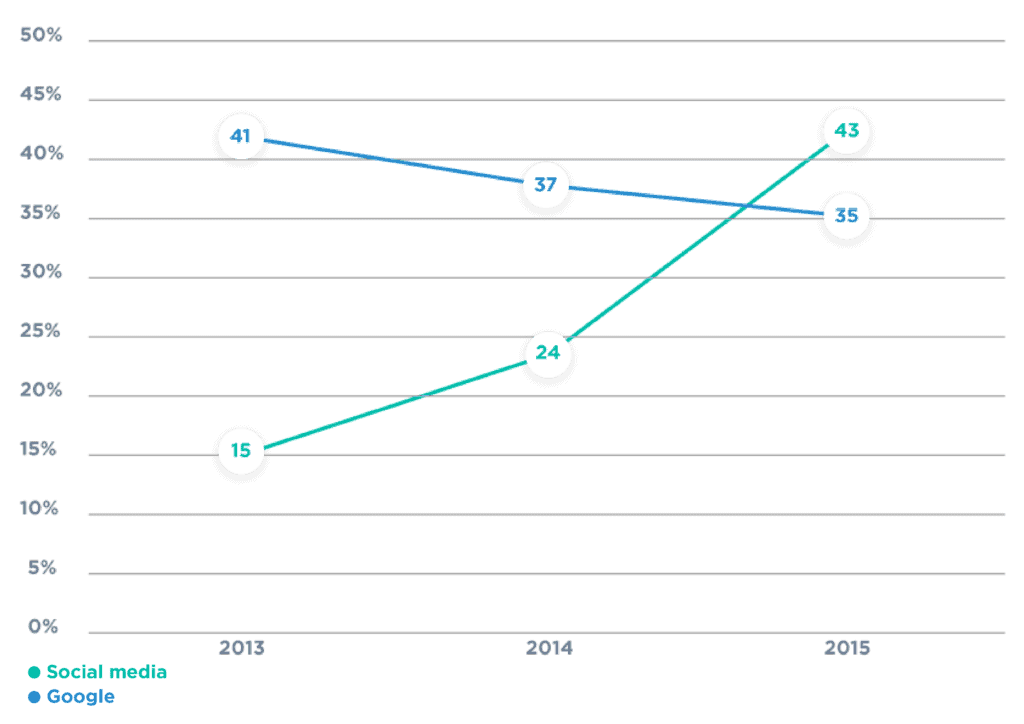
Social media referral traffic, although growing in ad spend, now constitutes less than 20% of total web traffic. Organic reach on platforms like Facebook and Instagram has declined sharply due to algorithmic changes favoring paid content.
This trend is especially true for most businesses compared to news-focused websites. The numbers for business websites show even stronger dependency on search engines.
For that reason, we decided to test the same two channels across different business types:
Traffic Distribution For Business Websites
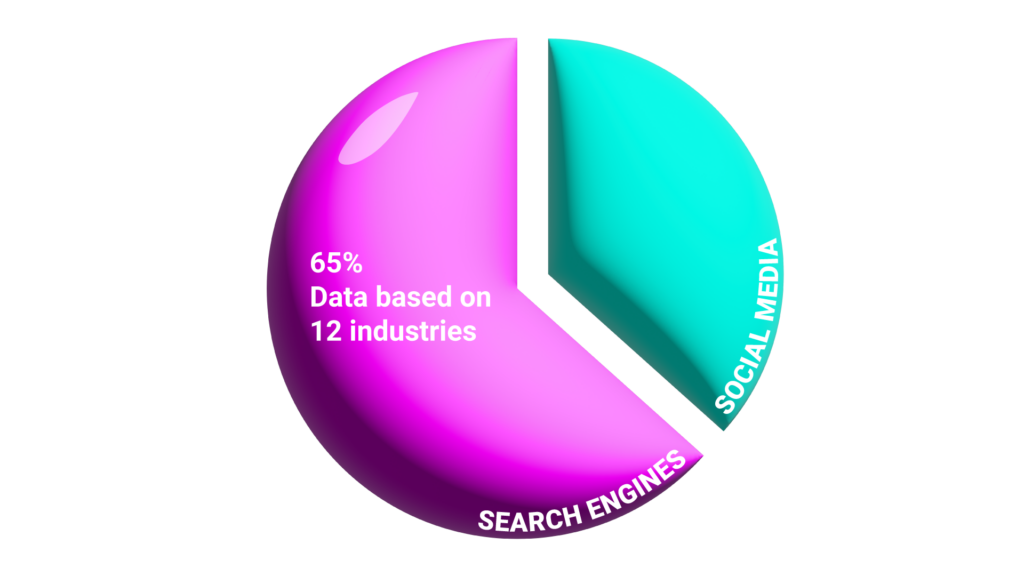
Our research across business websites shows a clear pattern:
- Search engine (pull): 53-60%
- Social media (push): Less than 20%
So what’s the push and pull distribution in those marketing campaigns? It is clear from the data that most businesses are significantly more dependent on search engines like Google (pull) than they are on social media (push) marketing.
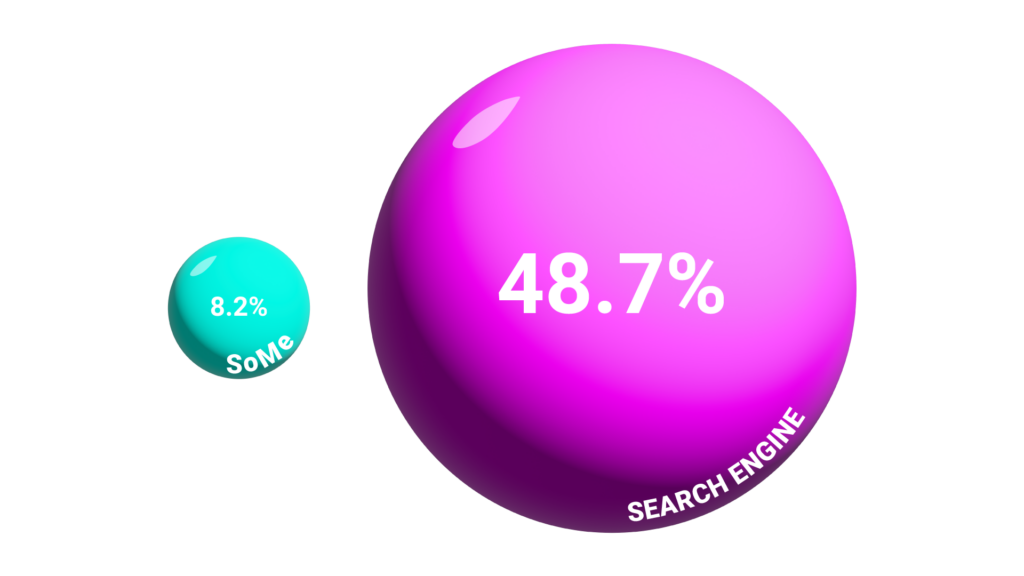
The shift toward organic search dominance reflects users’ preference for active research when making purchasing decisions, rather than passive social media browsing.
Purchase-Ready Google Traffic Continues Growing (Pull)
You might have heard some comments that Google won’t last long. But this couldn’t be further from the truth.
Google is not headed down. On the contrary, purchase-ready Google traffic continues to grow year over year. Google maintains over 89.62% of the search engine market share in 2026, reinforcing its dominance in organic visibility.
Push and Pull channels click prices
Let’s say you want to pay for a push and a pull click. What is the price difference in 2026?
- Push traffic pricing varies by platform. Facebook CPC averages approximately $0.68, Instagram around $0.25, and TikTok ranges from $0.50 to $1.00 per click.
- Pull traffic remains more expensive and especially dependent on competition in the industry (i.e., lawyers). Recent analysis shows that the most expensive search keywords in 2026 can cost more than $1000 per click.
AI-driven targeting and creative automation have improved conversion rates on push channels, while stricter privacy regulations are reshaping how both push and pull campaigns collect and use data.
This concludes the case study 📊👍️
Push vs Pull channels – which should you use?
To understand whether you should use a push marketing or a pull marketing strategy, you need to determine where your potential customers are positioned in your awareness funnel.
Now, the Awareness Funnel might sound scary, but it’s a rather simple concept to grasp. It consists of just 4 steps – and it often dictates almost every step in your marketing tactics and strategy.
The 4 steps of the Awareness Funnel are:
- Unaware
- Problem Aware
- Solution Aware
- Product Aware
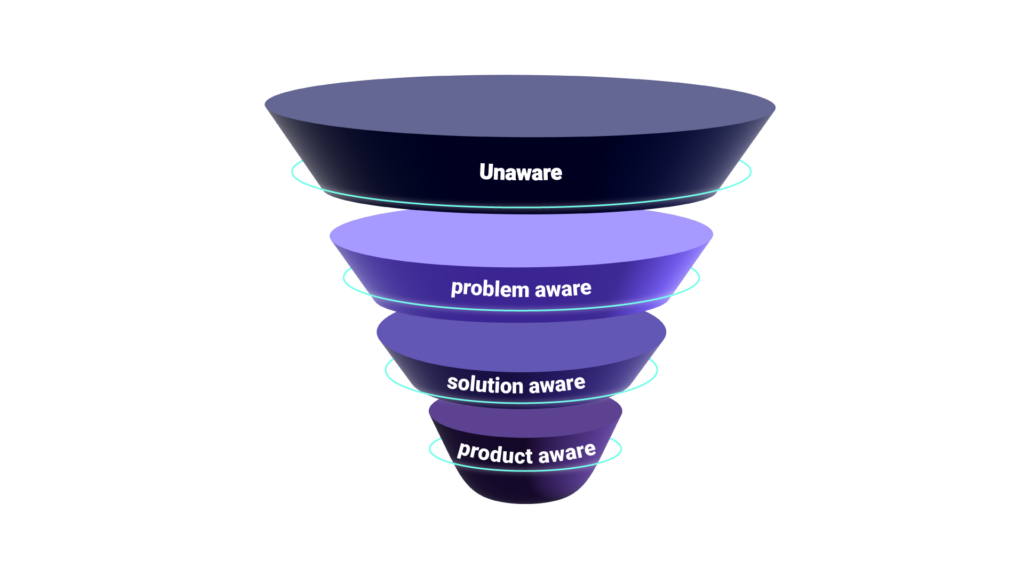
These steps will directly dictate what customers do and search for. For example:
- Unaware – Potential prospects who are unaware of their problems aren’t actively searching for anything related to your products.
- Problem Aware – People who in one way or another (e.g. through push marketing) have become aware that they have a problem are starting to become active in their search. For example, they are trying to understand their problem better. They are, however, not necessarily searching for a product just yet.
- Solution Aware – These customers are actively doing research to understand how to solve the problem they are facing. This is a great place to attract them through pull marketing.
- Product Aware – Similarly to “Solution Aware”, customers have explored enough and are ready to make a purchase. Now they are looking for the best solution according to their needs.
As you can see, push and pull marketing both have their strengths and weaknesses. And it’s a lot about timing. Therefore, they are bound to work most effectively when used together.

Why use a combination of push and pull strategies?
So what’s the logic behind using both strategies? The idea is that you want to reach your customers across multiple channels to increase your chances of conversion. This is also called omnichannel marketing.
To decide how much of each channel you should use, you need to be clear about a few things first:
Product:
– What is my product/service/offer?
– Is it a brand new/revolutionary product I’m offering?
Timing/Duration:
– Is it a one-time-only or time-sensitive promotion?
– Is it a very limited offer?
– Is it a seasonal sale?
Target Customers:
– Who is my target customer?
– What are my target audience’s favorite websites?
– What is my target group’s preferred Social Media (Facebook, Instagram, TikTok, etc.)?
– At what point in their lives do customers think about buying my product?
– How do customers learn about their problems that my product solves?
Resources:
– How much money can we spend on that promotion?
– Do we have a team that can produce the content needed?
– Do we have a digital marketing specialist to set up and control the promotions?
Sometimes, ranking high on Google for Solution Aware & Product Aware searches is almost impossible because of high competition. In such cases, you can opt in for more Problem Aware searches where you aim to increase your audience of newsletter subscribers and convert them through email marketing later on.
It’s very important to answer those questions because then you will see what the potential for your product is on each channel.
Recommended Read: Top 6 Ways To Promote Your Blog For Free
Examples of push and pull marketing?
Now let’s look at some examples of companies using those marketing strategies to reach their customers. It’s important to understand that budget will often times have the biggest say in your decision-making when it comes to which channels you want to implement in your case/company.
That being said, most of the time you see companies using BOTH inbound and outbound strategies, and that’s especially true for bigger businesses.
For the sake of simplicity, let’s examine the inbound and outbound marketing campaigns of the hardware/electronics company NZXT.
NZXT Inbound & Outbound channels
Push Channels:
For this example we are going to use Facebook’s “Info and ads” panel that allows us to inspect a company’s current live advertisements.
In the “Info and ads” panel of NZXT’s Facebook page, you can see their active advertising campaigns across multiple countries:
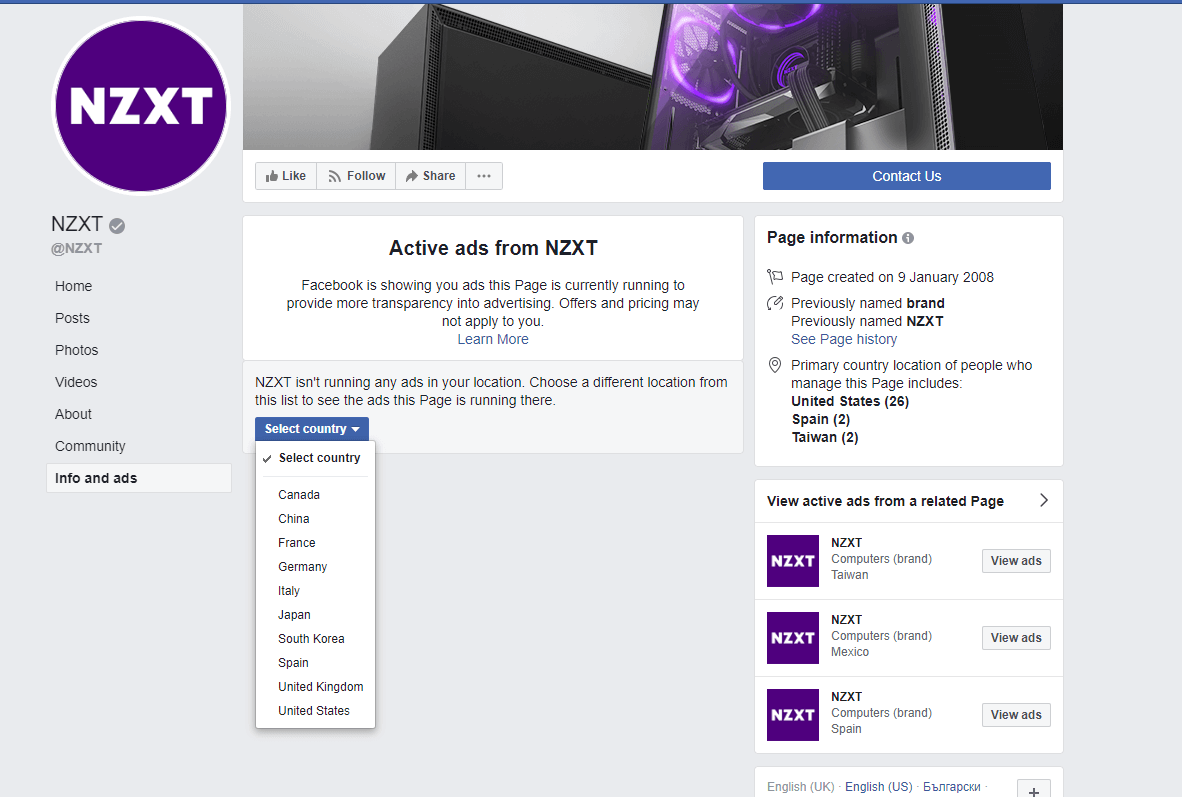
You can see that NZXT runs ads in multiple countries targeting different audiences.
After selecting one of the countries, you will be able to see all of their active advertisements. Here are a few examples of the promotional offers they are trying to show:
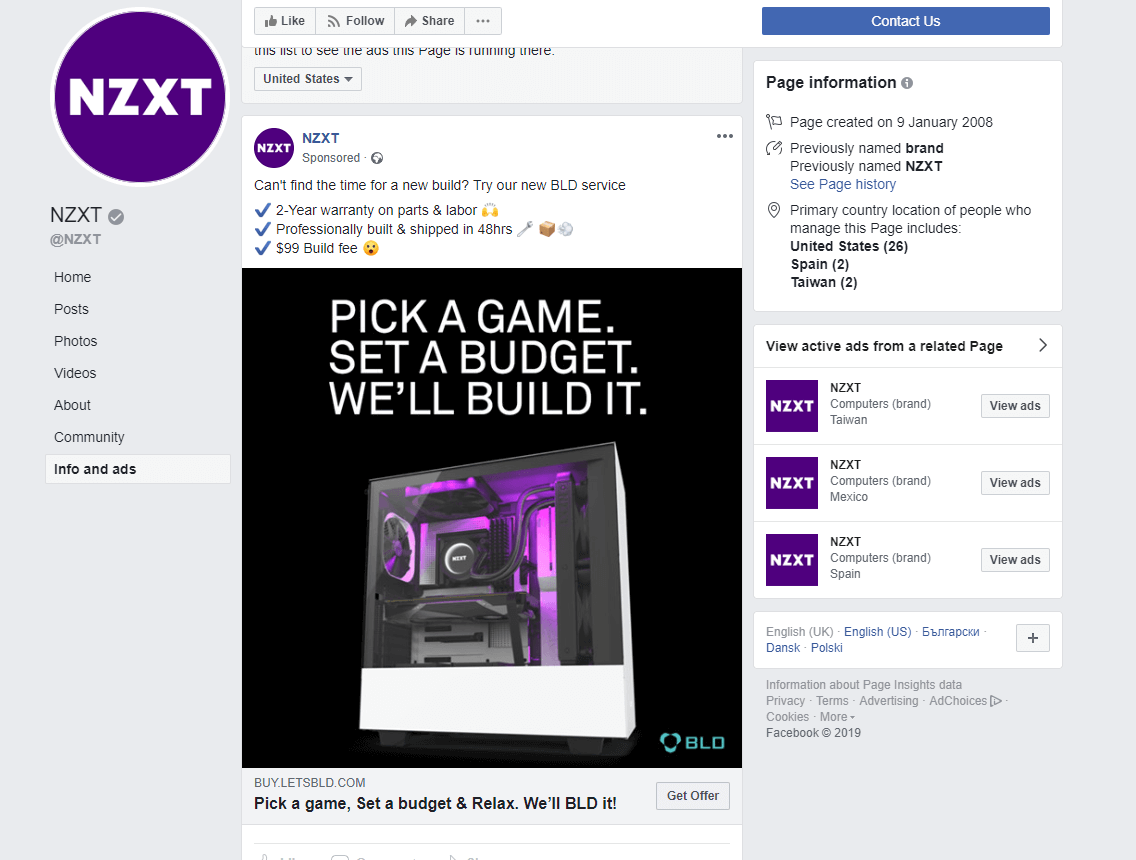
NZXT Push Marketing Example 1
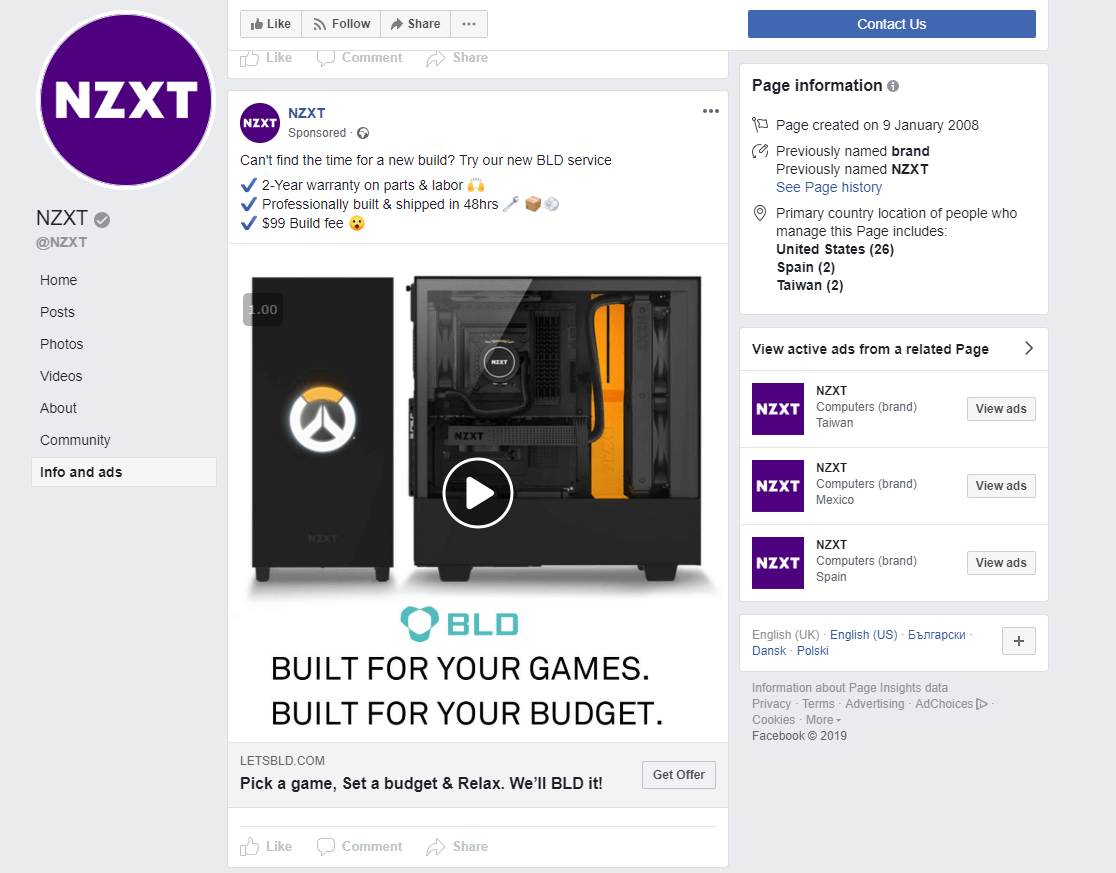
NZXT Push Marketing Example 2
They are heavily promoting the “build your own pc” ad – possibly with different types of target audiences.
Pull Channels:
In their pull channels, however, things look slightly different.
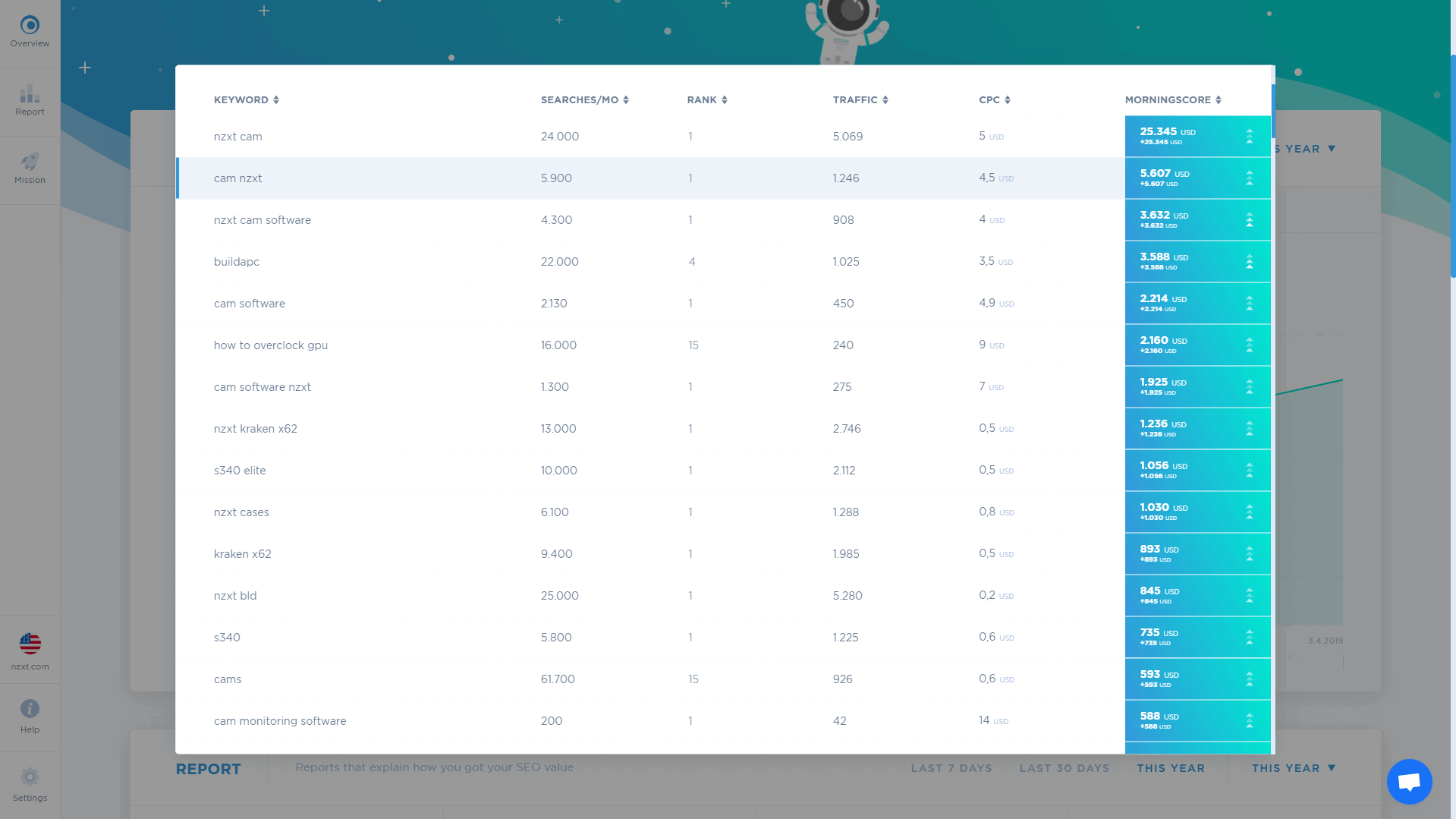
NZXT Pull Marketing Example 1
You can see that the company ranks both for searches like “build your own pc” but also for plenty of others where people generally take longer to make a decision. Additionally, NZXT also ranks for hundreds of informational searches, meaning they pull in a lot of colder audience which they focus on converting at a later point.
NZXT conclusion:
Now one thing becomes very obvious. You can immediately see how NZXT uses a mix of both strategies to get the sale.
Their pull channels are performing very well for keywords the users are actively searching for (“build your own pc”). However, since that is oftentimes a time-sensitive decision, their outbound approach comes as a supplementary channel.
What Does This All Mean For You?
Now that you understand the current trends shaping those strategies, it’s time to conclude with several take-away points. For the future, consider:
- Increased traffic does not equal more sales and revenue – but conversion rates for organic search traffic consistently outperform social media push traffic
- It definitely pays off to invest in high purchase-oriented PPC prices on Google, especially as conversion rates show organic search leads converting at approximately 14.6%
- Facebook ads and similar social channels don’t necessarily bring purchase-ready traffic directly
- Push traffic is available in an almost infinite amount which makes it an excellent supplement to pull traffic (which in some cases can be completely sucked out with less than $500 per month)
- AI-driven targeting and creative automation are making push campaigns more effective, while privacy regulations require transparent, user-driven data collection strategies
- Platforms like TikTok are emerging as powerful push channels, especially for younger demographics, with strong engagement rates
Start on the right foot by knowing your platforms before you begin your work. Many are preconditioned towards a channel and jump the gun based on what they think.
The facts, however, show that it depends 100% on your industry and your advertising goal so that either one of the platforms fits best for your company.
Frequently Asked Questions
What is pull and push in marketing strategy?
Pull marketing attracts customers who are actively searching for solutions (like through Google or SEO), while push marketing promotes your products directly to audiences through ads and outbound tactics (like social media or display ads). Think of pull as customers finding you, and push as you finding customers. The best marketing push vs pull strategy uses both approaches together based on where your customers are in the buying journey.
How do you measure the effectiveness of marketing pull and push strategies?
You can measure push vs pull effectiveness through conversion rates, cost per click (CPC), and ROI for each channel. Our data shows that pull traffic (organic search) converts at approximately 14.6% for SEO leads, consistently outperforming push channels like social media which range from 1.54% to 1.93%. Track these metrics using analytics tools to see which strategy delivers better results for your specific business and industry.
What’s a realistic budget for combining push and pull marketing?
Budget allocation depends entirely on your industry competition and goals. Pull traffic (Google Ads) can cost anywhere from a few dollars to over $50 per click in competitive industries like legal services, while push channels average $0.25-$1.00 per click on platforms like Instagram and TikTok. Some businesses can exhaust their pull opportunities with less than $500 monthly, making push channels an excellent supplement for reaching additional audience segments.
Do push and pull strategies work differently for B2B vs B2C?
Yes! B2B customers typically require longer research cycles and multiple touchpoints, making pull strategies especially effective for building trust through content marketing and SEO. B2C often benefits more from push tactics for impulse purchases and new product launches. However, both B2B and B2C businesses should use integrated approaches – our data shows that 53-60% of business traffic comes from search engines (pull) regardless of business type, proving that purchase-ready customers actively search in both markets.
What’s the biggest mistake companies make with push vs pull marketing?
The most common mistake is choosing only one strategy and sticking with it exclusively. Many marketers believe one approach is superior and ignore the other completely. In reality, integrated campaigns that combine both push and pull tactics consistently outperform single-channel approaches because they reach customers at different stages of the awareness funnel, from unaware prospects to purchase-ready buyers.
How long does it take to see results from push vs pull marketing?
Push marketing typically delivers immediate visibility and quick results – you can launch a Facebook or TikTok ad campaign and start seeing traffic within hours. Pull marketing, especially SEO and content marketing, requires a longer investment, often taking 3-6 months to see significant organic traffic growth. That’s exactly why successful businesses use push channels for short-term goals and product launches while building their pull channels for sustainable, long-term growth and higher conversion rates.