
 Deutsch
 Dansk
Dansk Svenska
 Nederlands
 Español
 Lietuvos
Key Takeaways
- eCommerce SEO helps your webshop rank higher in Google and bring in organic traffic – no ad spend needed.
- It starts with keyword research to find what your customers search for, then moves into optimizing your product and category pages.
- Clean site architecture, solid technical SEO, and link building are all essential to reach and hold top positions.
Getting your eCommerce store noticed on Google can feel like a challenging task. A solid ecommerce SEO strategy can boost your webshop’s visibility and attract more customers.
The process includes keyword research, improving product pages, and creating a better user experience. These steps help you climb the search rankings.
In this blog post, we look at practical SEO methods that can drive more traffic to your eCommerce store and support organic growth without ad spend.
What is eCommerce SEO?

You have set up your online store and filled it with good products. Now you wait for customers to arrive.
Instead of a steady flow, you only see a trickle.
This is where eCommerce SEO comes in.
eCommerce SEO is the process of optimizing your webshop to achieve more and higher keyword rankings in organic search results. The goal is to gain visibility and attract more users from Google, Bing, and other search engines.
It includes keyword research to discover what potential customers search for, improving your pages for users, creating a clear website structure, producing high-quality and relevant content, and increasing the authority of your website through link building.
When users search for products you sell, you want your store to appear among the first results. It is similar to having a good spot in a grocery store where many people pass by.
This does not happen by luck. It requires the right strategies to make your eCommerce store more relevant for search engines like Google.
Morningscore was founded in 2018 in Odense, Denmark. The goal was to build simple SEO tools and create 1 million SEO heroes.
Is eCommerce SEO different to SEO for other websites?
You might be wondering if eCommerce SEO differs from regular SEO.
The core principles are the same. You still aim to rank higher in search results.

eCommerce SEO simply involves more elements. You optimize product pages, category pages, and the overall user journey.
You do not normally do specific SEO on the checkout process. Still, you improve on-page factors and user experience with the goal of turning visitors into customers.
eCommerce SEO requires attention to detail on many pages, thorough keyword research for products, clear descriptions, and a logical site structure with good filtering and categories.
It also puts a stronger focus on user experience. Google looks at how users interact with your site. Slow pages, difficult navigation, or a poor mobile experience can lower your rankings.
Product reviews matter too. They build trust and give search engines fresh content.
While the foundation is similar, eCommerce SEO demands more work because webshops usually have more pages and more complex structures.
Why ecommerce SEO matters
Running an eCommerce store without SEO is like opening a shop in the middle of nowhere and expecting customers to find it.
SEO makes your online store visible to potential customers in Google. Here are some reasons why it should be a priority:
First, visibility decides success. Most users never go beyond the first page of search results. If your shop does not appear there, few people will find it.
Good SEO helps your site rank higher so customers can discover you when they search for products you offer.
Second, SEO is a cost-effective approach. Unlike paid ads that stop when the budget runs out, SEO can continue to bring visitors over time.

It builds results that last.
SEO also improves user experience. Search engines favor sites that are easy to navigate and fast to load. Optimizing for SEO makes the site more user-friendly, which can increase conversions.
Higher rankings also build credibility. Customers tend to trust stores that appear at the top of search results.
Finally, SEO gives useful insights about your customers. Tools like Google Search Console, Google Analytics, and others show which keywords bring traffic, which pages perform well, and how visitors move through the site.
This information helps you make better decisions for your eCommerce business.
A ResearchGate meta-analysis confirms that effective SEO significantly increases organic traffic and sales.
In summary, ecommerce SEO supports the long-term success of your online store by increasing visibility, improving experience, and providing valuable data.
Next, we look at how to actually do SEO for eCommerce shops.
Keyword research for ecommerce SEO
You need clear direction before you start SEO work. Keyword research shows what users search for when looking for the products you offer. These keywords become the foundation for your optimization.
Keyword research uncovers the words and phrases people use to find products like yours. It gives you the terms you need to target to attract relevant traffic and customers.
Find keywords with Morningscore
Our keyword research tool makes the process straightforward.
Type a product word such as “dumbbell” and the tool returns related search phrases with monthly search volume, CPC, and difficulty estimates.
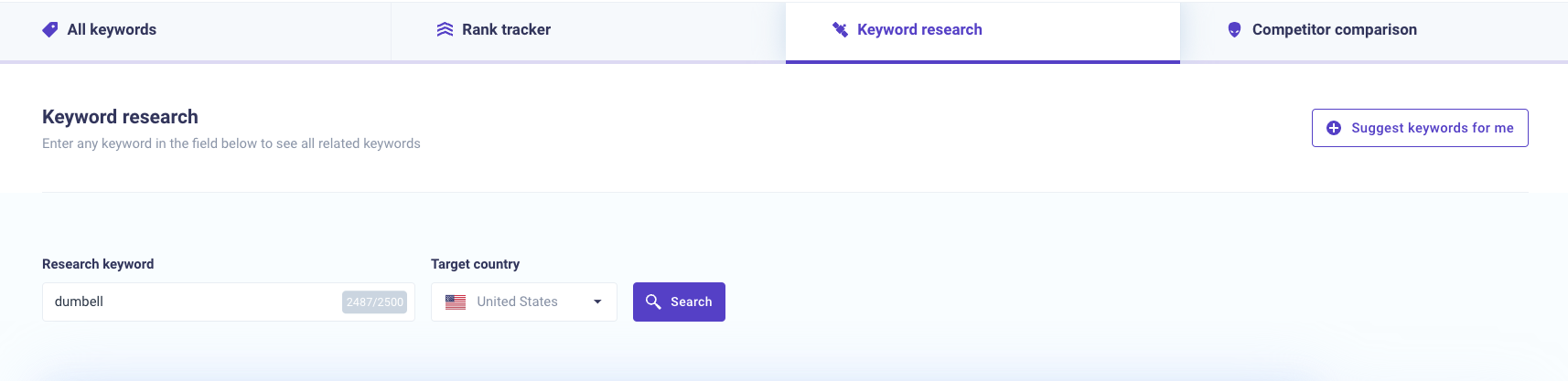
You then receive a list of relevant keywords.
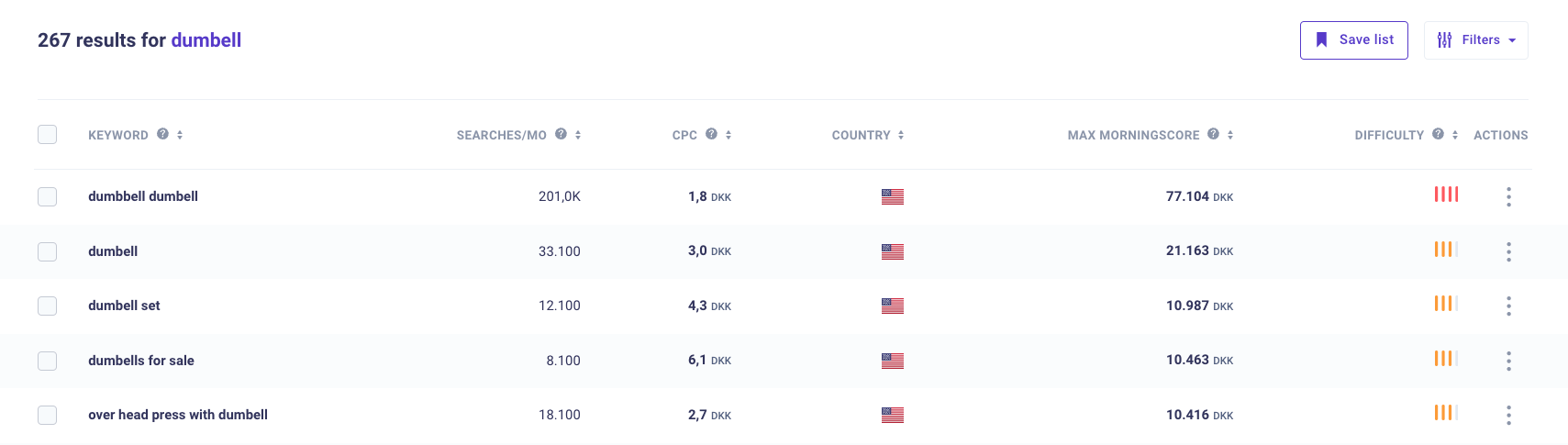
Before optimizing pages, you need to select the best keywords for your ecommerce SEO plan.
Go through the list and keep only those relevant to your products. Use the include and exclude filters to refine the results.
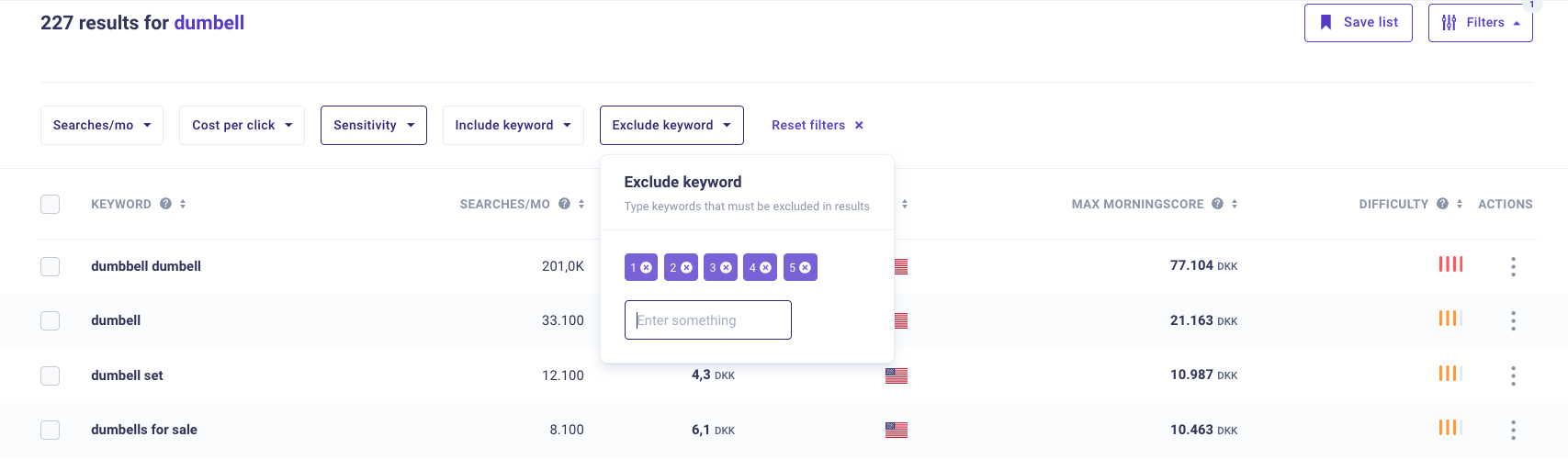
Add relevant keywords to your keyword rank tracker.
Next, group them by search intent. The main types are:
- Navigational intent: Users looking for a specific website or page.
- Informational intent: Users searching for information or answers.
- Commercial intent: Users comparing products or looking for reviews.
- Transactional intent: Users ready to buy.
Understanding intent helps you create the right type of page. Category pages usually suit commercial intent, while informational searches need blog content.
Check search results on Google or use the SERP checker to see what Google shows for each keyword.
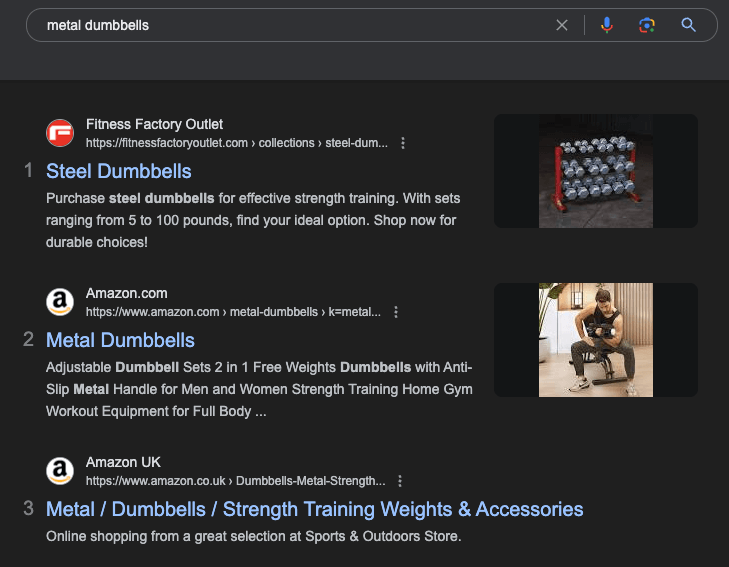
Add the keyword to the correct folder in the rank tracker.
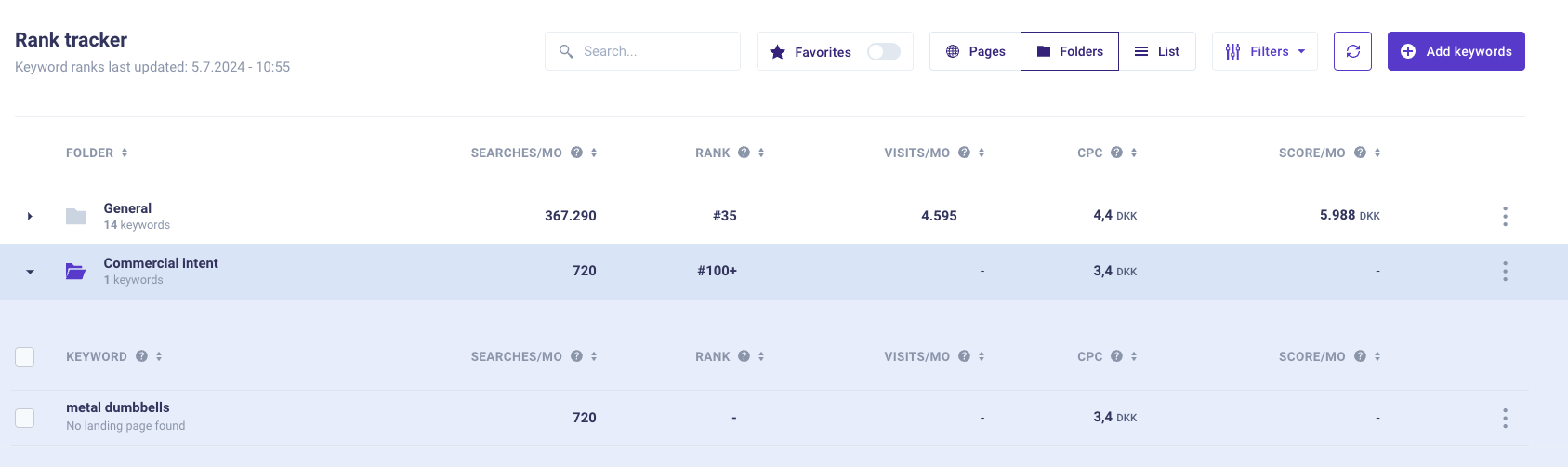
When choosing keywords, look at search volume and competition. New stores usually have better results with specific long-tail keywords rather than broad terms with high competition.
Using Google and Amazon search features to find keywords
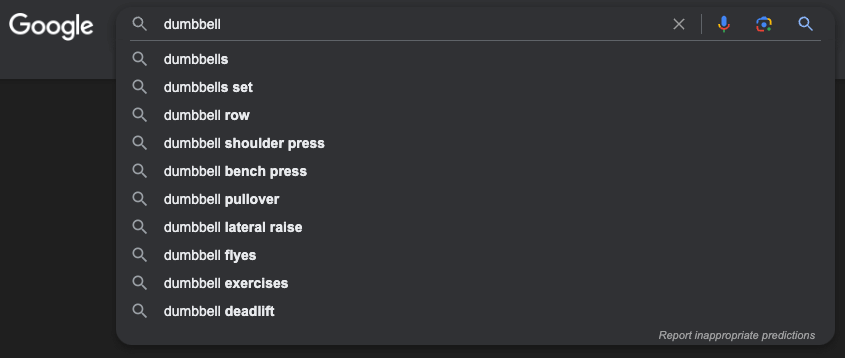
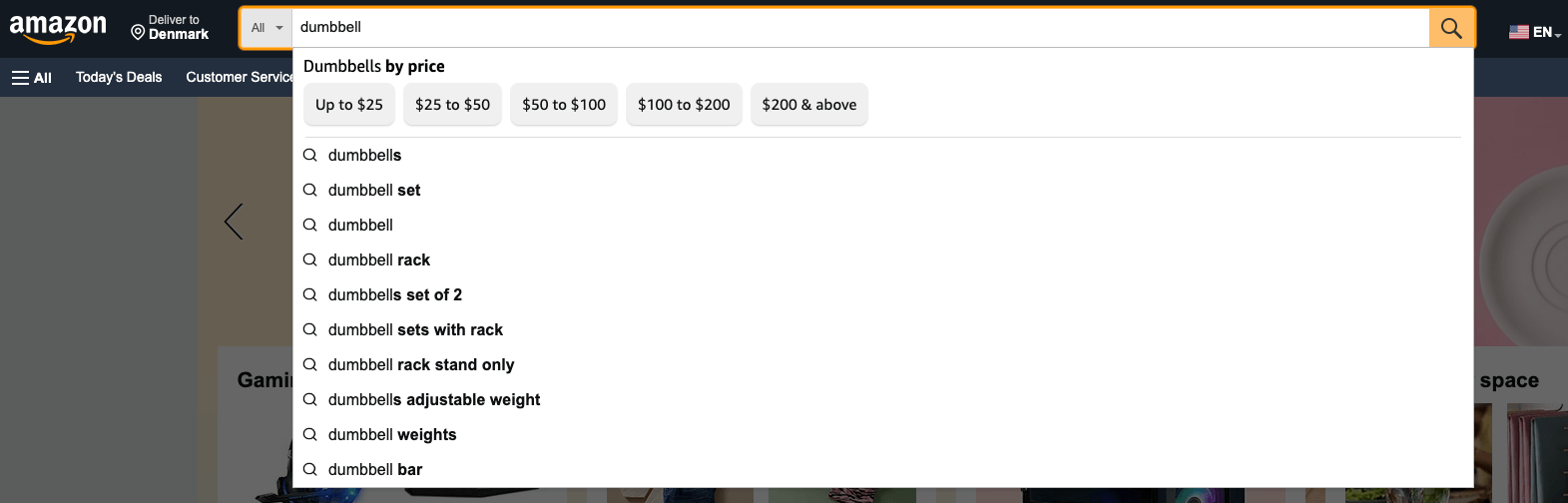
Google autocomplete and Amazon search suggestions provide additional keyword ideas.
As you type in Google, the suggestions show common related searches.
Amazon’s search bar works in a similar way and often reflects buying intent.
Using these tools together with Morningscore gives a broader set of relevant keywords.
Find unencountered keywords from competitors
Adding competitors to Morningscore lets you see which keywords they rank for.
Go to their overview and click to see their keywords.
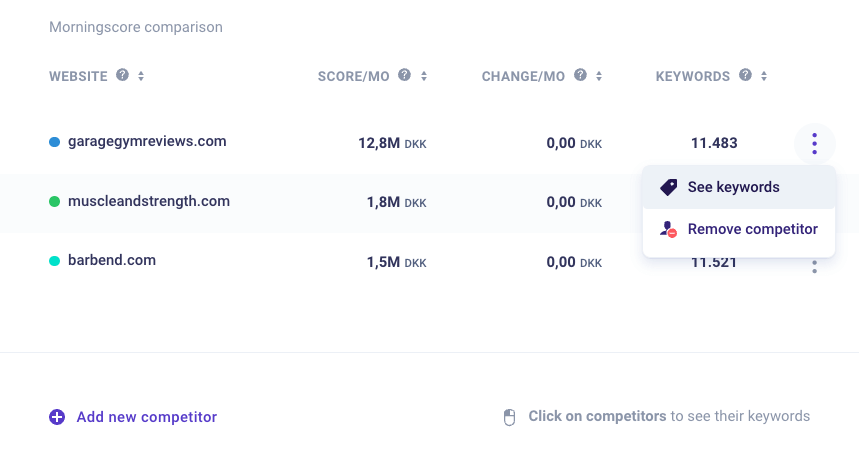
Look for terms in your product categories that you have not yet targeted.
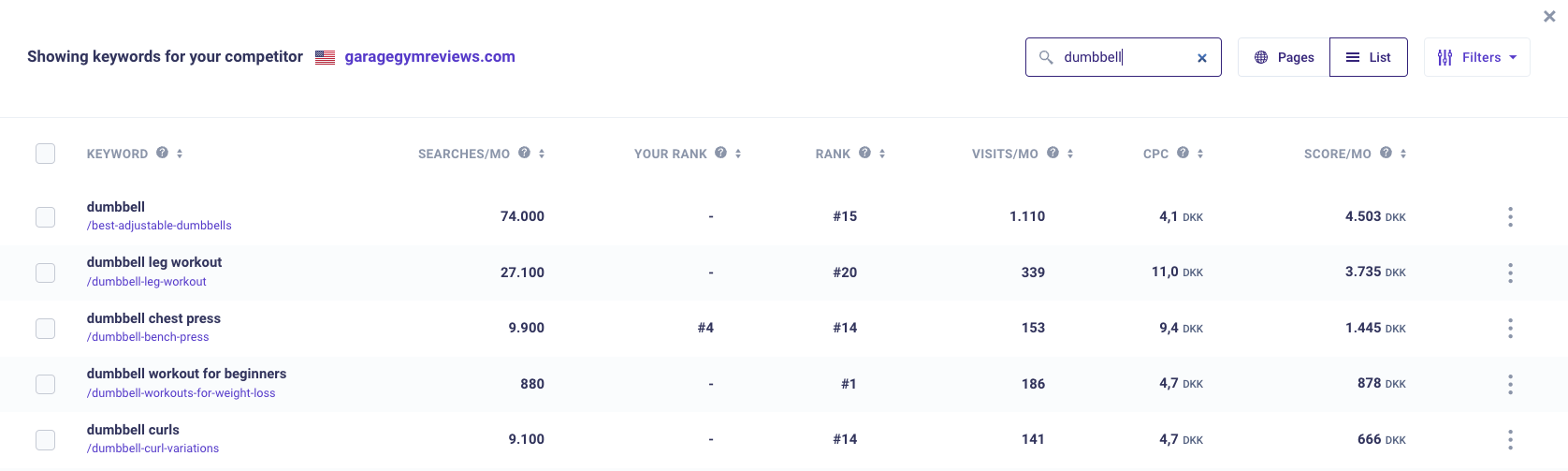
This approach quickly reveals new keyword opportunities.
Now that you have your keywords, the next step is to improve your site structure.
Perfect your architecture
A clear website structure makes navigation easy for users and helps Google understand your site.
Technical SEO forms the foundation of your eCommerce shop. A good structure helps Google find all pages, improves user navigation, and spreads link value to important category pages.
Key principles are:
- Don’t make users think
- Have a clear logical next step
- Few clicks to reach a product
A simple menu with clear categories works well. From the front page, users should reach category pages in one or two clicks, and product pages in one more click.

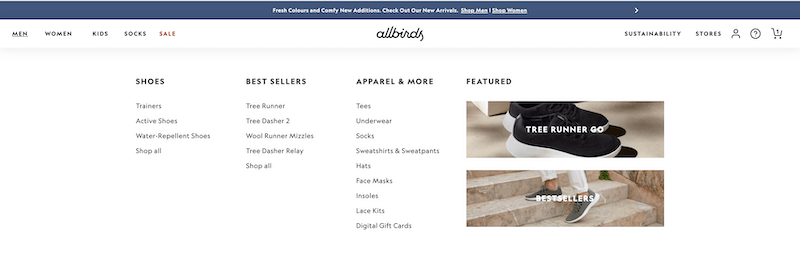
Keep the structure logical: front page to category pages to product pages. Use main keywords in category names to help both users and search engines.
Best practice for redirects for product pages
Managing out-of-stock and discontinued products affects both user experience and SEO.
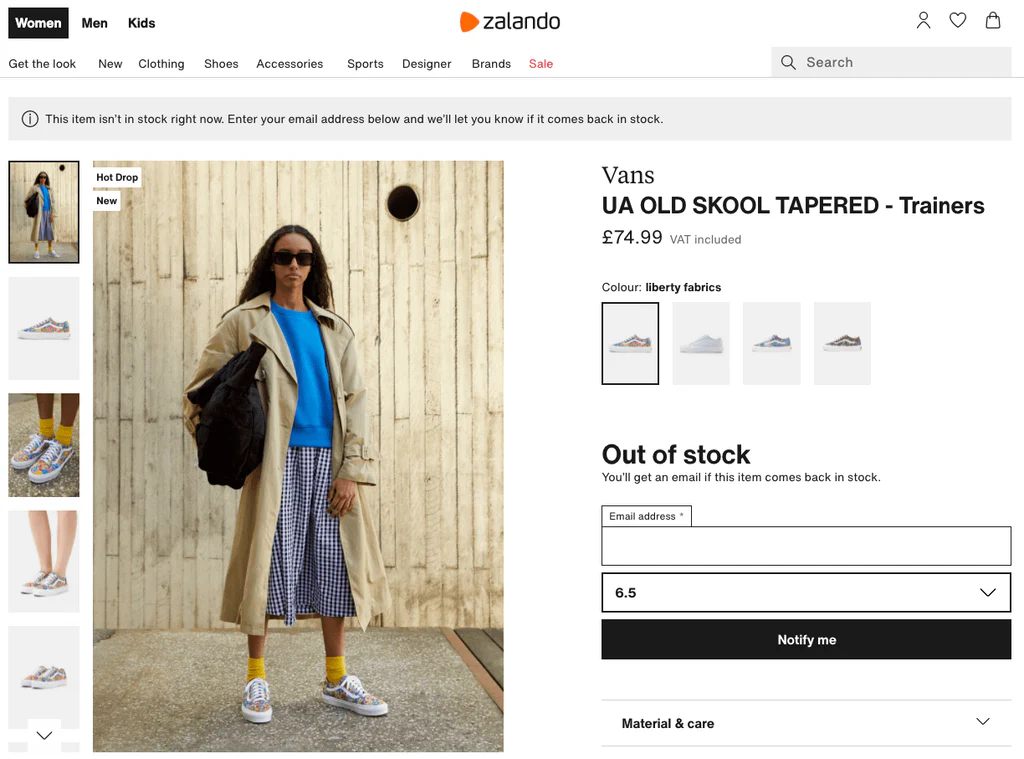
Handling out-of-stock products
- Leave the product page online and show “out of stock”:
- This keeps the page’s SEO value. Show the status clearly and offer to notify customers when the product returns.
- Suggest similar products on the page.
- Enable pre-orders:
- This captures demand and helps manage inventory.
Handling discontinued products
- 301 redirects to relevant pages:
- Redirect to the closest similar product or category page to preserve SEO value.
- Create a custom discontinued page:
- Explain the situation and suggest alternatives if no good redirect target exists.
Choose the approach that best balances SEO value and customer experience.
Other important technical ecommerce SEO aspects
Technical SEO includes more than architecture. Make sure your webshop has these elements in place:
- Use HTTPS: This creates a secure connection. It is especially important for eCommerce sites.
- Mobile responsiveness: Google uses mobile-first indexing. Your site must work well on mobile devices.
- Have an updated sitemap: Submit your sitemap to Google Search Console so all pages can be found.
- Improve page speed: Faster pages improve both rankings and conversions. Test your site at pagespeed.web.dev.
Also, fix duplicate content, broken links, broken images, and 4xx errors.
Staying current with tech trends ensures your store remains competitive in 2026. See this guide on 2026 technical SEO best practices here.
On-page ecommerce SEO

After the technical foundation comes on-page SEO for category and product pages.
Optimize page title
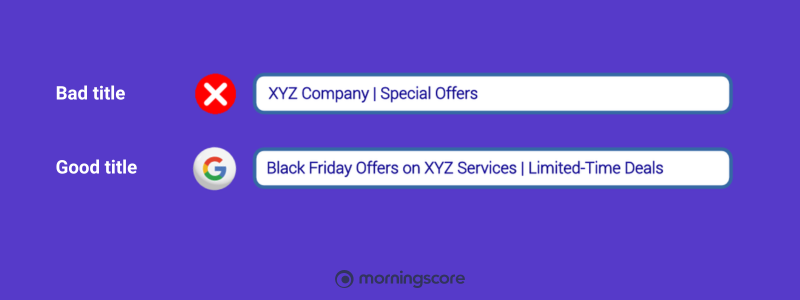
The page title is the headline shown in search results and browser tabs.
How does it affect SEO?
Titles help search engines understand the topic of your page and influence rankings.
Best practices for creating title tags
- Keep it short and sweet: Aim for 50-60 characters.
- Include keywords: Place them naturally.
- Unique titles: Give each page its own title.
- Write for humans: Make it clear and relevant.
- Avoid stuffing: Do not repeat keywords unnecessarily.
Title tag example
“Buy Dumbbells Online – Best Prices & Free Shipping”
This title contains the main keyword early, mentions benefits, and stays within length limits.
Don’t forget the meta description

The meta description appears below the title in search results. While it does not directly affect rankings, a good description can improve click-through rates.
Best practice for meta descriptions
- Keep it between 50-160 characters.
- Make each one unique.
- Describe what users will find on the page, including price, discounts, or shipping benefits.
- Include your main keyword.
SEO-friendly URLs

Clear URLs help both users and search engines.
Best practice for URLs
- Keep them short but descriptive.
- Use hyphens (-) to separate words.
- Use only lowercase letters.
- Avoid dates and numbers when possible.
- Include the main keyword.
Check your URLs with our SEO checker tool.
Optimizing images for eCommerce products

Use descriptive file names and alt text with relevant keywords. Compress images to improve load speed. Choose appropriate formats and implement lazy loading.
Category and product page basics
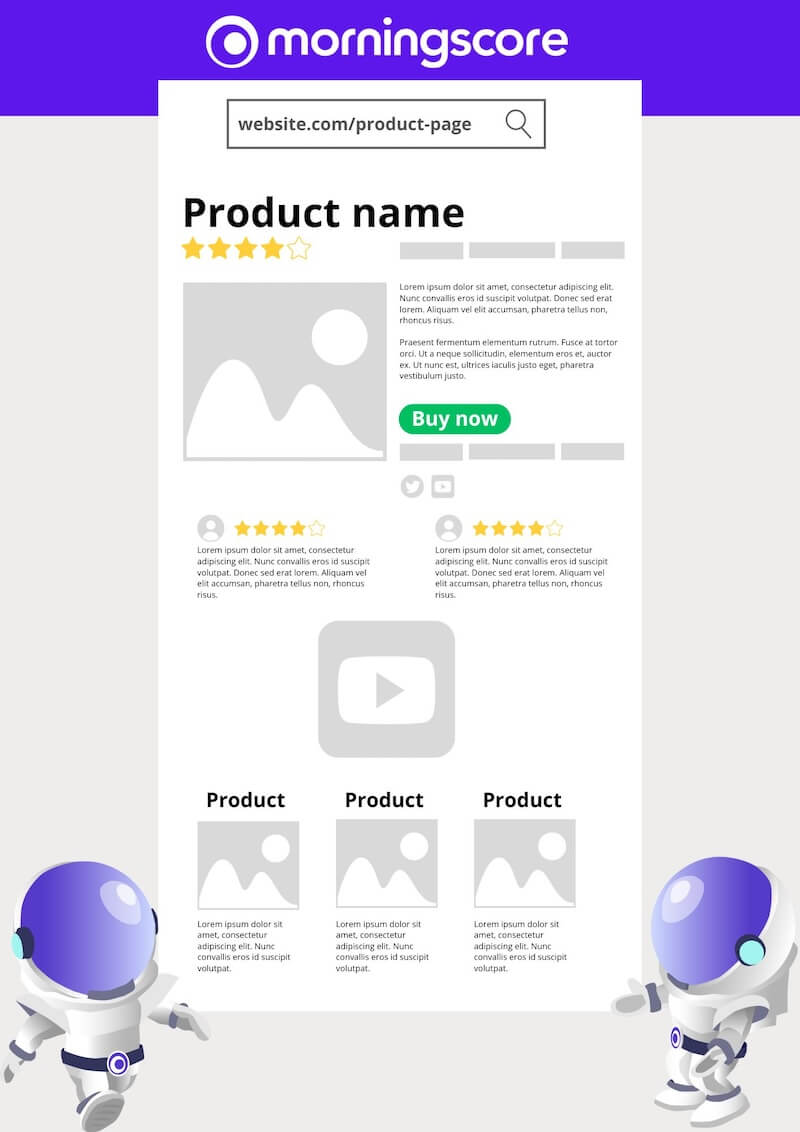
Category and product pages need enough content to explain the topic clearly to both users and Google. Aim for at least 1,000 words on important pages. Focus first on your main categories and key products.
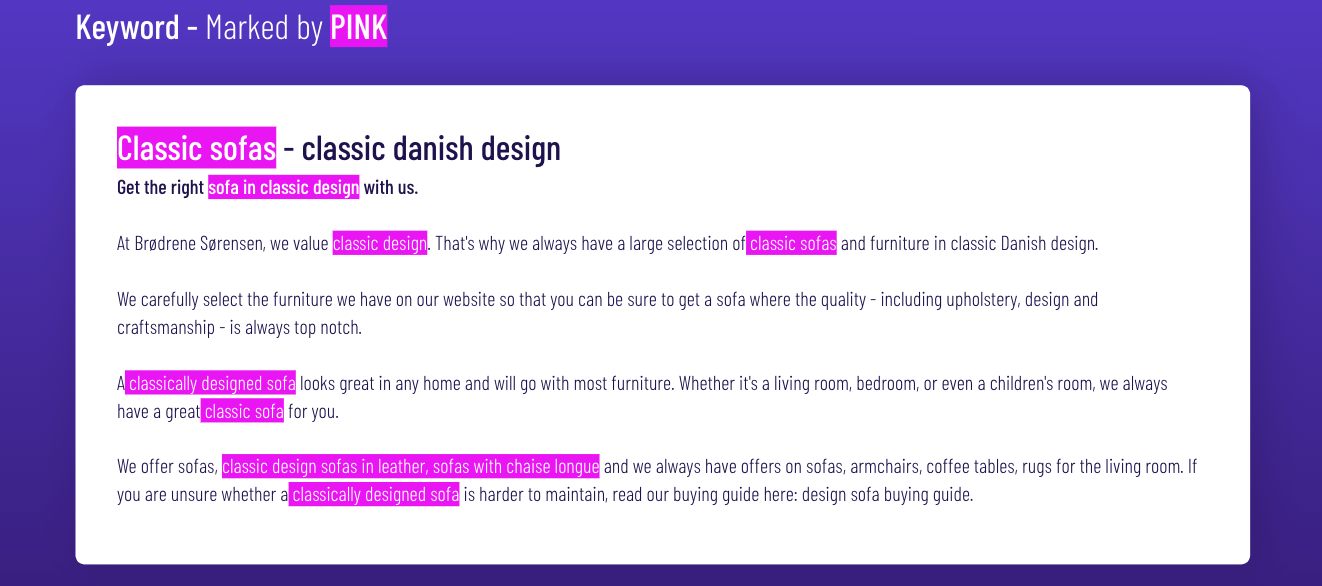
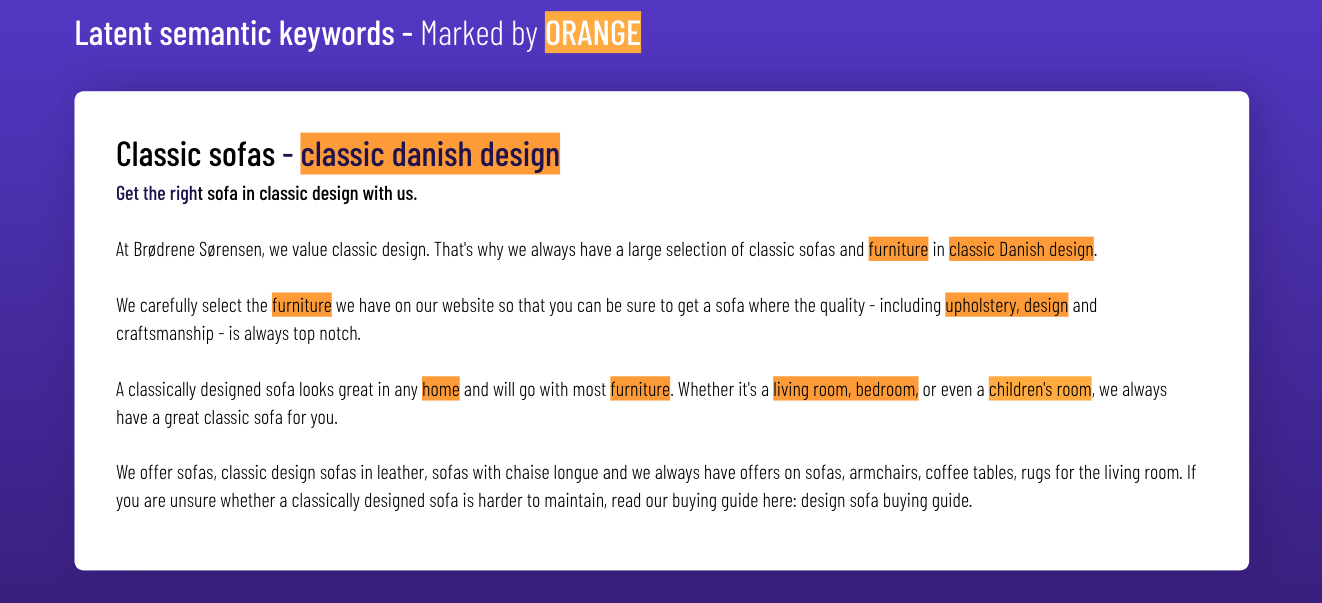
Place your main keyword in the first paragraph. Add related terms (LSI keywords) to create a complete picture of the subject.
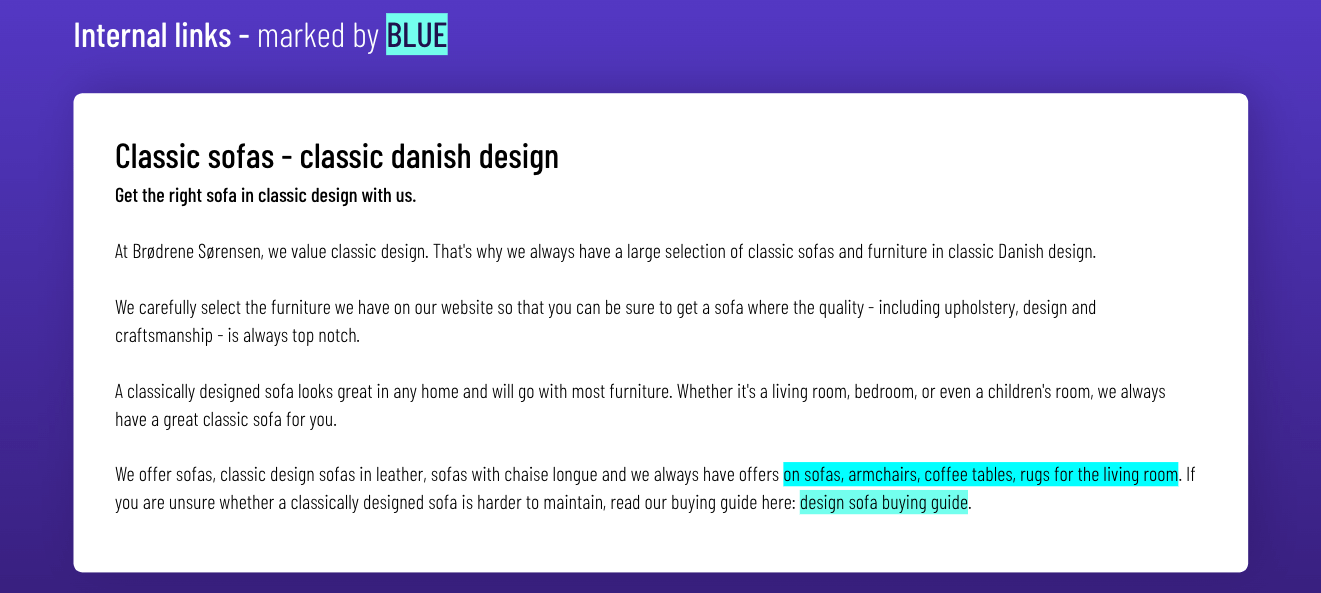
Link internally to your most important categories
Internal links help users navigate and pass value to important pages.
Use descriptive anchor text that matches the target page. Avoid adding too many links on one page as this can harm the user experience.
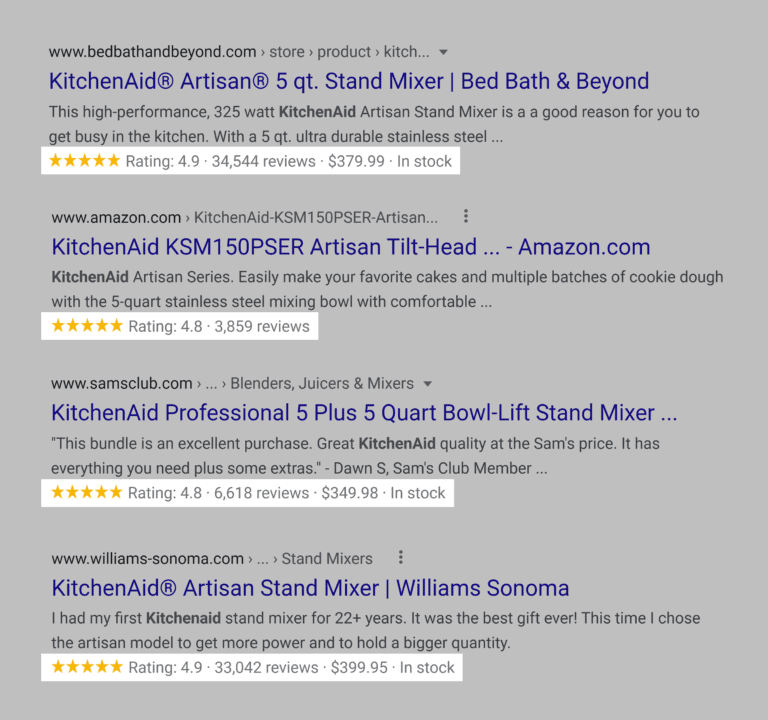
Add product Schema
Product schema can create rich snippets in search results that show price, stock, and ratings.
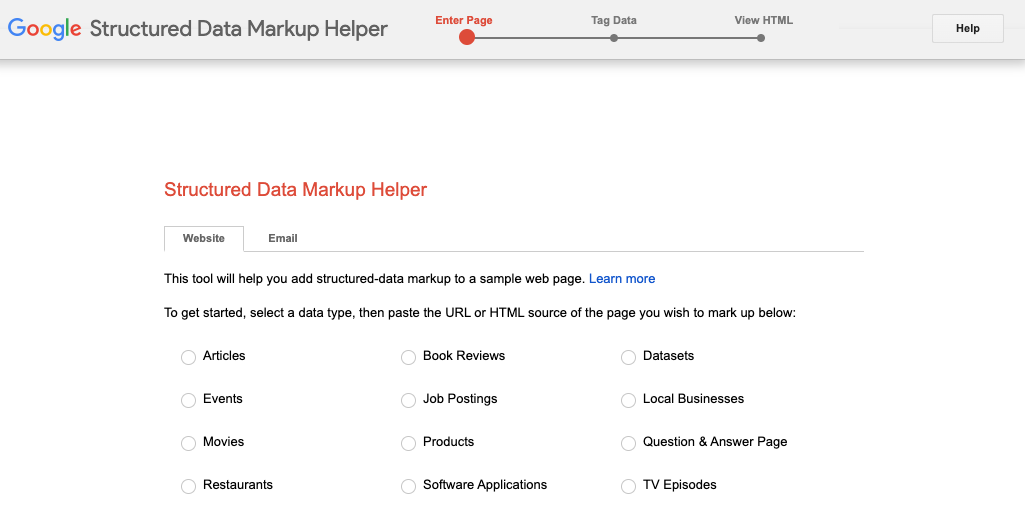
Use Google’s markup helper tool to generate the code.
Content marketing
Good content marketing supports eCommerce SEO by attracting targeted traffic, earning links, and adding value for users.
Link building for ecommerce SEO

Backlinks remain an important ranking factor. Here are practical ways to build them for eCommerce sites.
The power of content: your blog is your best friend
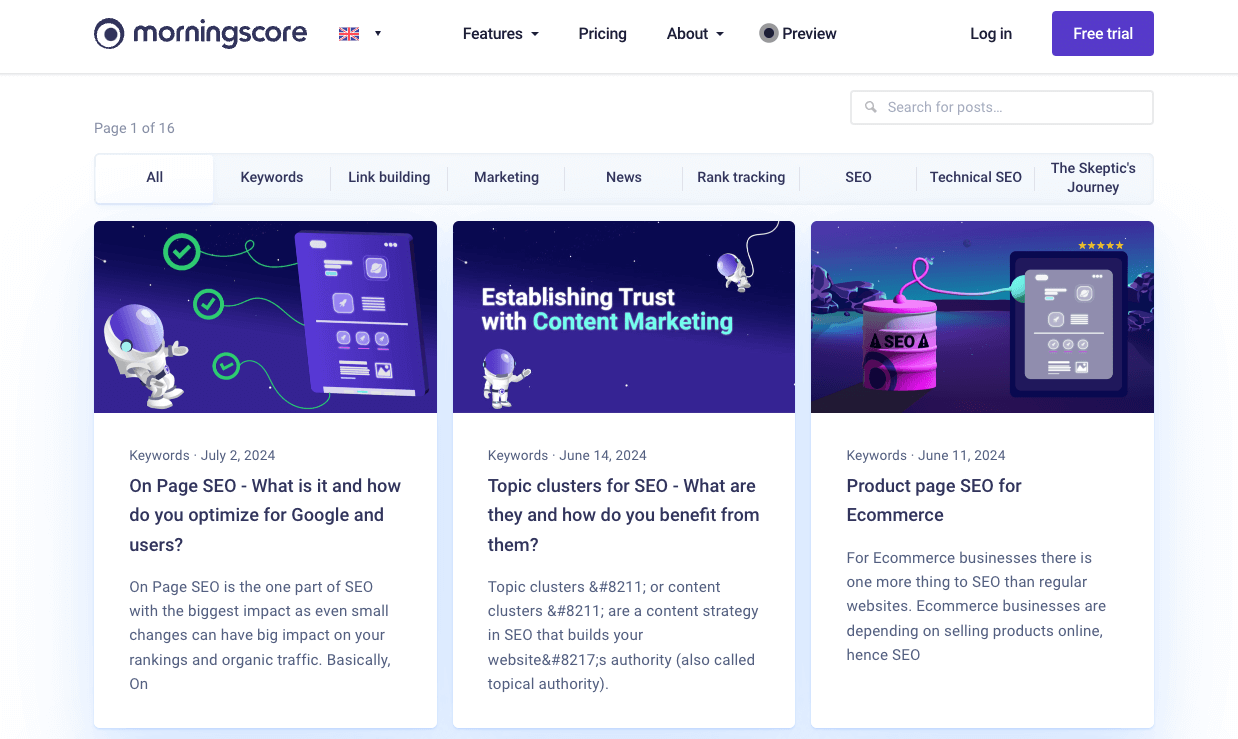
A blog allows you to publish useful guides, comparisons, and industry information. Focus on content that others may want to link to.
Unlinked brand mentions: turning ghosts into guests

Search for mentions of your brand that do not have links. Contact the sites and ask them to add one.
Reverse product image link building: A picture is worth a thousand links
Find sites using your product images without attribution and request a link back.
Guest posting: sharing your expertise
Write guest articles for relevant sites in your industry.
Collaborate with industry websites
Work with other businesses on joint content or promotions.
Broken link building: Turning dead ends into pathways
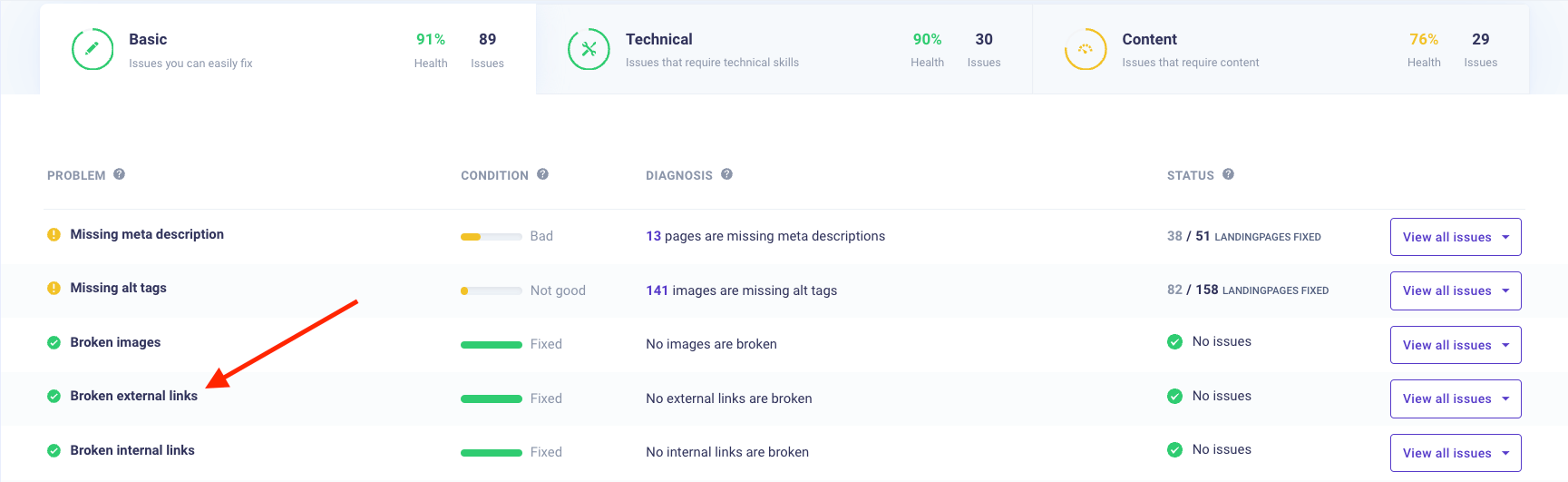
Find broken links on relevant pages and suggest your content as a replacement.
The power of testimonials
Leaving genuine testimonials can result in links back to your site.
eCommerce SEO FAQ
How do I get SEO results for webshops?
Optimize titles, meta descriptions, and content with your keywords. Create helpful supporting content, earn relevant backlinks, and keep pages updated.
How do I start doing eCommerce SEO?
Begin with on-page elements such as titles, descriptions, and URLs. Improve category page content and user experience. Then move on to technical improvements and link building.
Is SEO necessary for eCommerce?
Yes. SEO provides lasting traffic that does not stop when you pause your efforts, unlike paid advertising.
How is eCommerce SEO different from non-eCommerce SEO?
The principles are the same, but eCommerce SEO involves many more pages, product and category optimization, and a stronger focus on conversion.
How do I handle duplicate content from faceted navigation?
Faceted navigation often creates multiple URLs with similar content, which can dilute your ranking power. Use canonical tags or noindex directives on filter pages to prevent search engines from indexing them, preserving your crawl budget for important pages.
Why is schema markup important for eCommerce SEO?
Implementing structured data helps search engines display rich snippets with price, availability, and reviews directly in search results. This increased visibility makes your listings more attractive and can significantly improve your click-through rates.
What content should I add to category pages?
Category pages often suffer from thin content. Adding relevant descriptions at the top or bottom helps search engines understand the context and allows you to target broader commercial keywords effectively.
Do product reviews impact my search rankings?
Yes, reviews act as fresh, user-generated content that keeps product pages dynamic. Search engines favor updated content, and reviews provide unique text that helps distinguish your page from competitors selling the same products.
How do transactional searches help attract customers?
Transactional searches come from users with high commercial intent who are ready to make a purchase. By targeting these specific keywords, you attract visitors who are further down the funnel, resulting in higher conversion rates.