
 Dansk
Dansk Deutsch
 Svenska
 Español
 Nederlands
Key Takeaways
- YouTube defines duplicated content under its “inauthentic content” policy as mass-produced, low-effort, or repetitive material that fails to add significant human creative input.
- You generally cannot upload the same video twice on YouTube because automated classifiers and policy signals will flag the content as inauthentic, making it ineligible for monetization.
- Ignoring a YouTube duplicate issue is risky, as it can lead to your channel being demonetized, removed from the Partner Program, or terminated; third-party reports cited 12.4 million channel removals in 2025 alone (this is a normal amount in historical context)
- I recommend adding substantial human editorial value, such as unique commentary or transformative editing, and disclosing any AI-generated media to avoid 2026 enforcement actions.
YouTube has become a serious traffic business, and a lot of ranking competition has led to bad practices too.
There are always people who try to benefit from copying content from others.
But content that is flagged as being duplicate is not always made with bad intentions, which is the cause of a fair amount of confusion!
YouTube can demonetize your channel if your content is flagged as being “inauthentic” or “repetitious.” Based on my observations of recent algorithm shifts, the platform is no longer just looking for stolen clips, but for any content that lacks a clear human editorial hand.
I offer direct answers to frequently asked questions about this topic in this article updated for 2026.
What is duplicate content on YouTube?
As of 2025-2026, YouTube has broadened its rules to target “inauthentic content.” This includes reused content or repetitious material that is mass-produced, low-effort, or templated. According to YouTube’s latest enforcement standards, it is content where the creator has not added significant original value or human creative input.
YouTube takes this seriously. In 2026, the platform transitioned to stricter enforcement against what industry experts call “AI slop” and automated channels. Third-party industry reports indicated that nearly 12.4 million channels were terminated in the first nine months of 2025 alone following these policy shifts, as YouTube prioritizes advertiser safety and high-quality human engagement.
But in the end, what matters most to YouTube is adding value. So, as long as you are contributing substantial value (be it through original commentary, educational value, or transformative high-quality editing) to the video, your content will not be flagged as inauthentic or endanger your channel’s monetization.
Examples of duplicate content on YouTube
- Taking an existing video that is not your work and uploading it to your channel
- Video compilations put together with absolutely no changes or minimal edits
- Mass-produced or templated AI-generated content without significant human editorial input
- Using royalty-free music (while allowed, using this type of music might flag your video if the content lacks other original elements)
- Content that already has a Content ID (when a video is uploaded to YouTube, it is assigned a Content ID)
- Copyright infringement activities like uploading videos of TV shows, movies, or recordings of concerts
- Uploading videos of gameplay that have not been meaningfully edited or narrated
- Multiple users uploading the same video or effectively identical renders
- Content using synthetic voices to narrate third-party content without adding new information
How does YouTube discover duplicate content?

YouTube discovers duplicate or inauthentic content in a few ways. The first is users flagging a video manually. The second and more powerful method is through its 2026-era automated classifiers.
While Content ID handles copyright matching for audio and video, YouTube uses separate “inauthentic content” detection that looks at:
- Behavioral and metadata patterns,
- Template and scale detection,
- AI-generated pattern detection,
- Audio waveforms and pixel distribution,
- Frame-by-frame similarities.
Each uploaded video is screened for matches. In 2026, minor edits or small surface changes are no longer enough to avoid detection, as the algorithm is trained to spot templated or near-duplicate material across the entire ecosystem.
What you can do about it depends on the situation. If the algorithm flags content during upload, you must add substantial human creative input. This means more than just changing the background music; you need to provide unique context, show your presence on screen, or offer deep editorial commentary.
If you received a manual report or an inauthentic content strike, you must demonstrate that your channel is not part of a mass-produced “slop” operation. In early 2026, several large faceless AI channels were terminated after being identified as low-effort scaled content, resulting in the loss of billions of views.
Can I upload the same video on two YouTube channels I own?
You will not be able to upload the exact video twice on YouTube as the algorithm will flag it as repetitious behavior. Under the current inauthentic content rules, uploading the same file or effectively identical renders to multiple channels is ineligible for monetization and increases the risk of channel strikes.
As for video descriptions and thumbnails, having similarities in a series is generally fine as long as the video content itself stays original.
If you want to be certain that your video won’t be flagged, think about exactly what your followers are gaining from this video. Remember, YouTube is all about added value.
For a quick fix:
- Perform substantial editing that transforms the material
- Add your voice or be present on screen to provide a human element
- Provide unique context in the video description and disclose any AI assistance
Interestingly, YouTube knows exactly what file you’re trying to upload. This can be seen when a video fails on upload; if you try to re-upload the same file, YouTube recognizes it and resumes the existing file.
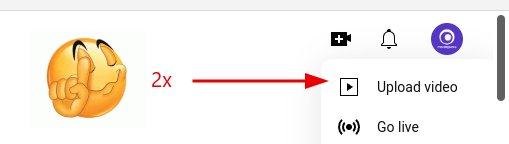
Disclosing AI and Synthetic Media
In 2026, YouTube requires creators to disclose when content contains realistic altered or synthetic media, such as deepfakes or synthetic personas. If you use AI to generate or modify your content, you must use the disclosure labels in the upload flow. Failing to disclose this, especially when combined with repetitive content patterns, significantly increases the risk of channel termination.
Can my YouTube description be flagged as duplicate content?
Yes, if your YouTube video description is an exact copy from another video or used across a massive number of videos, it can be flagged. While descriptions are not the main trigger for inauthentic content, they serve as a signal for templated or automated channels. That is why it is important to always have unique, informative content in your YouTube descriptions.
Does duplicate content include video titles and thumbnails from a series of videos?
If you have a series of videos with similar titles such as “Episode 1”, “Episode 2”, etc., you will not be affected by a duplicate content penalty.
The algorithm is smart enough to know that the actual contents of the videos are different. Metadata patterns are common for episodic content and are not the primary basis for inauthentic classification.
In fact, a series of videos can increase your engagement metrics and your YouTube SEO rankings. By branding your content into a series of episodes, you make it easy for the end user to consume your content.
You should name these playlists using keywords people search for. Use an SEO tool like Morningscore to research keywords, since there will be a big overlap with YouTube keywords.
Is YouTube duplicate content different from Google duplicate content?
In essence, they differ in how they are managed. On the web, duplicate content is usually filtered or canonicalized rather than penalized financially.
There are three major differences between duplicate content on YouTube and Google:
1. How it is discovered
Google Search filters duplicate pages to find the most authoritative source. YouTube’s detection is much more aggressive because it involves monetization and advertiser trust. In 2026, YouTube uses advanced AI classifiers to detect mass-produced “slop” that might look original to a basic search engine but lacks human editorial value.
2. What are the consequences of being flagged
Google Search might lower your ranking, but it rarely deletes your website. YouTube, on the other hand, will demonetize your channel, remove you from the Partner Program, or terminate your account. In 2025, industry reports highlighted the “AI slop” purge where high-visibility channels lost millions of subscribers almost overnight for violating inauthentic content policies.
3. Who owns the content
On Google, duplicate content is often about canonicalization of your own pages. On YouTube, it is usually about preventing creators from “gaming” the system with low-quality, automated, or stolen content.
Does YouTube treat duplicate content the same as Google and does it influence rankings?
Yes, it will affect your video’s ranking because flagged or demonetized videos are rarely promoted by the recommendation algorithm.
However, the consequences on YouTube are much more severe than on Google. YouTube’s enforcement is ecosystem-centric; they want to protect the creator economy from being flooded by automated copies, so they remove content entirely rather than just down-ranking it.
How to avoid YouTube duplicate content penalty

The key is “substantial human creative input.” YouTube and Google are all about value.
YouTube is built on reaction videos and commentaries. These videos borrow visuals, but they add a narrative. In 2026, small surface changes or automated edits are no longer enough to “bypass” the system. You must prove a human is behind the editorial process.
Here are a few tips to avoid being flagged:
- Add significant commentary that provides new insights
- Show your physical presence or a unique synthetic persona that has a clear human editorial hand
- Disclose any use of AI-generated media using the official YouTube labels
- Avoid “templated” content where only a few frames or words change between videos
- Do not use copyrighted music; use the YouTube Audio Library instead
Or you could just make original content. Just saying 😛
What happens if my YouTube video gets flagged as duplicate content?
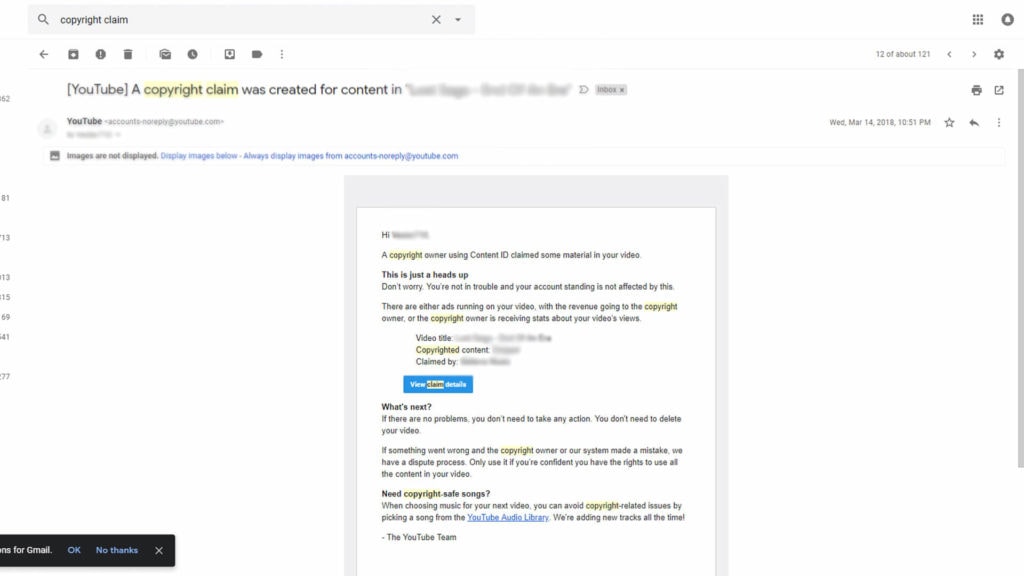
If your video is flagged, you will receive an email. Under the 2025 monetization update, your video may be immediately demonetized if it falls under “inauthentic content.”
Generally, the outcomes are:
- The video gets demonetized or the revenue goes to a copyright owner
- The video is removed from the platform
- The channel is removed from the YouTube Partner Program (YPP)
- The channel is terminated for spam or inauthentic behavior
YouTube maintains a track record. In 2026, the platform is much faster to terminate channels that show a pattern of mass-producing repetitive content.
What do I do if someone copied my YouTube video one-to-one?
If someone copies your video, you have the Copyright Match Tool and Content ID to help. You can submit a copyright complaint to initiate a takedown.
Here is the process:
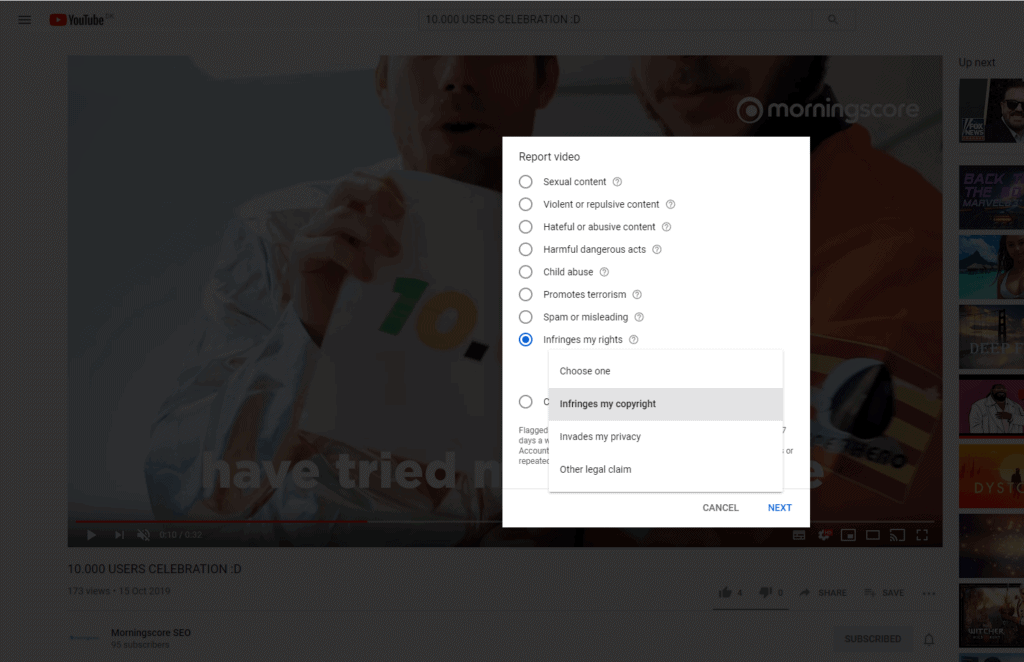
1. Click on the three dots (…) for more options and then choose Report
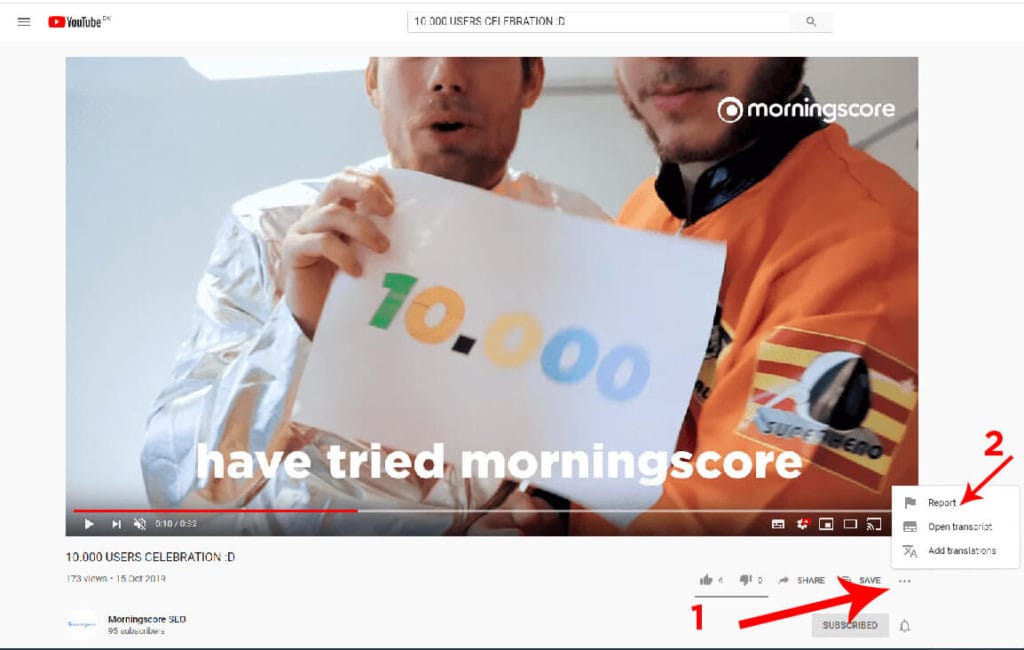
2. Choose “Infringes my rights” and then “Infringes my copyright” from the list
3. This leads you to the Submit a copyright takedown notice
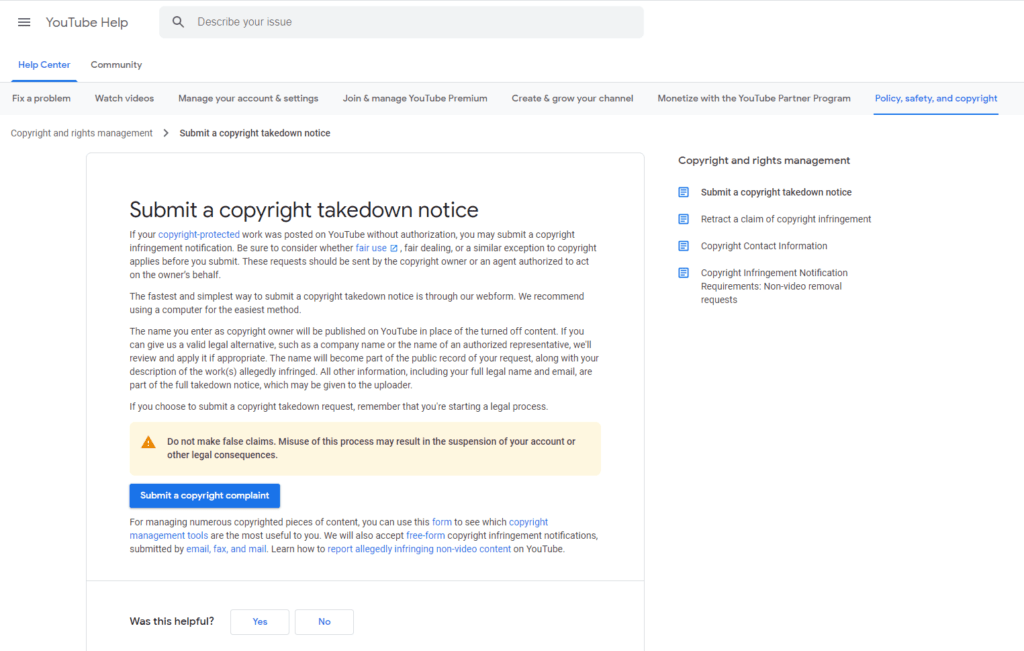
If a channel copies multiple videos, report as many as you can. Three valid copyright infringements within three months will terminate that channel. Remember, this is a legal action. False claims can result in your own account being suspended.
What happens if you have the same video on two YouTube channels?
If you upload the same video on two channels, it is flagged as inauthentic content. Even if the content is yours, YouTube views this as “repetitious” and ineligible for monetization.
If you are merging channels, follow these steps to maintain authoritativeness:
- Download your videos from the old channel.
- Upload them to the new channel but ensure you are adding new value or context where possible.
- Delete the videos from the old channel immediately after uploading to the new one to prevent the system from flagging them as duplicates.
- Ensure the old channel is cleaned up or shut down to avoid inauthentic content signals.
What can I do if my YouTube channel gets removed for duplicate content?
If your channel is removed for inauthentic or repetitious content, you may have been flagged for mass-produced or low-effort material. If you are removed from the Partner Program (demonetized), you generally have 30 days to make changes before you can re-apply.
YouTube recommends that you remove or heavily edit the content to comply with standards. You must prove through your edits that your videos now have significant human creative input. Once you resubmit, a human reviewer will check your channel.
I hope that you now have a better understanding of duplicate and inauthentic content on YouTube for 2026. Keep human creativity at the center of your strategy to stay on the right side of the algorithm.