
 Deutsch
 Dansk
Dansk Svenska
 Nederlands
 Español
SEO strategies are usually a mess of jargon meant to keep agencies in business. And if you aren’t an SEO, you hire one only to find they’re using the same tactics they used for a corporate brochure back in 2020.
For IT companies and startups, this one-size-fits-all approach is why rankings never move. You need a solution built for your specific stack.
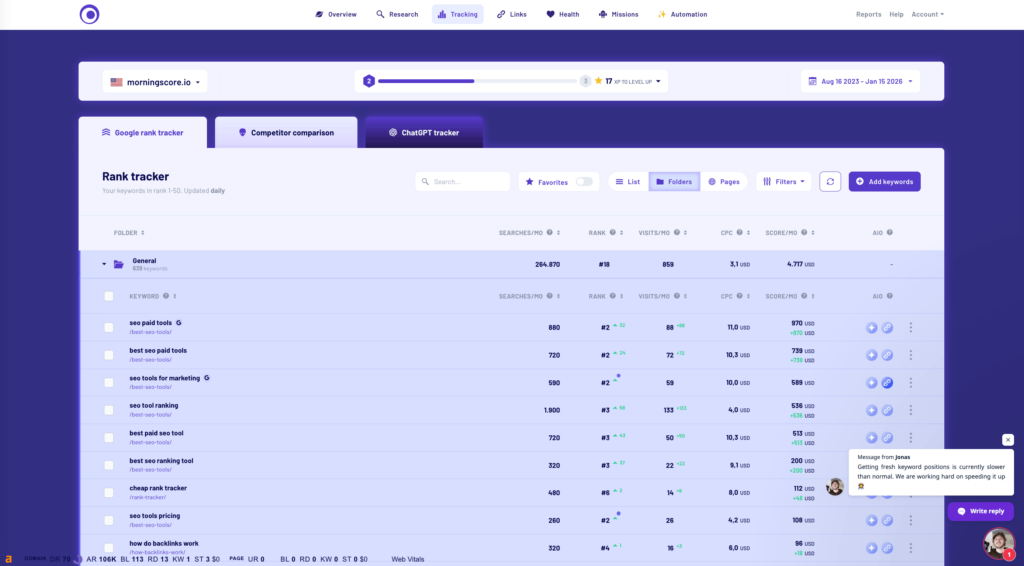
1. The Content Strategy: SEO for SaaS & IT Startup Companies
In the tech world, doing SEO is building a digital asset that compounds in value every month. Whether you are a SaaS startup or an IT company, Google rewards you for one thing: Proof of Solution. Forget the post-and-pray blogging strategy. You need a Tech Growth Engine.
And this is exactly how SaaS software and IT services are actually subscribed:
1. Feature & Expertise SEO Content
Google loves depth. You need to create clusters of content that prove you understand the job the user is trying to finish.
If your software has a feature for Automated Invoicing, along with a feature page you already obviously have, write for the job: “How to automate billing for digital agencies” or “Reducing late payments in freelance tech.”
If you offer cybersecurity, don’t just list Cybersecurity. Write for the crisis: “How to migrate legacy SQL databases without a second of downtime.”
This brings in leads who have the exact problem you solve. They don’t just browse, they book demos because you’ve already solved their problem in their head.
2. Own the Solution Space
Tech buyers don’t search for software or services first. They search for a fix to a problem that is costing them money.
The Alternative Strategy: Your biggest competitors have spent millions building the market. You can draft off that.
Instead of fighting for the massive keyword “CRM,” target “Best HubSpot Alternative for Small Teams.” You are capturing a user who is already frustrated and has their credit card in hand.
Target “On-premise vs. Cloud Security for Banks.” You are positioning your expertise against the “old way” of doing things.
3. Case Studies as Keywords
In tech, trust is your highest-converting keyword. Your case studies shouldn’t just be hidden in a PDF, they should be your best-ranking pages.
Case Studies Example: Optimize your wins like they are search queries.
Instead of “Client Success Story” use:
- Scaling an ecommerce platform to handle 6× Black Friday traffic with zero performance degradation
- Scaling a SaaS backend from 1,000 to 100,000 users while maintaining sub-200ms response times
- How we mitigated a DDoS attack on a Fintech startup in 24 hours, restoring 99.98% uptime
- Stabilizing a fleet management system processing 250,000+ daily updates with zero data loss
- Migrating 1.2 million user accounts to a new platform with zero downtime and no data loss
- Replacing spreadsheets with a centralized system, reducing reporting time by 62% for a professional services firm
- Securing 4,500+ industrial IoT devices across 12 production sites without disrupting operations
Here is how we do it @Morningscore:
This proves you’ve done it before for people exactly like them. It turns a cold visitor into a warm lead before they even hit your contact page.
Google’s mission is to serve the most precise information as fast as possible. Your freshly published case studies won’t rank the day you post them. SEO is a compounding asset. As long as you are serving valuable information, tomorrow your website will be ranking better than today.
2. Off-Page SEO for SaaS & IT Startups: The 2026 Reality of the Internet’s Voting System
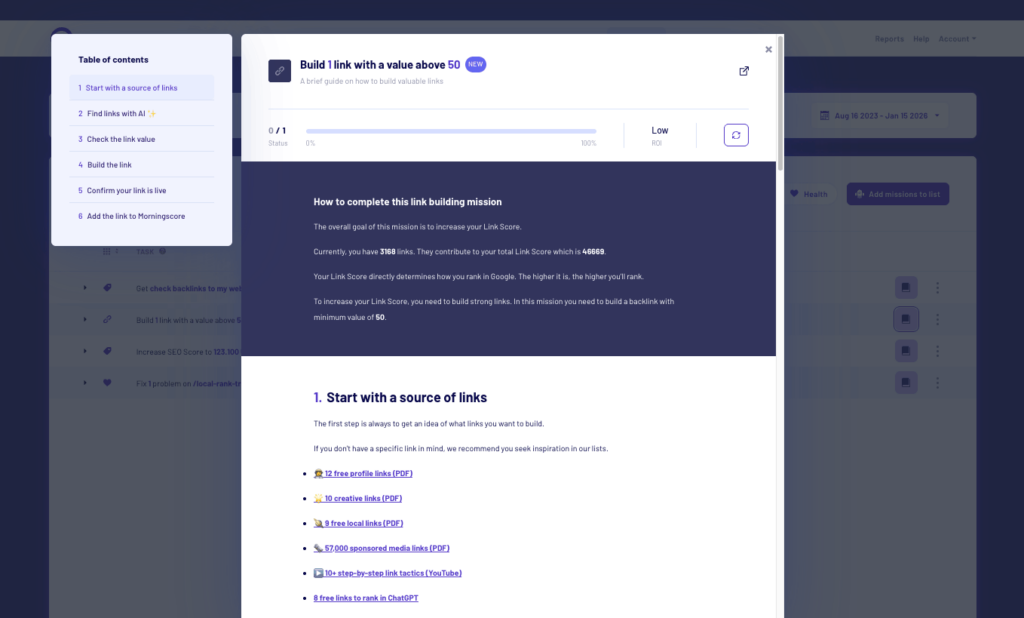
Backlinks are the internet’s voting system. But in 2026, the link market is broken. Here is the reality of link building for startups:
- You better have a budget, but switch the perception from Link Building budget to SEO budget. You can work with any, week by week, month by month.
- Most SEO agencies will try to sell you a link-building package filled with garbage links from sites that have nothing to do with your stack, and even if it’s not like this, it is like this.
- For the agency with bosses, manager managers and shareholders giving you a correct link tagged below $750 is a waste of time. How many of such are you ready to buy?
- Many agencies tell you that expensive links equal higher rankings. False. Link price is set by the webmaster’s greed, not by Google’s algorithm.
- Buying $100 links from shady marketplaces is like putting low-grade fuel in a high-performance engine. You want links from sites that actually relevant have traffic.
In the IT and SaaS world, you neither need quantity, nor insane budgets, you need Relational Authority.
YES — a garage startup can outrank a VC-backed brand.
1. Getting the basic backlinks
You likely already have the foundation:
- Business Registries: Local and industry-specific directories, both governmental and public.
- Social Footprint: X, LinkedIn Company profiles, and Crunchbase, GitHub, StackShare, Product Hunt,
- Review Tech: G2, Capterra, or Gartner, TrustRadius, Garten Peer Insights, PeerSpot, SourceForge, Slashdot
This is just the baseline. To move the needle, you need to look at your invoice list.
2. Leverage Your Ecosystem
Start looking at your partners. Every company you work with, your API providers, your optimization tools, your security vendors, is a source of high-authority trust.
- The Strategy: Address every company you have a relationship with. You mention them as a trusted vendor, they mention you as a successful implementation.
- The Reality Check: Amazon won’t link to you from their cloud services homepage, but the mid-market SaaS provider or specialized DevOps tool you use daily? That is the exact path you should take.
- Earned Authority: The best links are earned by providing a solution (like a free Utility tool). There are millions of websites where you can find authority, high-traffic sites that aren’t greedy. You just need the data to find them.
- Listicles: Start addressing listicles. The truth is first places are 95% times taken by biggest affiliate program holders, but even holding 10-15th place in the list, you already get noticed by LLMS and chatGPTs, they don’t care that much about the position.
3. Tapping into Established SEO Authority
In the SaaS and IT sectors, you are surrounded by companies that have already spent years building their SEO Score and rankings. These sites tend to share links by exchanging them in the most natural way possible to validate their own ecosystem.
How natural link exchanges look in tech:
- The Integration Play: If you use an API, get listed on their Built With or Integrations page.
- The Case Study Swap: Provide a testimonial for an optimization tool, they publish a deep-dive on how you used it to scale.
- The Technical Guest Post: Share a fix for a niche problem on a partner’s engineering blog. They get expert content, you get a high-traffic backlink.
- Original Research with Infographics: Conduct original research within your niche and support it with data visualizations and infographics. This type of content naturally attracts referring domains, citations, and organic links over time.
- Research as Interview Content: Offer your research findings as interview-style content to industry blogs or media outlets. Framing it as “Experts from [Your Brand] discovered [Key Insight]” increases credibility, shareability, and earns editorial backlinks.
Links are still uber-valuable for SEO rankings, just don’t you dare think that TODAY, in 2026, guys with quantum computing capabilities are actually unable to evaluate you buying links from home-alone-blogger-mammy websites.
The Precision Mandate
Repeat! Google’s mission is to serve the most precise information.
Precision in the language of algorithm = Trust. By building links through your actual tech stack, you aren’t trying to trick an algorithm, you are proving you exist in a network of experts.
3. GEO (Generative Engine Optimization) or LLMO: SEO for the AI Era
In 2026, ranking on Google is only half the battle. Your tech startup also needs to rank inside the brains of Large Language Models (LLMs) like ChatGPT, Claude, and Perplexity. This is called GEO (Generative Engine Optimization) or LLMO.
LLMs don’t crawl the web the same way Google does. They retrieve information to answer a specific prompt. If your content is too fluffy, the AI will ignore it because there’s no point in summarising it.
The “Answer-First” Framework
AI engines like Perplexity, ChatGPT or Gemini prefer content that gets straight to the point.
- The Strategy: Start every section with a direct, 1-2 sentence answer to the heading.
- Example: Instead of an intro about the history of SQL, start with: “To recover a deleted SQL database on AWS, use the Point-in-Time Recovery (PITR) feature located in the RDS dashboard.”
- The Result: You become extractable. The LLM can copy-paste your solution directly into its chat window and give you a citation link.
The llms.txt File: The New Robots.txt
Just like you have a sitemap.xml for Google, you now need an llms.txt file in your root directory.
- The Logic: This is a Markdown file specifically for AI agents. It provides a clean, text-only map of your most important documentation, APIs, and case studies.
-
How to implement this: You don’t need complex software to build this. Simply create a plain text file named llms.txt. In it, use Markdown to list the URLs of your most important documentation, pricing, and case studies. Upload this file to your website’s root directory (e.g., yourdomain.com/llms.txt). This gives AI crawlers a direct map to your best content, bypassing marketing fluff.
Credibility Signals
Early 2025/2026 tests show that LLMs are 28 – 40% more likely to cite your brand if you include:
- Statistics: Our tool reduces churn by 27%. (Specific numbers > vague claims).
- Expert Quotes: According to our CTO, [Name]…
Technical Terms: Don’t dumb it down too much, LLMs associate technical depth with authority.
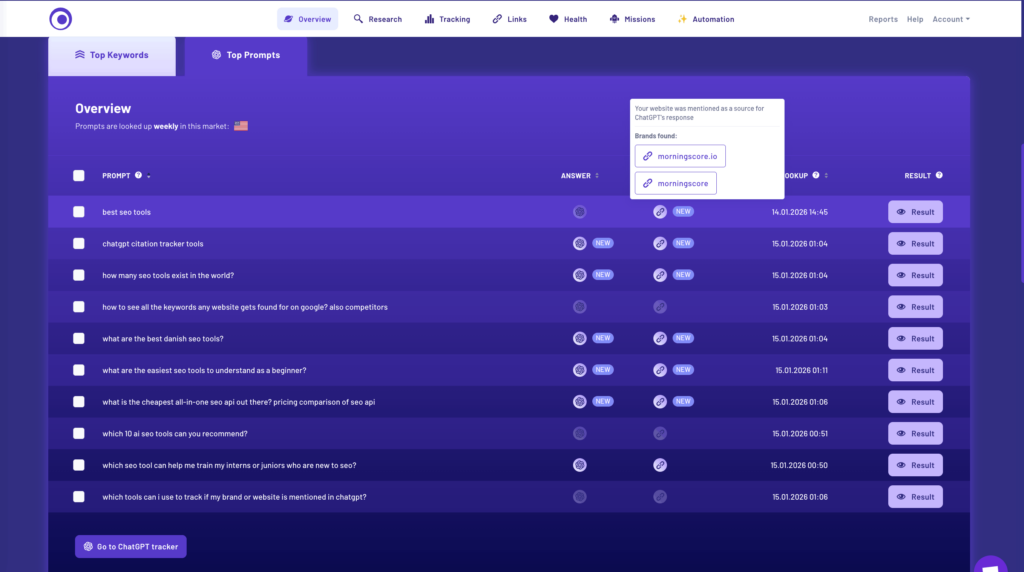
Digital PR: HOW do LLMs learn
LLMs learn from patterns. If 50 different “Best SaaS 2026” listicles mention your product, the LLM starts to treat your brand as a fact.
- The Non-Greedy Link Play: You don’t need to pay for every mention. By finding high-authority industry blogs that are not charging greedy webmaster fees, you can build a massive footprint of mentions.
- Brand Sentiment: If Reddit, trustpilot and G2 are full of positive reviews, ChatGPT will describe your startup as highly recommended.
The Execution Strategy:
- Citation Audits: Regularly query tools like Perplexity or ChatGPT with “Best tools for [Your Industry]” to see if you are mentioned. If not, analyze the sources cited in the answer and target them for PR.
- Schema Markup: Ensure you are using FAQPage and TechArticle schema. This acts as “subtitles” for AI models, helping them understand your code or solution structure without guessing.
- Data Freshness: AI models prioritize recent data. Update your key statistics and “Last Updated” dates quarterly to prevent being flagged as “legacy” information.
4. Stop Studying, Start Shipping
You don’t manually check every line of code, you use linters and automated tests. SEO should be no different. We’ve replaced the SEO Manuals with Missions.
Meet Morningscore: Your Virtual SEO Manager
We’ve helped thousands of companies move past random acts of marketing by replacing complex strategies with a clear, automated roadmap. Vetted by industry authorities like Ahrefs and SEMrush, Morningscore acts as your virtual SEO department.
- No Tax-Return-Style Audits: We don’t send 40-page PDF audits that gather dust in your inbox. We give you execution.
- The Keyword Gap Engine: Our tool identifies the exact opportunities your competitors left open and immediately hands you the Mission to fill them.
- Zero-Coding Technical SEO: You don’t need HTML knowledge to master your technical health. Fix your site’s foundation in just 15 minutes a day.
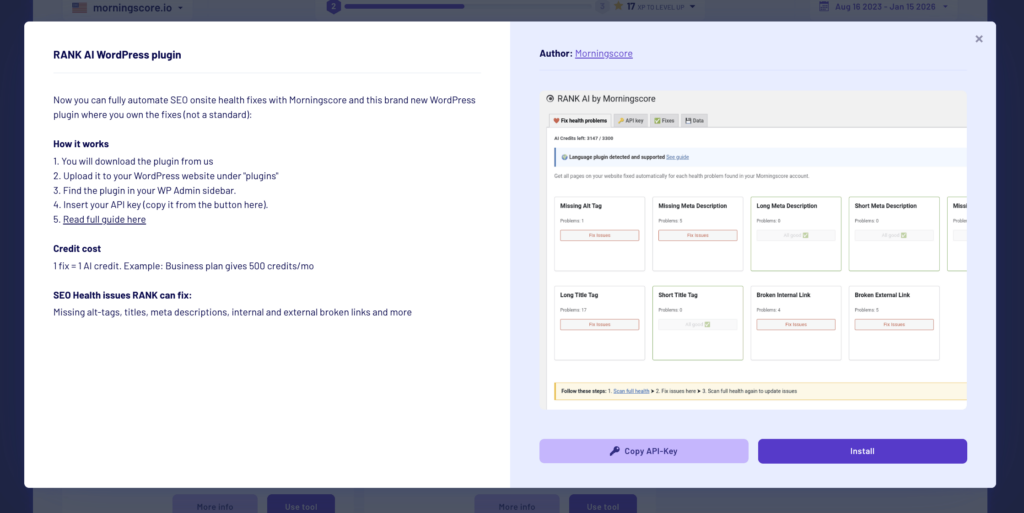
- Native Platform Automation: Our WordPress and Shopify plugins automate the grunt work handling meta tags, image compression, and content optimization.
- Consultant-Level Results: Save thousands on external agencies by using a tool that simplifies the complex into actionable steps.
We didn’t reinvent the wheel, your website still gets all the required optimization. We just made the road smooth enough for you to put it in cruise control.
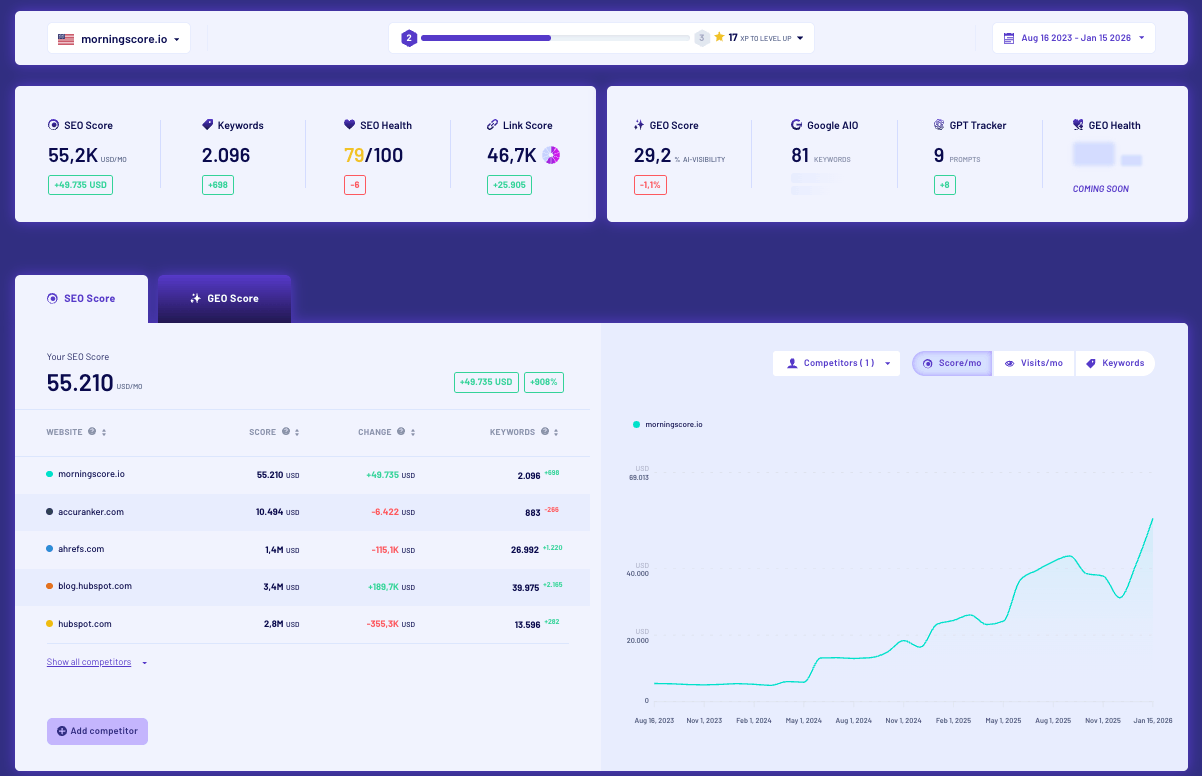
5. Traffic Value: Where Do You Stand?
Most tech startups look at Rankings. Smart founders look at Value.
To dominate your niche, you need to know exactly how much your organic traffic is worth in cold, hard cash. Most companies are shocked to find they are sitting on $10k/month in hidden traffic potential. Customers searching for their solution right now that they simply haven’t claimed yet.
The Value Breakdown
We don’t just count visitors, we count what those visitors would have cost you on the Ad Market (Compare with Google Ads click prices for each keyword you rank on).
| Business Goal | The Action Required | The Business Value | The “Paycheck” (ROI) |
| User Acquisition | Target “Alternative to” keywords | Captures users who are unhappy with big competitors and ready to buy. | High. These are your most expensive clicks in Ads, now free in SEO. |
| Brand Authority | Fix Tech Health & Core Web Vitals | A faster, cleaner site builds trust. Google (and AI) recommends you more. | Steady. Higher “Crawl Velocity” means your new features rank instantly. |
| Market Share | Monitor Competitor Keyword Gaps | Finds the specific problems the industry leaders ignored. | Compound. Steal their high-value traffic for the cost of 15 mins a day. |
| Global Scaling | Set GEO & International Missions | Reach new markets (US, EU, Asia) without opening a new office. | Scale. Localized traffic in new regions boosts your valuation. |
| AI Visibility | Answer-First & llms.txt Setup | Gets you cited in ChatGPT and Perplexity. | Future-Proof. You become the “default” answer for AI agents. |
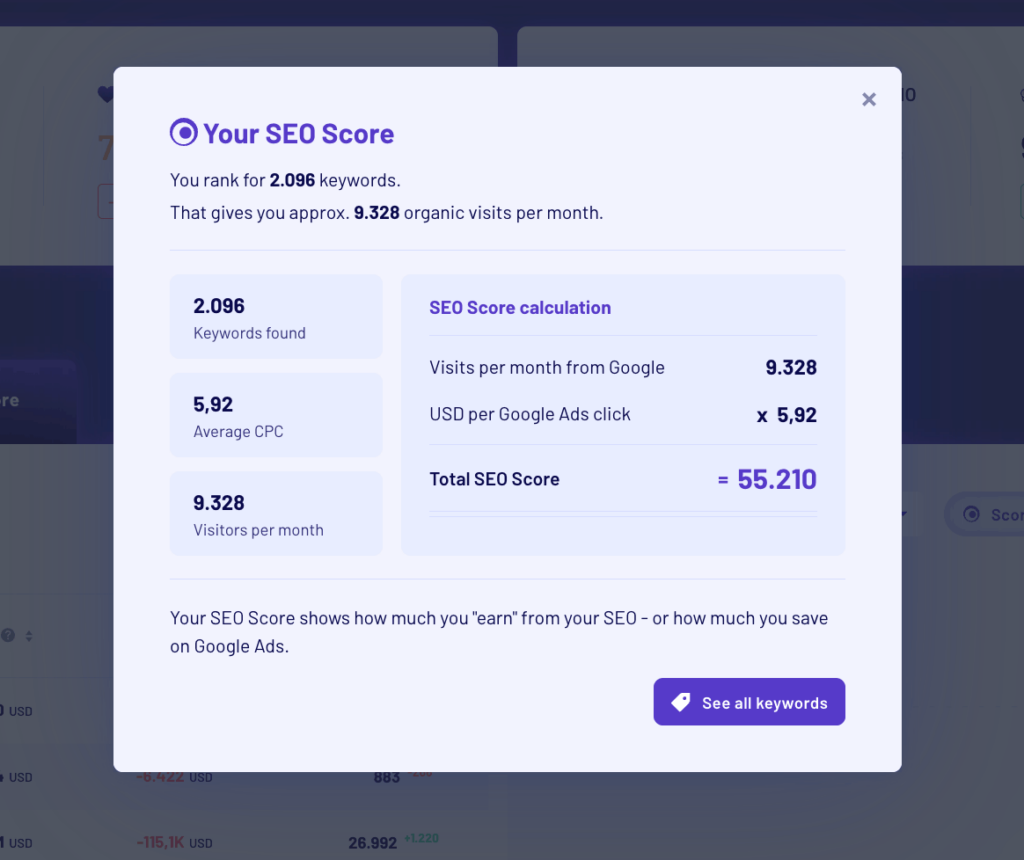
Your SEO Score:
Every Mission you complete increases your SEO Score. This isn’t a vanity metric, it is a real-time calculation of your website’s market value.
If your SEO Score is $5,000, that means you’re generating $5,000 worth of free Google Ads every month. $60,000 a year added back to your bottom line. By the second year, your initial investment barely registers on the graph compared to the traffic value you’ve earned.
In the world of tech, that is money you can spend on:
- Hiring a new senior developer.
- Aggressive R&D for your next feature.
- Improving security and compliance.
- Or yes, they accept them at Porsche dealerships.
By treating SEO as a financial asset rather than a marketing chore, you stop spending on growth and start investing in it.
6. Technical SEO for Saas, IT and Tech Startups
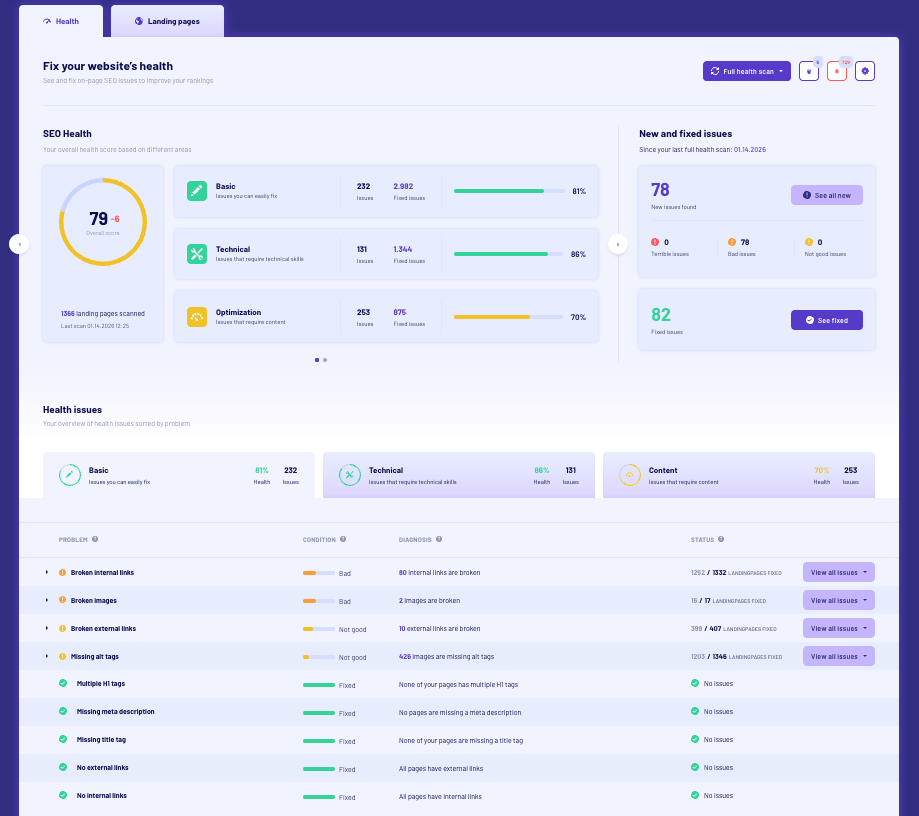
In the IT sector, your website is your calling card. If you sell high-tech solutions but your site is a slow, unoptimized mess, your authority vanishes. Google expects tech companies to have a digital infrastructure that matches their innovation.
Here is the “No-BS” technical checklist for SaaS and IT startups:
- JavaScript SEO (React, Vue, Next.js): Your modern stack can be a black box for Google. If your content only renders on the client-side, you’re invisible.
- Core Web Vitals: For SaaS, speed is a conversion metric. A slow Demo page is a lead-killer.
The Fix: Use Google’s free Lighthouse tool (in Chrome DevTools). Look specifically at the “Opportunities” section. It will identify exactly which JavaScript files are blocking the main thread or which images need WebP conversion.
- Programmatic SEO: The ultimate SaaS scale. Instead of writing 500 blogs, use your data to generate thousands of high-value pages (e.g., “Integration for [App Name]”).
- Schema & Structured Data: These are “subtitles” for Google. Using SoftwareApplication or Service schema gets you Rich Snippets – those star ratings and FAQ boxes that skyrocket your click-through rate.
- Topic Clusters: Google ranks Authority, not pages. You need a “Hub and Spoke” architecture to prove you aren’t just guessing, but are the absolute expert in your niche.
“I’m a founder, not a dev.” That’s the point. If a local moving crew or a massage therapist can follow our Missions to hit #1 on Google, imagine what you can do. You live in the stack. When you plug your expertise into a tool that automates the grunt work, you don’t just rank, you shake up the competition.
7. Why Every SaaS, IT and Tech Startup Needs SEO
Let’s be honest: You don’t care about backlinks or meta descriptions. You care about your Product-Market Fit and Monthly Recurring Revenue.
When your competitor runs PPC ads, they are charged for every single click. When your website ranks organically on these search terms, this traffic is essentially free.
Scale MRR without scaling your budget
Paid ads are a drug, the moment you stop paying, the leads stop coming. Organic Growth is a digital asset. Once you rank for those problem solutions or comparison keywords, they produce leads 24/7.
SEO as a Conversion Lab
When you serve the right intent, you’re doing your best job on Conversion Rate Optimization. When users find you because you solved their “AWS 504 error,” they already trust you and are 5x more likely to hit the “Subscribe” button.
Reduce Churn Rate with Competence
By dominating your niche topic clusters, you appear as the expert, people trust you. SEO isn’t just for new leads, it’s for Churn Rate Reduction.
8. Timeline and Roadmap.
When you combine a great product with a consistent SEO routine, the results compound.
While SEO is a long game, you should see the velocity much sooner. Here is the roadmap:
The Growth Roadmap: How it Wins
SEO is like a snowball. It starts small, but it becomes a giant force if you keep it moving.
Day 1: The “Aha!” Moment
You run a scan and find Keyword Gaps. You realize your big competitors are ignoring the specific, high-intent problems your customers have. You stop guessing and start targeting.
Week 1: Fixing the Foundation
You clear your Technical Debt.
You spend 15 minutes a day fixing one specific issue.
- The Result: Google starts visiting your site more often because it’s easy to read. Your SEO Score (the dollar value of your traffic) starts to go up.
Week 4: The First Harvest
Your Alternative to and Use cases pages start appearing in SERP.
- The Result: You get your first organic leads. These are people who found you because you solved their problem. They didn’t cost you a cent in ad spend.
Month 3: Building Trust
Your Utility tools and case studies are being shared by others. You aren’t just a website anymore, you are a resource.
- The Result: High-quality sites link to you because your tools are useful. This makes Google trust you even more.
Month 6+: The Compounding Engine
This is where you are proud of yourself. Because you have high trust and a fast site, you start ranking for the big keywords in your industry.
- The Result: Your monthly revenue grows, but your marketing costs stay the same. You have built an asset that works for you 24/7.
The Synergy Formula: Why 1 + 1 = 5
When you combine your high-tech solution with our automated Missions, you create a feedback loop:
- Fast Site -> More Crawls.
- More Crawls -> Faster Indexing of Use Cases content.
- Use Cases Content -> Immediate Trust and Backlinks.
- Trust -> Domain Authority to rank for big keywords.
Every Mission you complete isn’t just a checkmark, at some point it’s another $1,000 added to your monthly SEO Score (Organic Traffic Value).
9. The Math: Why SEO is a Success Machine
Most startups get stuck on the Ad Treadmill. You pay for a click, you get a lead, and then you have to pay again. SEO works differently. It is an Equity Asset.
Let’s look at the basic math of a single high-quality article versus a Google Ad campaign over two years.
The PPC Campaign
- Cost per Click (CPC): $5.00
- Monthly Budget: $5,000
- Total 2-Year Cost: $120,000
- Result: The moment you stop spending, your leads drop to zero.
The SEO Mission
- Initial Investment: $2,000 (Strategy + Content + Tech Setup)
- Monthly Maintenance: Tooling Cost: ~$100–$150
- Year 1 Visitors: 5,000 (Traffic grows as you win keywords)
- Year 2 Visitors: 12,000 (Authority builds and you win big keywords)
- Total 2-Year Cost: $5,096
The Comparison: Cost Per Visitor over 24 Months
| Metric | Paid Ads (PPC) | SEO Strategy according to us |
| Total Investment | $60,000 | $5,096 |
| Total Visitors | 12,000 | 17,000 |
| Cost Per Visitor | $5.00 | $0.30 |
The ROI Secret: In the beginning, ads look faster, and you should do them, but by month six, your SEO Cost Per Lead starts to plummet. While your competitors are burning $5,000 every month just to stay visible, you are paying $129 a month and 15 minutes a day to maintain a machine that brings in 3x more traffic than their ads do.
This is high-margin growth that increases the total value of your company.
A Note from an Author
I’m a founder like you. I know the pressure of Churn Rates, the grind for MRR, and the pride of building something that works.
That’s why your first 14 days are free. It’s enough time to run your first scan, find your Keyword Gaps, and finish your first 5 Missions. If you can follow a GPS to a client meeting, you can follow Morningscore to Page 1.
FAQ:
“When should a startup actually start doing SEO?”
- Yesterday. But specifically, once you have a Minimum Viable Product and your first 10 customers.
“Is SEO worth it for a SaaS startup in a crowded market?”
- Yes, because while ads get expensive, SEO gets cheaper per lead over time.
“SaaS SEO vs. Traditional SEO: What is the actual difference?”
- Traditional is about traffic, SaaS is about Product-Led Growth and solving “Jobs to be Done.”
“Should we hire an SEO agency or do it in-house?”
- For most startups, an agency is a luxury. Doing it in-house with the right missions is the lean way to scale.
“How to do SEO with a small team (or just a founder)?”
- You don’t need a team, you need 15 minutes a day for one Mission.
“How to compete with high-authority sites and ‘Dinosaurs’?”
- You don’t out-spend them, you out-maneuver them by finding the niches they are too big to care about.
“How to find high-intent keywords that actually lead to SaaS signups?”
- Stop chasing keyword volume and start chasing Solution intent.
“How much content does a tech startup really need to rank?”
- Quality over quantity. One comparison page is worth ten generic blog posts.
“How do IT companies generate B2B leads through organic search?”
- By ranking for the problems companies have, not just the services you sell.
“Does JavaScript SEO matter for my SaaS platform?”
- If Google can’t crawl your app’s frontend, you don’t exist. We simplify the tech audit so you don’t have to be a developer to fix it.
“How to track the ROI of SEO for a B2B IT service?”
- We translate your rankings into a real dollar value, making it easy to report to stakeholders.
Very Frequently Asked Question:
How do we find keywords that actually lead to SaaS and IT startup signups?
1. The “Crisis” Intent
When a CTO or a Founder is panicking, they don’t want an “Ultimate Guide.” They want a solution.
- The IT Example: Someone searches for “Recovering deleted SQL database” or “Fixing 504 gateway timeout on AWS.” *
The SaaS Example: A tired business owner types in “Automate late payment reminders for freelancers.” - How you land them: You provide the specific “How-To” that solves their immediate pain. By the time they finish your article, you aren’t just a “vendor” you are the expert who saved their day. That is how a startup outranks a giant.
2. The “Comparison” Intent
People don’t just “buy” SaaS; they switch to it because they are fed up with the status quo.
- The Search: “Alternative to [Industry leader] for small teams” or “[Industry leader] pricing vs [Your Product].”
- How you land them: By being the honest, fast, and modern alternative. You don’t need a million backlinks to rank for this. You just need to be more relevant to their specific niche than the big competitor is. If you serve small teams better than the giant does, Google wants to show your page to those users.
3. The “Feature” Intent
Sometimes, the user isn’t in a crisis; they are just looking for a specific tool for their stack.
- The Tech Example: “API for real-time currency conversion” or “Whitelabel dashboard for agencies.”
- How you land them: By having a dedicated, lightning-fast landing page for that exact feature.
Our Advantage: Finding the Gaps
You shouldn’t be guessing which of these crises to solve. Our tool is designed to find these low-hanging fruit keywords that the big corporations are too slow to notice.