
 Deutsch
 Dansk
Dansk Svenska
 Nederlands
 Español
 Lietuvos
- Money keywords drive sales, while research keywords answer questions
- Money keywords convert dramatically better – often 10%+ compared to 0.5% for research keywords.
- Example: “flower shop Amsterdam” (money keyword) vs “how to decorate with flowers” (research keyword).
Money keywords in SEO are a very important concept to grasp. It’s not something you can look up in the dictionary since it’s a definition that’s mostly used in everyday talk.
I see more and more professionals using the term to define high-intent traffic, and I personally like it.
The definition of a money keyword
In SEO, you can, roughly speaking, target two different kinds of keywords:
- Keywords that lead to a sale. I call that “money keyword“.
- Keywords that answer people’s questions “research keyword“.
Example of a money keyword:
“Buy professional coffee machine” is a money keyword since it’s someone looking to buy. You want to rank for this keyword on a page that can lead users to buy.
Example of a research keyword:
“How to make espresso” is someone looking for a guide. Not to buy. Like blog articles. They might be persuaded to buy after having their question answered, and it certainly doesn’t hurt that your brand helped them.
How to work with money keywords and research keywords
I always advise people to start with adding or improving their money keywords on their website if they are getting into SEO.
But research keywords can also lift up money keywords (this is called topical authority). For that and other reasons, it’s a clear step 2 once you have covered your money keywords.
If you want a quick example of the difference between money keywords and research keywords, take a look at the footer of this website as shown in this video:
In the video, I illustrate which pages in the footer target money keywords and which target research keywords. You could visit those pages to get a feel for the difference and apply the same logic on your website. An SEO tool that can help you find the right keywords is a big help in that process.
Conversion rate of money keywords
In my own experience, money keywords tend to convert 20 times better than research keywords. A very rough number.
On our own website, we see that research keywords convert 0.5% of traffic to free trials for Morningscore.
And money keywords convert 10%.
(Actually, some of our money keyword pages convert above 30% – it’s insane 🤑)
To be fair, our site draws A LOT more traffic from research keywords.
But still, money keywords are the clear overall winner in driving customers.
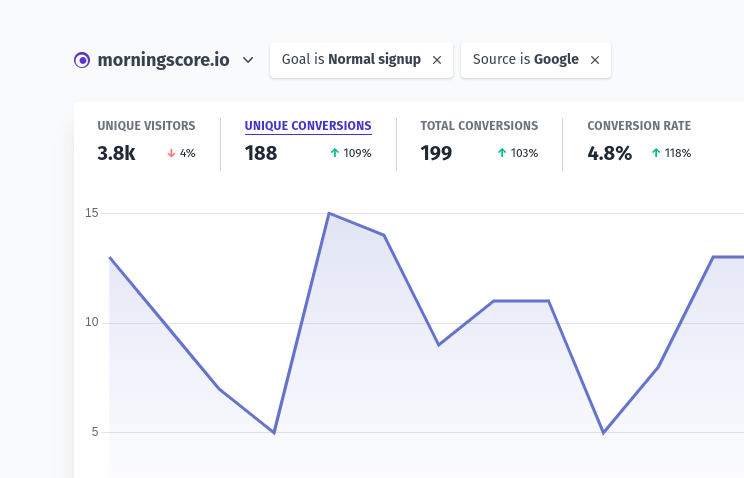
As you can see in the screenshot from our analytics tool Plausible, our overall conversion rate from Google traffic (SEO) over a period of 14 days is just below 5%.
This would be impossible if we relied on research keywords. So money keywords really does “bring the money home” in our case.
I hope this short guide helped you understand what money keywords are in SEO and why experts are focused on it. And I wish you succcess with it 👍️
Frequently Asked Questions
What’s the difference between money keywords and paid keywords?
Money keywords are search terms with high commercial intent that can drive conversions, while paid keywords are simply terms you target in advertising campaigns. The key difference is that money keywords can be used in both organic SEO and paid advertising strategies, whereas paid keywords specifically refer to your PPC campaign targets. A money keyword like “buy running shoes” could be targeted through both organic content optimization and Google Ads.
What tools can help me find money keywords?
The best tools for identifying money keywords include Morningscore, SEMrush, Ahrefs, Moz, and Google’s Keyword Planner. These tools help you assess search volume, competition levels, and user intent so you can pick keywords with the highest conversion potential. If you’re just getting started, an SEO tool can guide you through the process of finding the right keywords for your business.
Do high search volume keywords always make the best money keywords?
No, this is actually a common misconception. High search volume doesn’t guarantee high ROI or conversions. A keyword with lower volume but stronger commercial intent (like “buy organic dog food delivery”) often converts much better than a high-volume generic term (like “dog food”). Focus on the intent behind the keyword rather than just the numbers.
How are money keywords connected to purchase intent?
Money keywords are directly linked to high purchase intent – they target users who are ready to make a decision or buy something right now. The more commercial the intent in the keyword, the higher your conversion likelihood. That’s why keywords like “cheap flights to New York” or “best credit cards” are so valuable – they signal someone is actively shopping, not just browsing.
Can I use money keywords for both SEO and PPC?
Absolutely! Money keywords work great for both organic SEO strategies and paid advertising campaigns. In fact, combining SEO and PPC with the same money keywords can maximize your visibility and conversions. You can optimize your website content and meta tags for organic rankings while simultaneously targeting the same high-intent keywords in your Google Ads campaigns.