 Deutsch
 Dansk
Dansk Svenska
 Nederlands
 Español
 Lietuvos
Key Takeaways
- Broken external links happen when a page you link to gets deleted or moved by the site owner – outside your control.
- They can lower your SEO rankings and push users away when they hit a dead end.
- Tools like Morningscore automatically scan your site and flag every broken external link for you.
- Fixes are straightforward: update the URL, find a replacement source, or remove the link.
Broken external links can hurt your website’s SEO and user experience. They are links that point to external pages that no longer exist or have been moved.
When visitors click these dead links, they get frustrated. From an SEO viewpoint, this can damage your rankings.
In this article, we show you how to find, fix, and prevent broken external links.
Finding all broken external links without a broken link checker is nearly impossible. Most websites have too many links.
Stick around and I’ll show you how easy it is to find and fix them.
What is a broken external link?
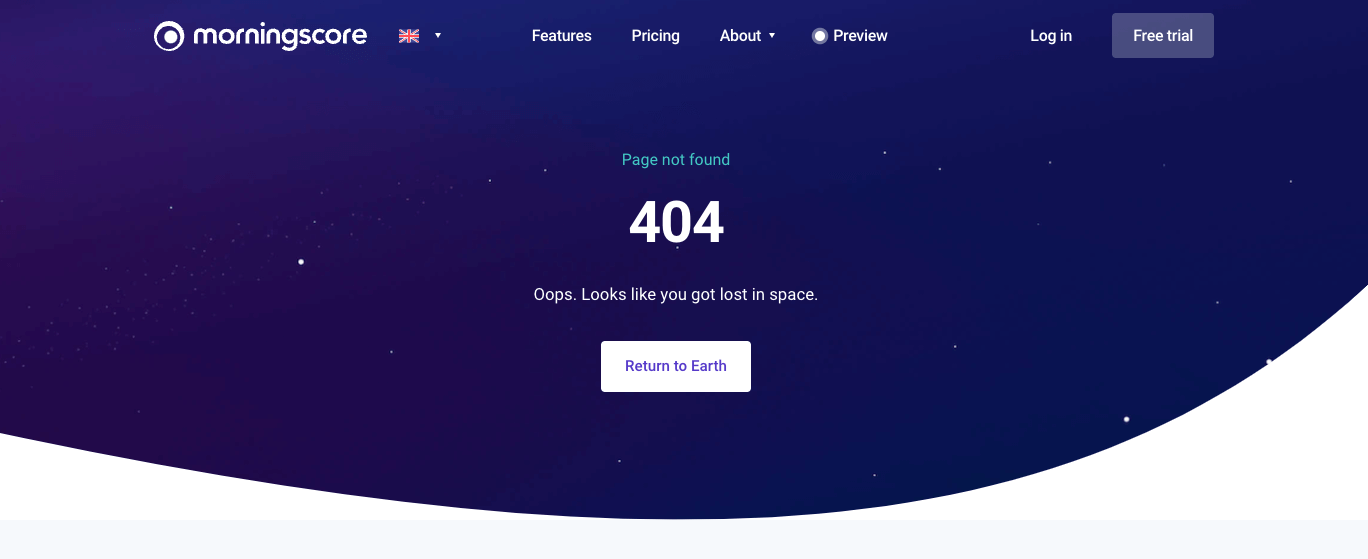
A broken external link is a hyperlink on your page – just like a broken internal link – that leads to an external page outside of your domain that no longer works.
These links are hard to control. They usually happen when another website owner deletes the page or moves it without redirecting the old URL.
Essentially, it’s a link that no longer works because the external webpage is inaccessible.
Understanding the impact of broken external links
Broken external links frustrate users and can drive them away. They harm your site’s reputation.
They can also lower your rankings and hurt your credibility in the eyes of search engines.
SEO Implications
Broken external links can harm your website’s SEO in multiple ways.
Search engines like Google see them as a sign of poor quality. This can lower your site’s ranking.
They also make it harder for search engine bots to crawl and understand your content. This reduces your visibility in search results.
Google Search Central explains how HTTP errors can affect crawl efficiency and user experience on your site.
User Experience Issues
Broken external links disrupt user navigation. They create frustration and make people question your site’s reliability.
This can increase bounce rates and reduce engagement. Both of these things hurt your SEO.
For example, if you quote external research or link to a source that supports your content, users need to access it. If the link is broken, they cannot check the information or confirm your statements.
Say you are selling a magic pill for weight loss. Scientific research proves it works. You link to that research, but the page does not exist. This harms your credibility because users cannot read the conclusions themselves.
How to identify broken external links
It is important to find broken external links quickly for both SEO and user experience.
Keep your content fresh by checking links regularly.
You can check for them manually or use SEO tools to make the process faster.
Manually checking broken external links
Checking manually takes time and effort.
You have to review all your content and click every link to see if it still works. For larger websites, this becomes very time-consuming.
That time would be better spent on actual SEO work.
Using SEO tools to find broken external links
You can use SEO tools to find broken external links automatically.
Tools like Morningscore crawl your website and create reports that show the broken links. This makes the whole process much easier.
It is the fastest and most reliable way to catch every broken external link.
How to find broken external links using Morningscore
The process of finding broken external or internal links is very simple.
First off, you need a Morningscore account (14 days free – no credit card required. No strings attached).
- Set up your Morningscore account using the box above. Add your website and Morningscore will scan your website right away.
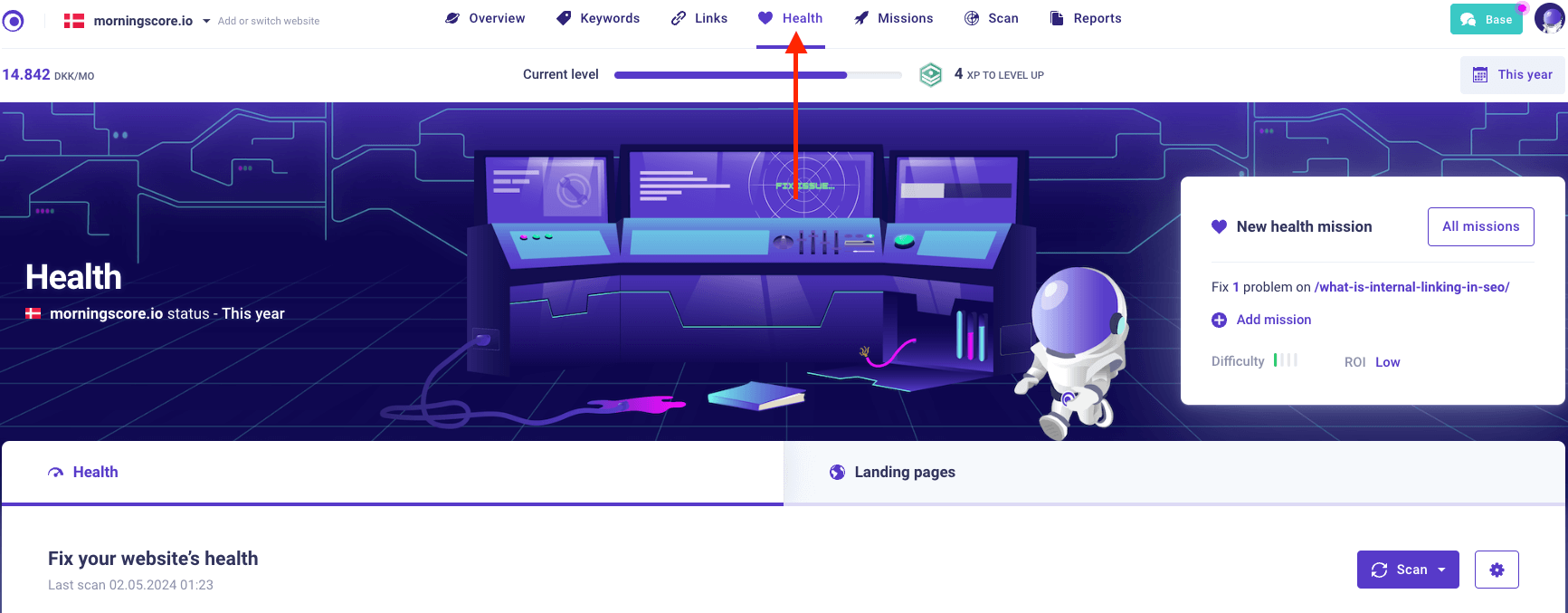
- In the top menu, click on “Health”.

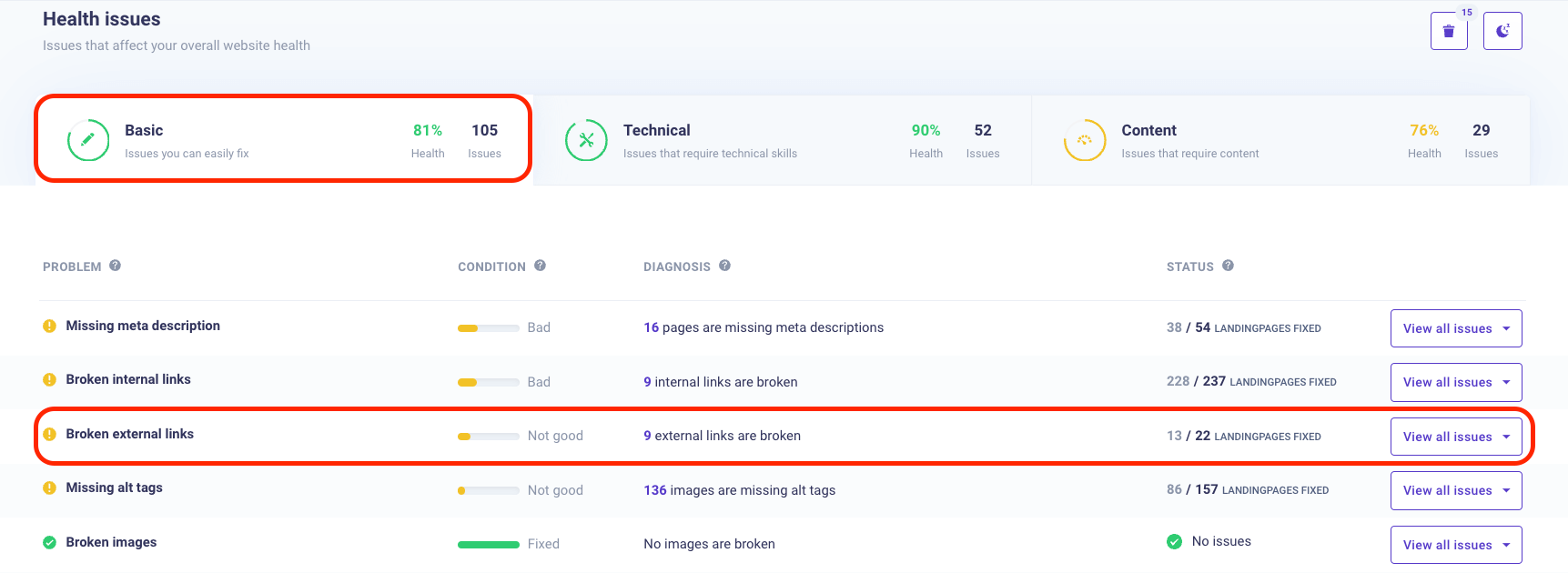
- Scroll down to the issues table and select the category “Basic”. Look for any problems regarding “broken external links”.
- Click on the button “View all issues”.
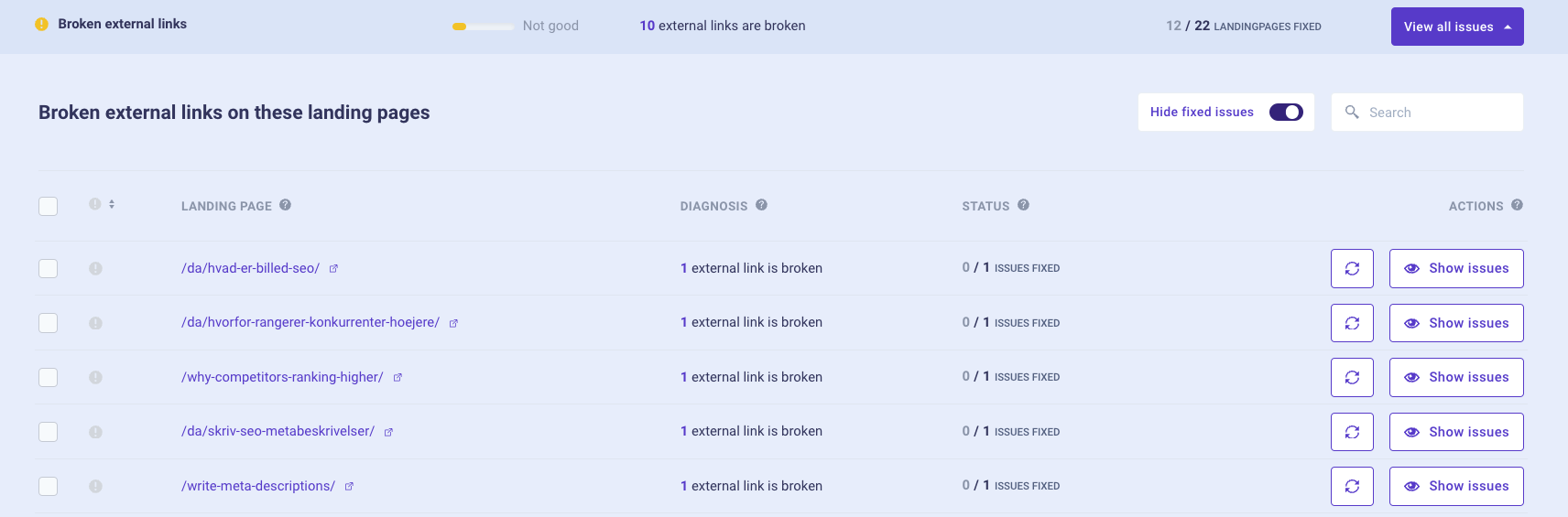
- Now the tab opens and you can see all pages with broken external links. Click “Show issues” on the page you would like to see the broken external links for.
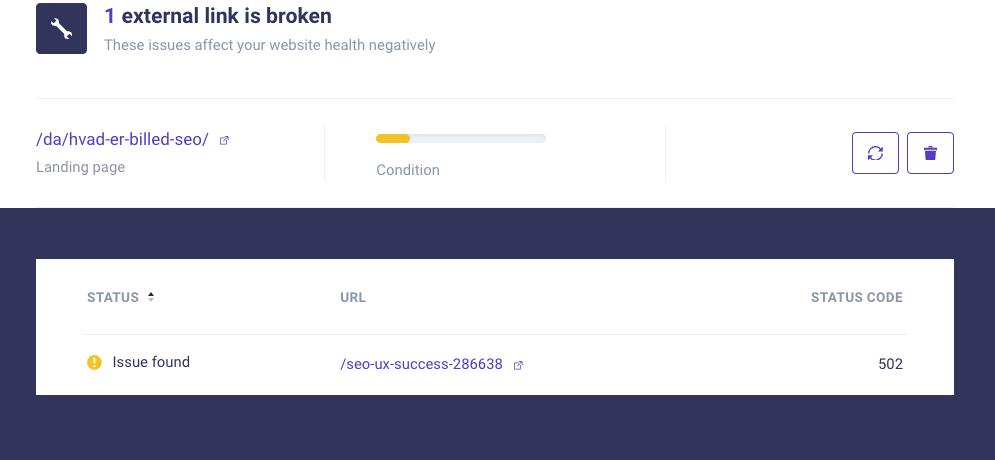
- A new tab opens which shows you the link that is not functioning on the page.
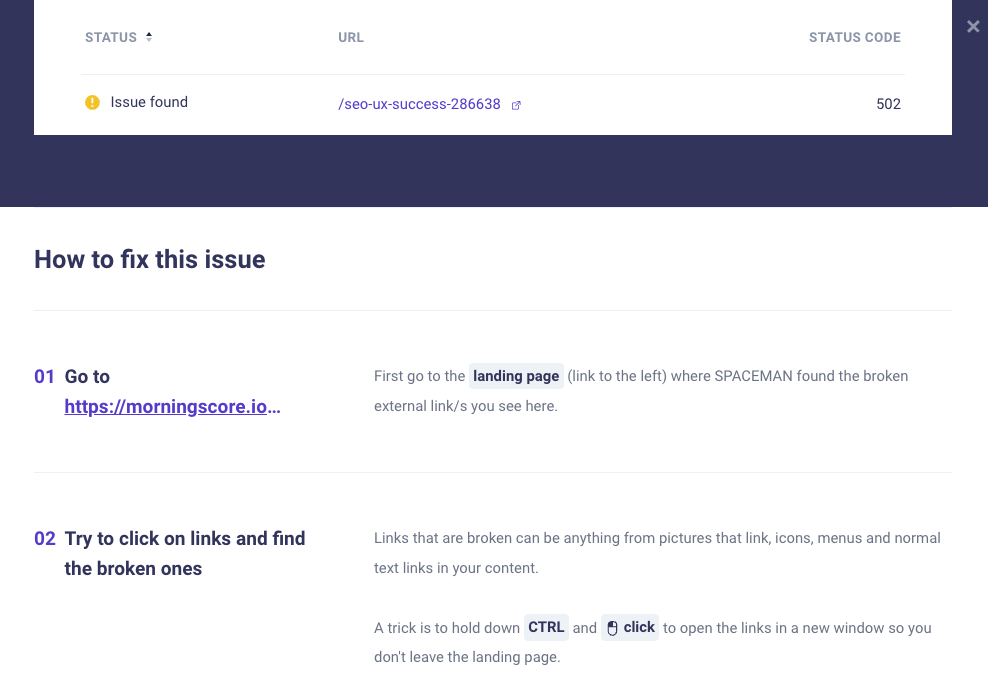
- Scroll down and follow the guide telling you exactly how to fix the broken external link.
That’s it. That is how easy it is to find and fix broken external links on your website.
How to fix broken external links once they are identified
Finding the issue is only the first step. Now you need to fix it.
Here are some ways to deal with broken external links.
Update the broken link
The first option is to update the link.
Check why it does not work. Is it just a typo in the URL? If so, correct it.
Has the page been deleted by the site owner? If so, look for another relevant source to link to instead.
Updating the link should be your first choice. You added it for a reason.
Notify the website owner
If you linked to a good source, the deletion might not be intentional.
Contact the website owner and tell them the page is down. They will often appreciate the heads-up.
If they removed the page on purpose, you should remove the link from your site.
Remove the link
Sometimes the best solution is to remove the link.
If you cannot find a replacement and the URL is truly broken, delete the link. Make sure you do not still refer to the source in your text.
Reasons external links get broken
Many website owners wonder how they can have broken external links when they have not changed anything on their own site.
I understand that. However, external links are controlled by other people. You need to monitor them.
Here are the most common reasons links break:
- Updated URL: If the website owner changes the URL without a redirect, the old link will break.
- Lost Pages: If the site you link to relaunches, some pages might disappear or get renamed without redirects.
- Firewall or geolocation restrictions: Links could function only in specific regions due to regional restrictions, similar to how certain YouTube videos are inaccessible in certain countries.
- Moved content: If a file is removed from the server or moved, the link stops working.
- Malfunctioning plugins: Links might not work if there are problems with plugins on your site or errors in the HTML or JavaScript code.
- The site is down: If the site you link to is down, the link will be broken.
- Change in URL structure: If a website changes its URL structure without redirects, old links will break.
FAQ for broken external links
How do broken external links affect SEO?
Broken external links can hurt your SEO.
When search engines find broken links on your site, it makes your site look unprofessional. This can lower your search rankings.
Users might leave your site if they hit a broken link. This is not good for your SEO either.
So, it is important to monitor and fix broken external links.
Frequently Asked Questions
What tools can I use to find broken external links?
You can use SEO tools like Morningscore, Ahrefs, or SEMrush to scan your website automatically. These tools identify links that return error codes like 404 or 410, saving you the time of checking every link manually.
How often should I check for broken external links?
For smaller sites, a monthly check is usually enough to keep things running smoothly. Larger sites or online stores should perform audits weekly or even daily to catch errors before they hurt your rankings.
What is the difference between a 404 and a 410 error?
A 404 error means a page was not found, while a 410 error means the page is gone permanently. Search engines typically remove 410 pages from their index faster than 404 pages.
Can broken external links be fixed automatically?
Yes, some plugins and tools can detect and fix broken links without manual work. However, for external links, it is often better to review them manually to ensure the replacement content is actually relevant to your readers.
Why do external links break if I did not change them?
External links break because the other website owner moved or deleted the page. You cannot control this, which is why regular monitoring is necessary to maintain a healthy site.
Do broken external links hurt user trust?
Yes, they do. When visitors hit a dead end, it looks like you do not maintain your content. This frustration can increase your bounce rate and lower your credibility.