 Deutsch
 Dansk
Dansk Svenska
 Nederlands
 Español
 Lietuvos
Key Takeaways
- Finding all your keywords in Morningscore takes 4 easy steps: navigate to “All Keywords,” review and filter your list, track priority keywords, and export data for analysis.
- Keywords bridge the gap between your website and target audience, helping you tailor content to meet their search needs.
- Use filtering options to identify high-potential keywords with good search volume and low competition.
- Regular keyword tracking helps you uncover new opportunities and refine your SEO strategy over time.
“Keyword research is the compass that guides SEO.” – Brian Dean
Keywords are the cornerstone of any successful SEO strategy, and with Morningscore, you can easily discover and track the keywords that matter most to your website. In this post, I will give you a step-by-step guide to find all your keywords using Morningscore, so follow along as I walk you through the process.
But, before we get into that, let’s establish why this is something you should do.
Why is it important to know all your keywords?
Understanding all your keywords is crucial for several reasons. Firstly, keywords serve as the bridge between your website and your target audience. By knowing which keywords your audience is using to search for products, services, or information related to your niche, you can tailor your content to meet their needs effectively.
Secondly, comprehensive keyword research enables you to uncover new opportunities and gaps in your SEO strategy. By identifying high-potential keywords with reasonable search volume and low competition, you can optimize your website’s visibility and attract more organic traffic.
A practical AI-era keyword research guide explains that identifying query opportunities and focusing on intent is the best way to monitor and track your visibility for the terms that really matter for your business results.
Understanding search intent is equally important – matching your content to what users actually want when they type a query will always outperform simply chasing high-volume terms. According to Search Engine Land’s keyword research framework, aligning keywords with revenue and buyer intent is essential for business-driven SEO.
And now, let’s get into how you find all the keywords your website is ranking for!
Find all your keywords in 4 easy steps
To stay competitive, it is vital to use the right toolset. Before deciding on content or site architecture, your first step should be using current SEO tools that help you identify the best keywords to target in your initiatives.
Step 1 – Navigate to “All Keywords”
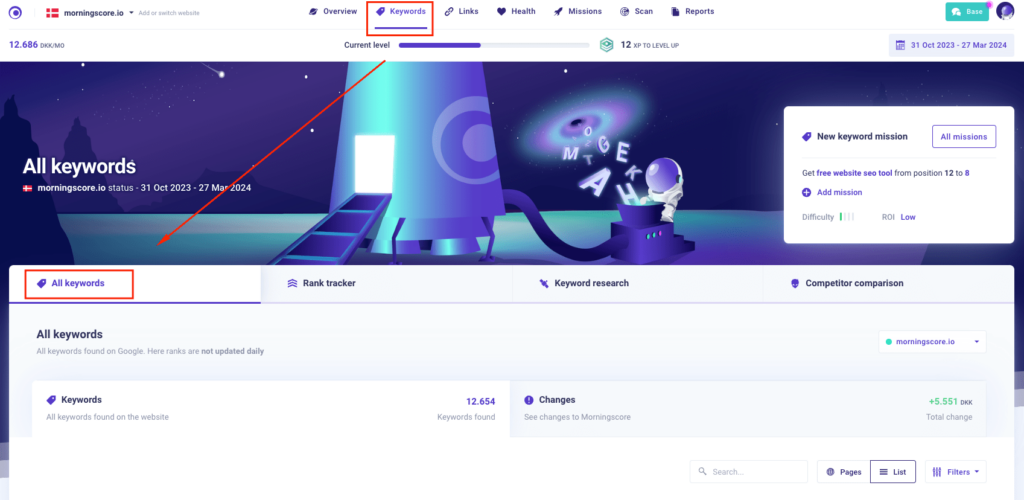
When you have logged in and find yourself on the Morningscore overview page, click on “Keywords” at the top of the page.
Once you have done that, click on the “All Keywords” tab.
Step 2 – Finding your keywords
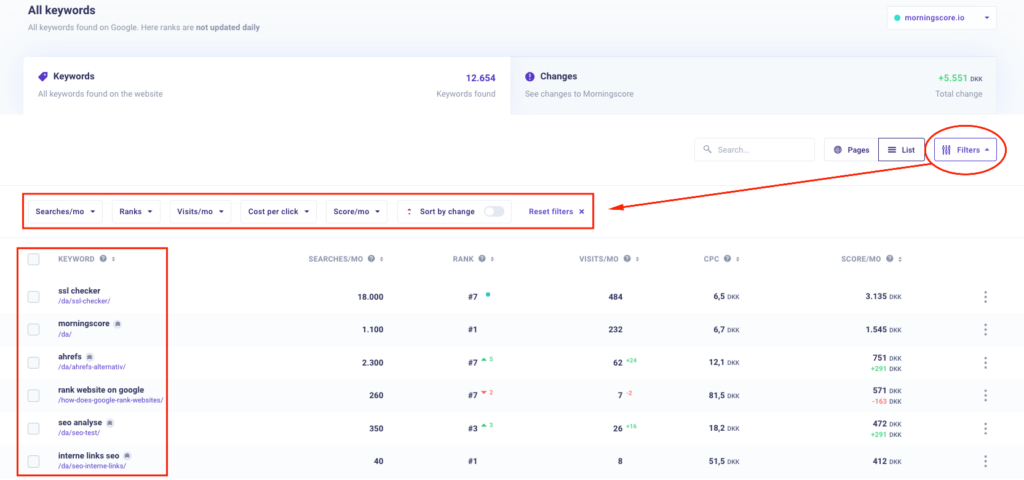
Now, if you scroll down a bit, you should be able to see a list full of keywords that your website is ranking for.
Utilize filters and sorting options to narrow down your keyword list based on parameters such as search volume, cost-per-click, and more. This systematic approach aligns with Search Engine Journal’s practical guidance on keyword types and research workflows.
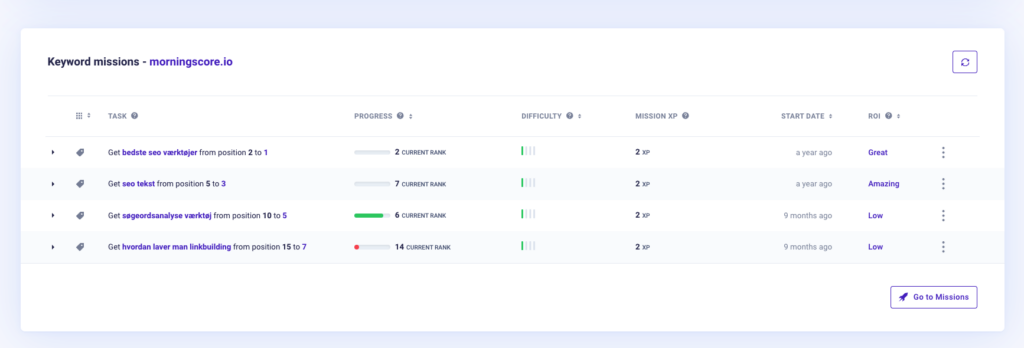
If you scroll down a bit more, Morningscore will also give you suggested keyword missions as something for you to do.
Step 3 – Tracking your keywords
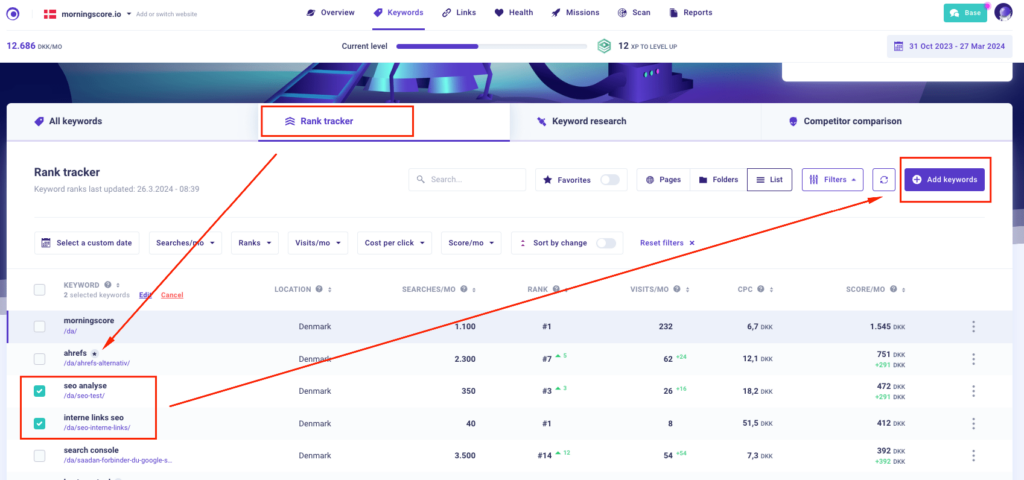
If you click on the “Rank tracker” tab, just to the right of the “All keywords” tab, you will be able to track the keywords you want.
Simply by checking the boxes next to them and then clicking on the “Add keywords” button.
Regular tracking helps you measure progress and identify trends, especially when using an AI-first rank tracking strategy. If you’re unsure about how to rank for the keywords you have selected, I would recommend you read this post about how to rank for a keyword.
Step 4 – Exporting your keyword data
If needed, export your keyword data for further analysis or reporting purposes.
Locate the export option right below your list of keywords.
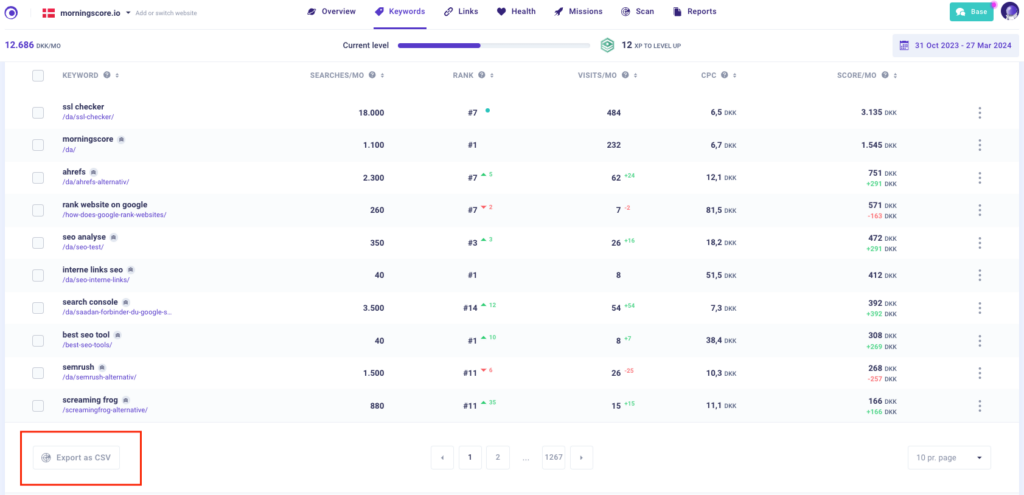
Congratulations! You’ve successfully learned how to find all your keywords in Morningscore. By following the steps outlined above, you’ve taken a significant stride towards understanding the power of keywords to drive organic traffic to your website. Remember, the world of SEO is dynamic, so don’t hesitate to revisit these steps regularly to refine your strategy and stay ahead of the curve.
Additionally, never underestimate the insights you can gain from your keyword research efforts. Whether it’s uncovering untapped niches, refining your content strategy, or keeping a pulse on industry trends, your efforts in keyword exploration can pave the way for sustainable growth and success.
Real Results: How Keyword Tracking Drives Growth
Fenerum (B2B SaaS) used Morningscore’s keyword tracking and optimization tools to achieve remarkable results in just 4 months:
- +500% organic traffic
- SEO Health Score improved from ~40 to 80+
- Significant increase in demo requests
By systematically tracking priority keywords and acting on the data, Fenerum transformed their organic visibility and lead generation. Read the full case study here.
Methodology & Best Practices
The workflow demonstrated in this article follows industry-standard SEO principles outlined in Google’s SEO Starter Guide. Data shown reflects typical account states; rankings are tracked via Morningscore’s Rank Tracker, and exports use CSV/Excel formats for further analysis.
For deeper strategic guidance, we recommend Moz’s approach to better keyword research, which emphasizes intent mapping and prioritization over exhaustive keyword lists.
Frequently Asked Questions
How often should I check my keyword rankings?
For most websites, weekly tracking is sufficient to spot trends without obsessing over daily fluctuations. High-competition or campaign-driven sites may benefit from daily monitoring. Morningscore’s Rank Tracker automates this process so you can focus on action rather than manual checks.
What do I do if my important keywords aren’t showing up?
First, ensure your site is properly indexed by Google – check Google’s indexing and crawlability guidelines. If you’re ranking outside the top 100 or for very new content, it may take time for Morningscore to detect rankings. Consider creating or optimizing content specifically targeting those terms.
Should I track every keyword I find?
No – focus on keywords that align with your business goals and user intent. Understanding search intent will help you prioritize keywords that actually drive conversions rather than just vanity traffic.
How do I know which keywords to prioritize?
Look for keywords with a balance of search volume, relevance to your offerings, and ranking opportunity (where you’re on page 2-3, or terms competitors rank for but you don’t). The Search Engine Land framework recommends aligning keyword selection with revenue potential and buyer intent.
Trusted by SEO Professionals & Businesses Worldwide
Morningscore has helped thousands of websites improve their organic visibility through smarter keyword tracking and actionable SEO insights.
Frequently Asked Questions
Where does Morningscore get its keyword data from?
Morningscore pulls keyword data from search engine results and combines it with analytics from your connected website. The platform tracks your actual rankings in Google and provides metrics like search volume, competition, and cost-per-click to help you make informed decisions about which keywords to prioritize.
How often does Morningscore update keyword rankings?
Morningscore updates your tracked keywords regularly, with most rankings refreshed daily or weekly depending on your plan and settings. Since keyword rankings can fluctuate due to algorithm updates and market changes, it’s recommended to monitor your rankings weekly or bi-weekly to stay on top of trends. This frequency helps you catch meaningful changes without getting distracted by minor daily variations.
Is there a limit to how many keywords I can track in Morningscore?
Keyword tracking limits depend on your Morningscore subscription plan. While you can view all keywords your site ranks for, the number you can actively track in the Rank Tracker may be capped based on your tier. Check your account settings or contact Morningscore support to see your specific limit and upgrade options if needed.
How can I view keywords for a specific landing page?
Navigate to Morningscore’s SEO checker tool and select the specific landing page you want to analyze. From there, you’ll see all the keywords associated with that URL, helping you understand which pages are driving traffic for which search terms. This feature is detailed in Morningscore’s help documentation.
Can I track keywords in different locations with Morningscore?
Yes, Morningscore offers a local rank tracker that allows you to specify locations such as cities or regions for targeted tracking. This is particularly useful if your business serves multiple geographic areas or if you want to compare performance across different markets. Learn more about this feature on the local rank tracker page.
How does Morningscore compare to Ahrefs and SEMrush?
Morningscore is more user-friendly and affordable, targeting small to medium businesses with an intuitive, gamified interface that makes SEO approachable. While Ahrefs and SEMrush offer extensive data and advanced features suited for professional SEO agencies, Morningscore focuses on delivering the essential tools most businesses need without overwhelming complexity.