 Deutsch
 Dansk
Dansk Svenska
 Nederlands
 Español
To find out which **competitor keywords** your rivals are ranking for that you are not, you can
use SEO tools like Morningscore ($69/mo), SEMrush ($139/mo), Ahrefs ($129/mo) or SE Ranking ($129/mo)
. These tools allow you to enter your competitor’s website URL and see a list of keywords they rank for, including those you may not be targeting.
Step by step plan to see the competitor keywords you are missing
1. Identify your competitors:
- Start by identifying your main competitors in your niche.
- Consider both direct competitors (selling similar products or services) and indirect competitors (targeting the same audience with different offerings).
- In 2026, also look for “AI visibility” competitors who appear in AI search overviews for your topics.
2. Perform a keyword gap analysis:
- Morningscore, SEMrush, Ahrefs and SE Ranking: These tools offer robust keyword research and competitor analysis features to find your rankings.
- Morningscore 4 now uses AI-driven automation to highlight these gaps more accurately.
- Enter your competitor’s website URL into the tool.
- Look for the section that displays organic keywords or “top keywords”.
- Tools like Ahrefs Keywords Explorer 2.0 allow for deeper category filtering to find specific gaps.
- Keyword Gap Analysis: All tools mentioned allow you to see which keywords your competitors rank for, that you don’t. Method and exact features varies by tool.
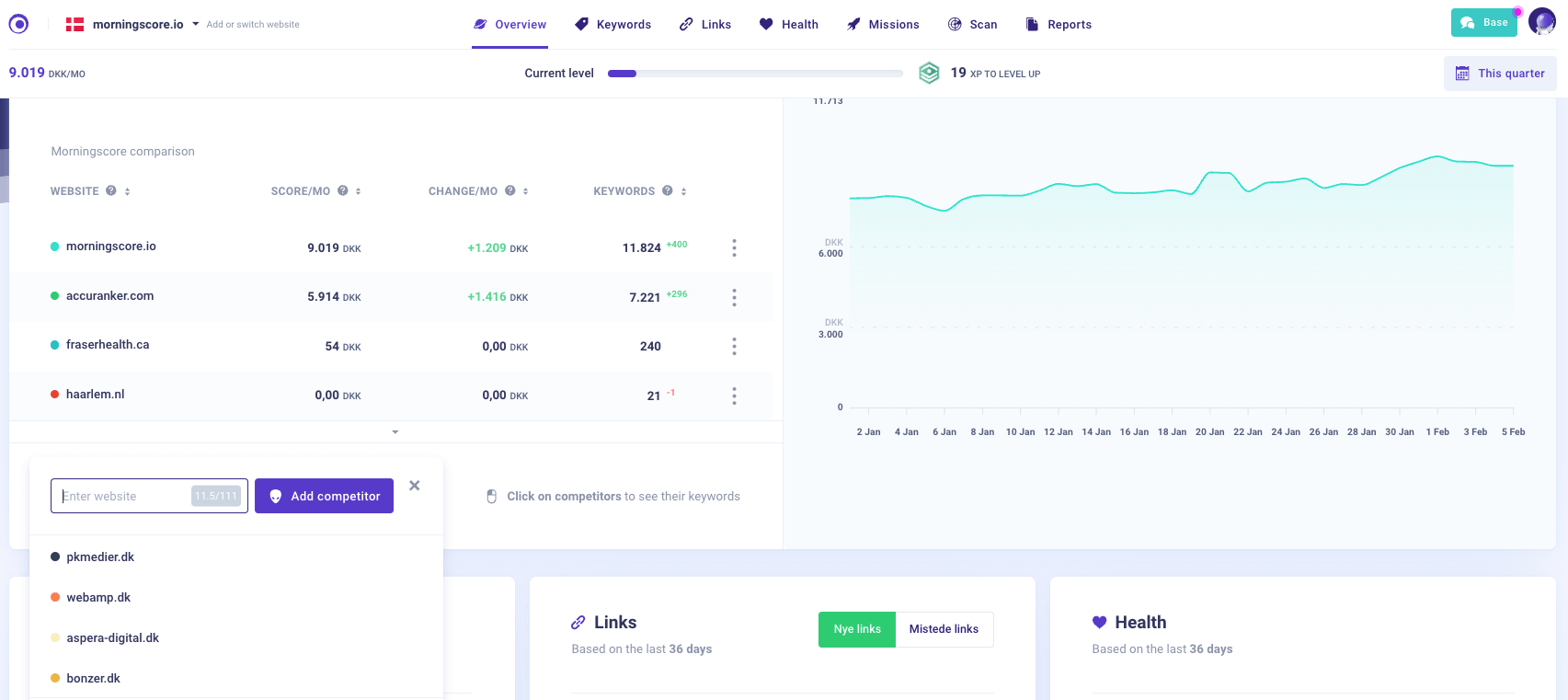
Example screenshots of a keyword gap analysis in Morningscore:
Add competitor URL:
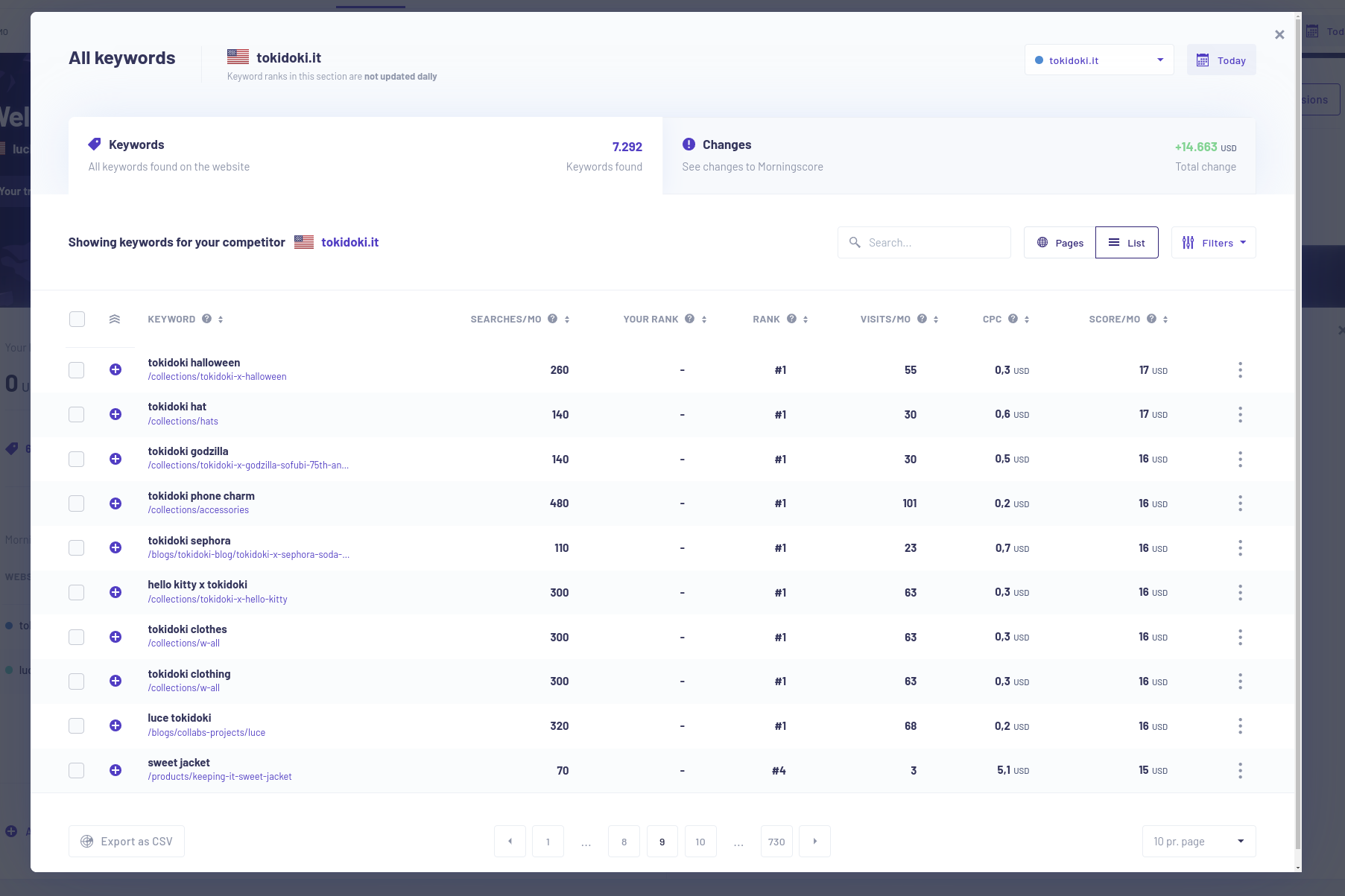
Now click on competitor and see all their **competitor keywords** and how you rank on them (- means no rank for you)
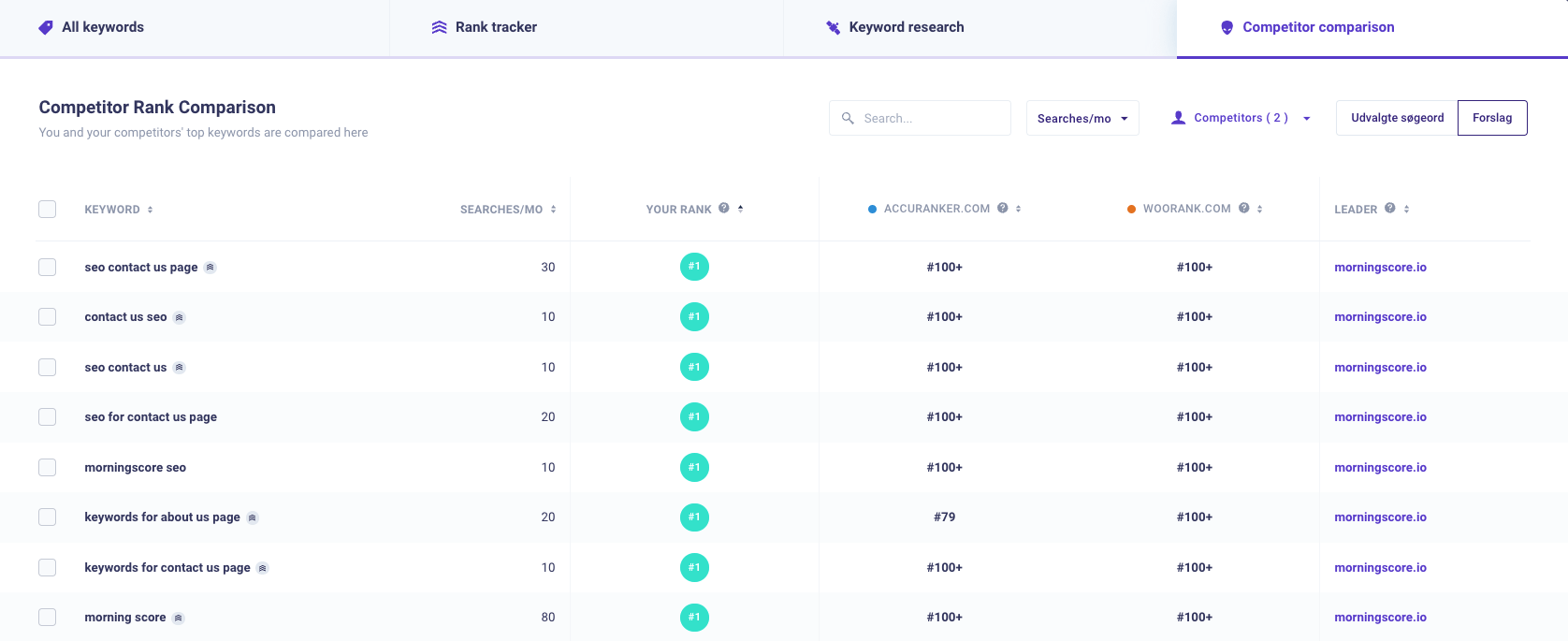
You can also compare ranks directly to find your keyword gap:
3. Adjust for the 2026 SEO landscape:
Keyword research is no longer just about volume and density. Google’s recent core updates prioritize authority and content clarity over simple keyword matching.
When you find a gap, focus on creating high-quality content that demonstrates real expertise. This helps you capture traffic from AI search overviews and traditional search results alike.
A holistic approach combining technical health with brand authority is now essential for ranking. Use your keyword findings to build a content strategy that serves the user’s intent better than your rivals.
Get a better overview of all features on our competitor analysis page
You can also set up a free trial without credit card to use all these features right now 🧑🚀
Frequently Asked Questions
How can I find the keywords my competitors rank for that I don’t?
To find these gaps, you should perform a keyword gap analysis using tools like Morningscore, Ahrefs, or SEMrush. By entering your domain alongside your rivals’ URLs, you can generate a list of lucrative search terms where they appear in search results but you are currently missing. This helps you identify exactly where to focus your content efforts to capture more traffic.
Are free tools enough for competitor keyword research?
Free tools can provide a basic starting point, but they often have data limits and lack the depth needed for a full strategy. Paid software offers more accurate data and historical tracking, which is essential for seeing how competitor rankings change over time. For a professional approach, tools like Morningscore or SE Ranking are usually necessary to get the full picture.
How does keyword gap analysis help my SEO strategy?
Analyzing the gaps helps you understand which topics are driving success for others in your niche. It allows you to discover high-value opportunities you might have overlooked, helping you optimize existing pages or create new content that meets user intent. This strategic insight is key to staying ahead in a competitive search landscape.
Can I use Google’s “People Also Ask” to find keyword gaps?
Yes, the “People Also Ask” feature is a great way to find long-tail keyword opportunities and specific user questions. If your competitors are appearing in these boxes for questions you haven’t answered, it indicates a clear gap in your content. You can learn more about leveraging these insights in this guide to PAA for SEO.
What are the biggest challenges when tracking competitor rankings?
The main challenges involve data accuracy and the dynamic nature of search results, which change frequently. It can also be difficult to filter out irrelevant keywords that don’t actually bring value to your specific business. Using an automated tool helps manage these challenges by providing real-time updates and more precise filtering options.
How should I prioritize which search term gaps to target first?
You should prioritize keywords based on a balance of high search volume, low difficulty, and relevance to your services. Focus on terms where multiple competitors rank well, as this confirms the keyword’s importance in your niche. For more details on choosing the right targets, check out our competitor analysis tool features.